Rocket V4
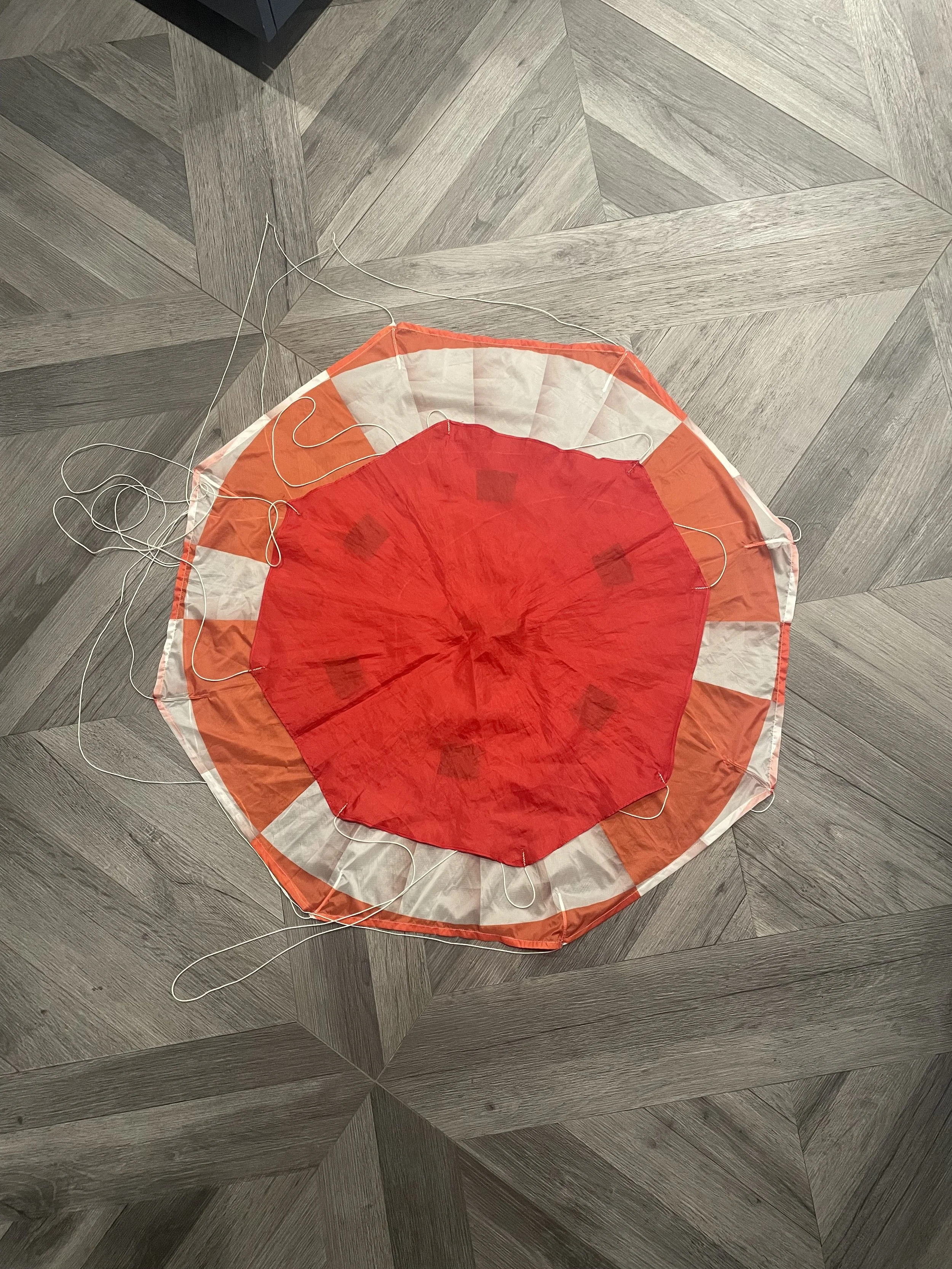
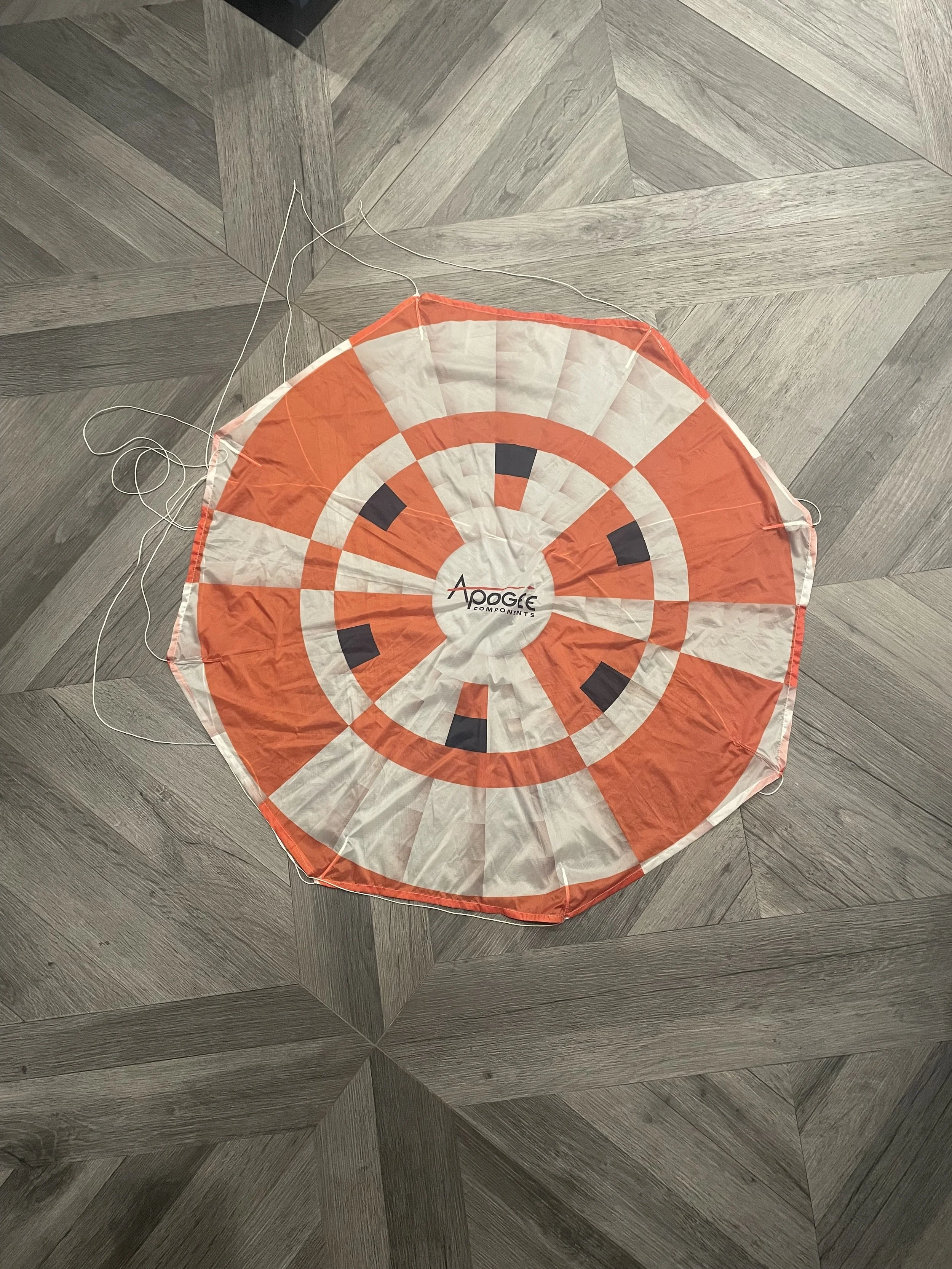
Currently, I am designing a fourth iteration. This system will accommodate a larger parachute, shown to the right. Versions 1, 2, and 3 could manage with a small, 24-inch parachute, shown in red. However, with heavier composite fuselages, my rockets are beginning to exceed 1 lb in weight. To prevent fuselage damage on impact, I need to use a larger 36-inch parachute.
A larger parachute requires a stronger ejection spring. With stronger springs, my Version 3 deployment system binds up quite easily and fails to deploy the parachute. Therefore, I am actively examining new methods for deployment that depart from the previous slot-pin design.
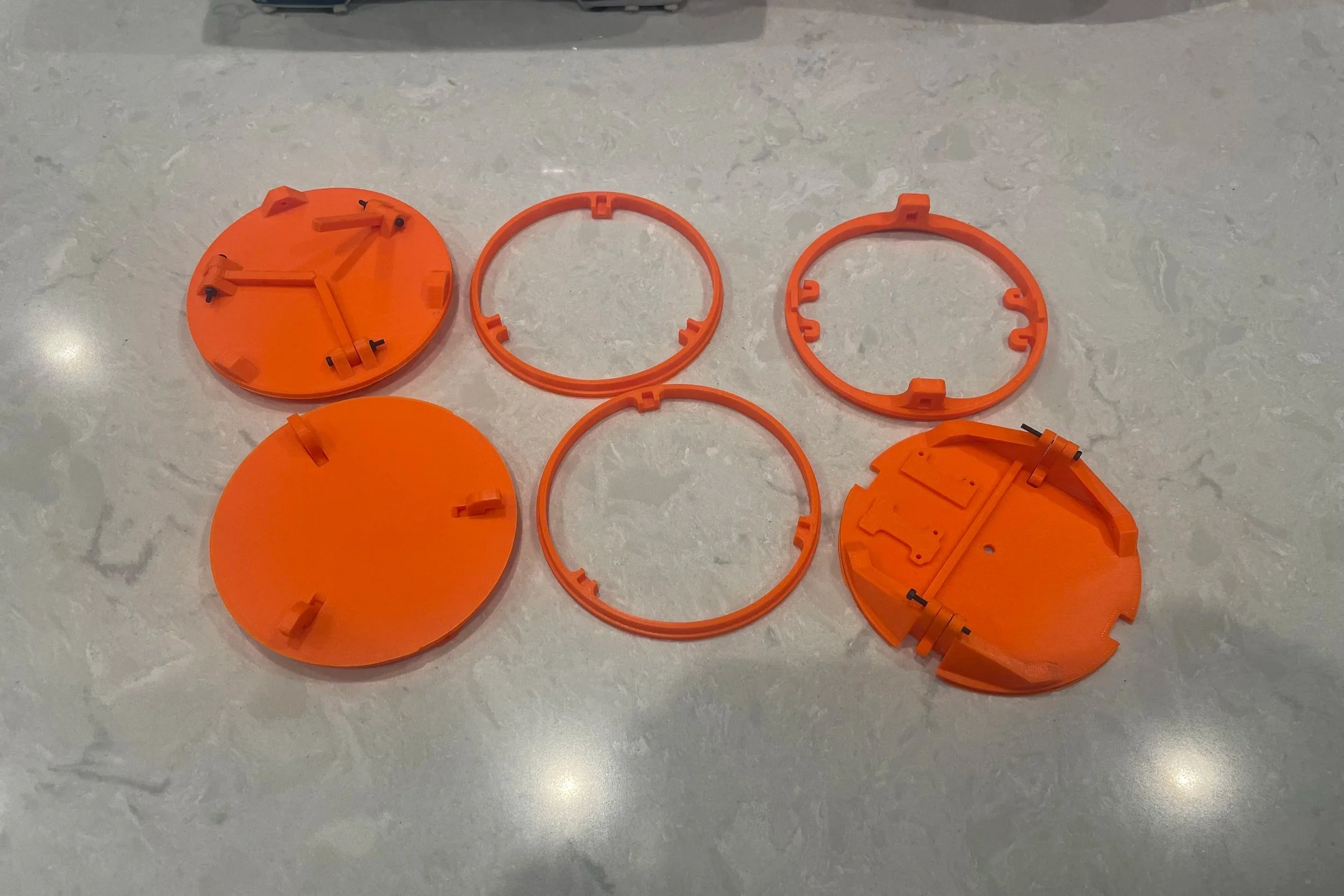
My new prototypes employ a system of levers. These levers remain under tension while the nose cone stays attached, and only when the levers are released from their locking position do they naturally unfold. Previously, the pin system required direct force from the servo to pull the pins and eject the chute. With these new levers, I can easily implement more forceful ejection springs without risk of mechanical failure.
I plan to add a barometer to my circuit components and remove my AltimeterOne external altimeter. With a barometer, an accelerometer, and a gyroscope, I can employ a Kalman filter. This is a mathematical algorithm that synthesizes each noisy sensor output into an accurate estimate of position and orientation. This will improve altitude and apogee detection, since I will no longer need to rely solely on the pitching motion of the rocket. It will also allow me to measure the rocket’s complete trajectory through the air, from liftoff to landing. I can then compare this to the predicted trajectory produced by my computational models to assess their accuracy.
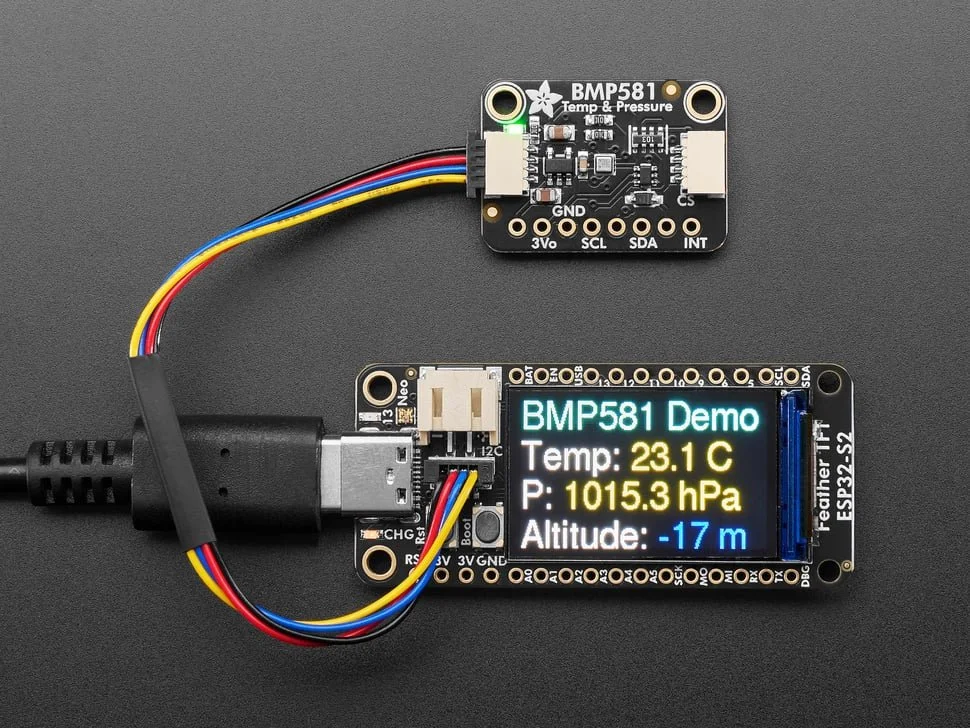
Credit: Adafruit