Other Projects

Virta Ventures
Outside my major engineering projects, I have also worked for Virta Ventures since the summer of 2025, researching portfolio companies in clean energy, power-grid infrastructure, sustainable mining, and recycling technologies, as well as solutions to the ever-present AI infrastructure challenge. I work directly with Managing Partner Russell Sprole to support Virta’s investment strategy. My most substantial report documented innovations in power-grid technologies to support the demands of AI data centers. These key innovations include solid-state transformers, dynamic line rating, and superconducting transmission lines.
Materials Engineering Course
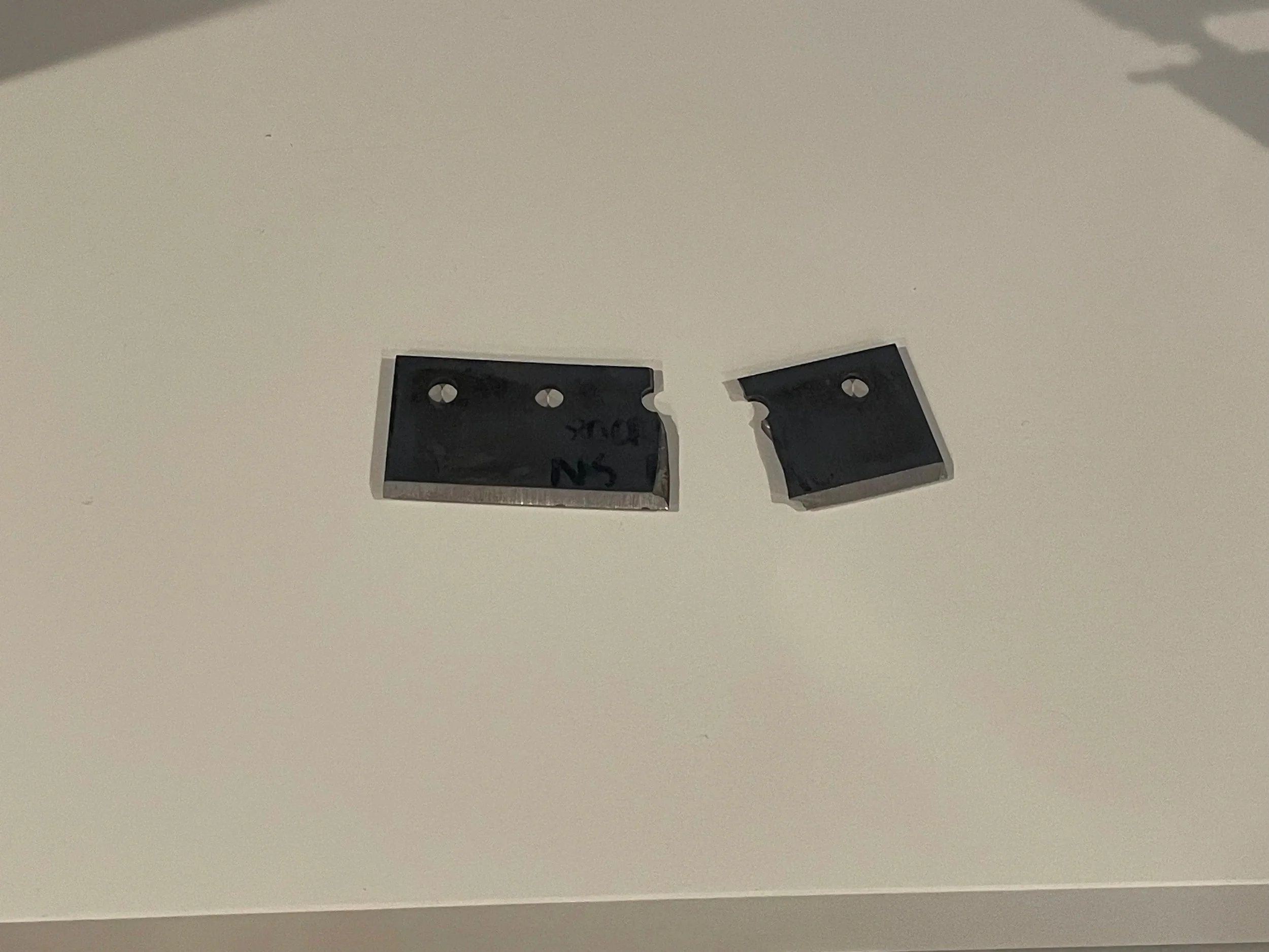
In my materials engineering class, I learned to heat-treat a steel cutting blade to withstand a radius-edge impact test, an edge-on press test, and a bend test. Of all the steel options (1084, 1095, 5160, 80CrV2, and CPM S30V), I selected 80CrV2. It offers a good balance of toughness and edge retention compared with 1084, 1095, and 5160, and it is forgiving to heat-treat, unlike CPM S30V. The “V” in 80CrV2 means that there is vanadium present in the steel alloy, which suppresses grain growth in steel during hardening. This creates a larger, more comfortable zone for heat treatment without risking an extreme drop in toughness from austenitizing at an excessive temperature.
After some research, I settled on the following heat-treatment plan to target a Rockwell hardness of 61 HRC and a toughness of about 30 ft-lb. First, heat to 650 °C at full furnace rate. Second, raise to 830 °C at half rate. Third, austenitize at 830 °C for 12 minutes. Fourth, quench in canola oil, edge first, to reduce warping. Fifth, run two temper cycles for 1 hour each at 205 °C in a toaster oven before slow-cooling to room temperature. Sixth, sharpen the blade to the desired edge geometry.
During testing, my blade outperformed the other high-carbon steels in edge retention and trailed the stainless CPM S30V blade slightly, with a larger chip in my blade from the impact test and press test. My cutting blade yielded slightly in the bend test while still providing immense resistance before snapping, whereas the stainless blade snapped quickly.
Applied Engineering Coursework
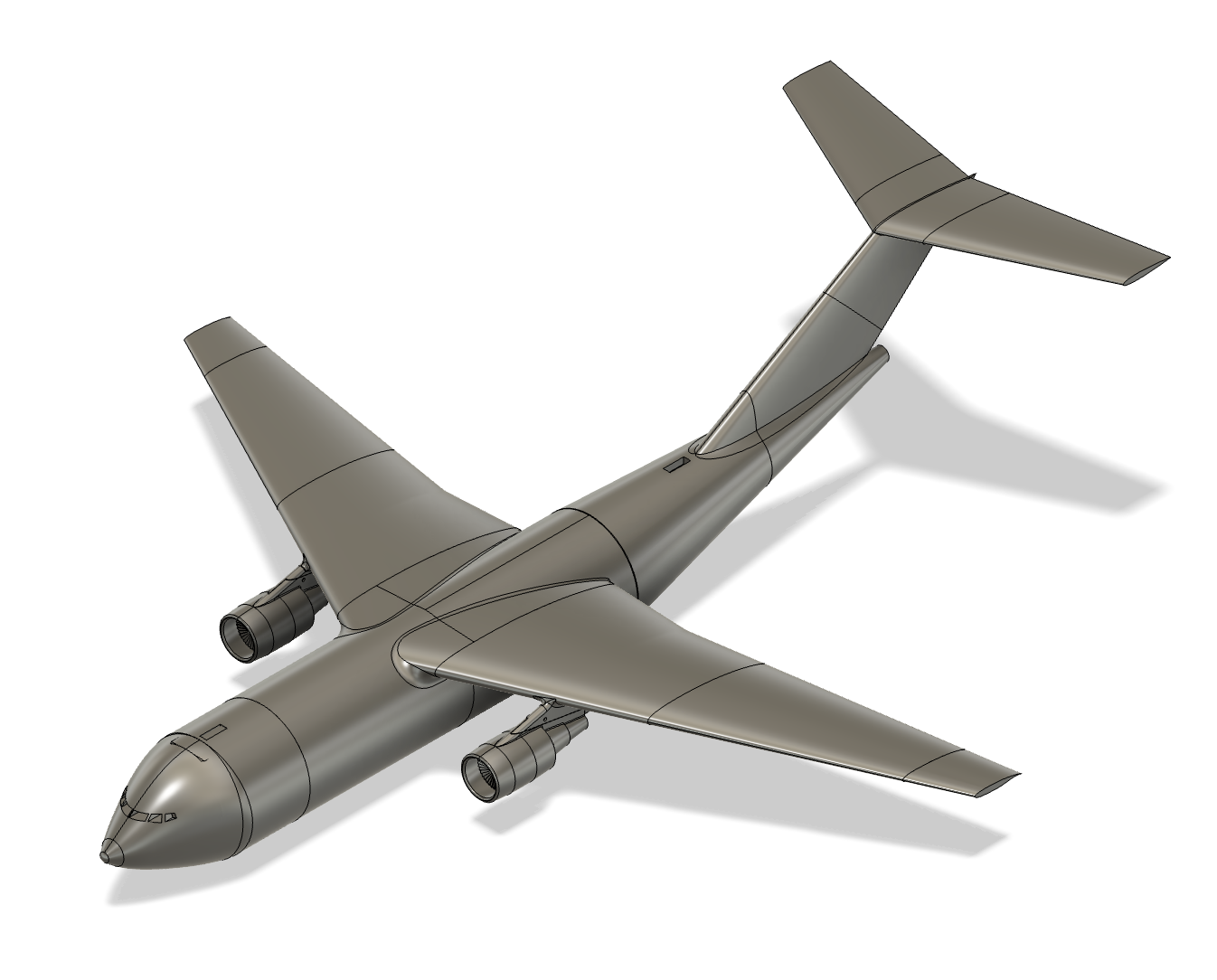
In my Applied Engineering: Aircraft course, the entire class was tasked with collaboratively designing a dual-drop-capable firefighting tanker aircraft with a drop speed of 160 knots (kt), a ferry range of 3,000 nautical miles (nmi), a cruising speed of 500 kt, and a capacity of 90,000 lb of water or fire retardant, among other performance requirements specified in a request for proposal (RFP). I read and employed methods from DARcorporation’s set of reference books, titled Airplane Design I–VIII, which are used throughout the aerospace industry in the design and construction of new aircraft. As the leader of the mass and stability subteam, I derived the wing loading, wingspan, thrust, maximum takeoff weight, stall speed, and other performance parameters, as well as optimal fuel volume to meet ferry range requirements. This information was critical for all other subteams and laid the groundwork for our aircraft design. I also designed the 4-foot-wingspan model that hangs from the school ceiling.
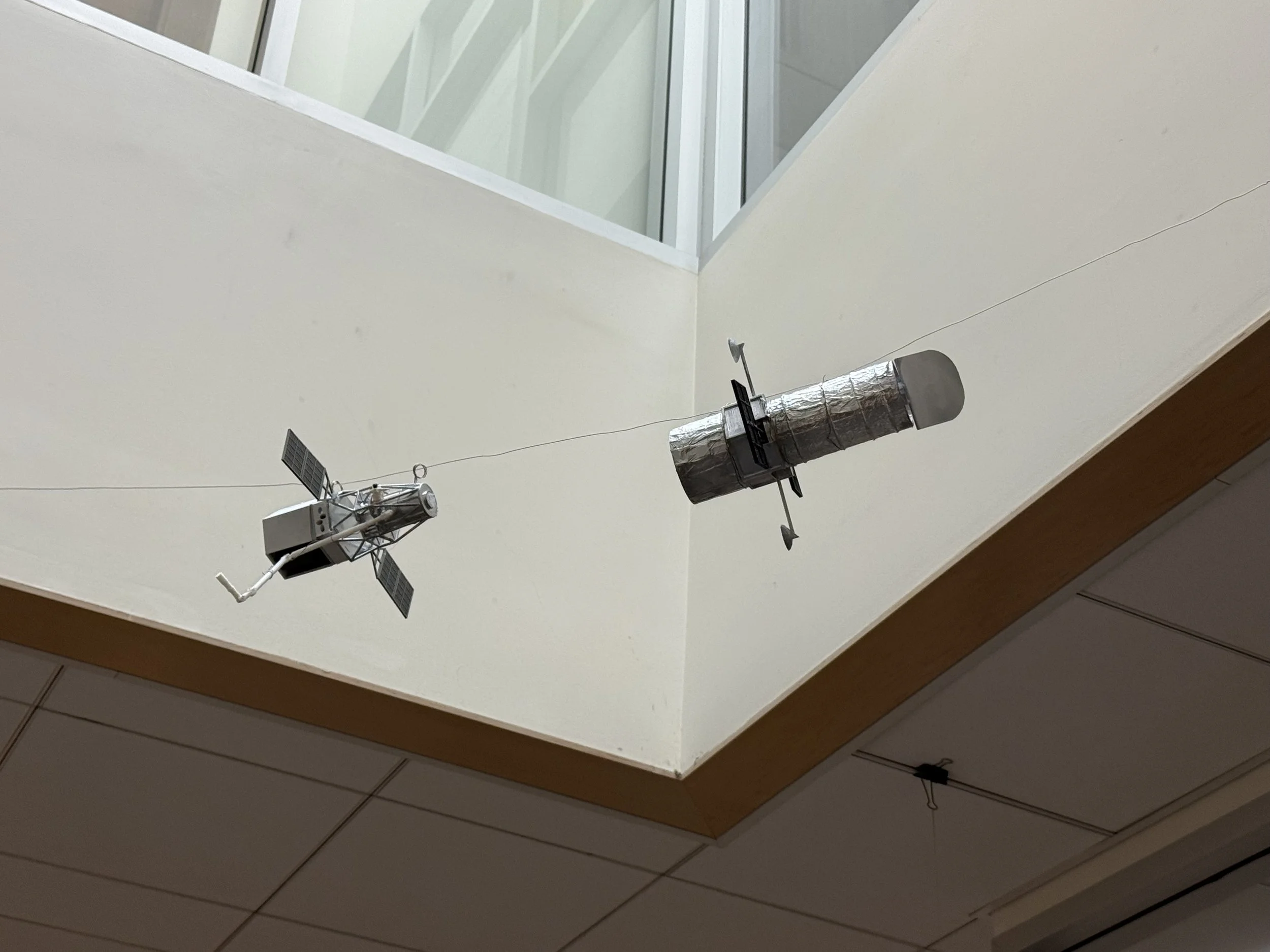
For an Applied Engineering: Spacecraft course, I helped propose a potential mission to extend Hubble’s operational life. The mission consisted of a service module, launched by a Falcon 9, that would dock with Hubble. Then, astronauts who were prepared for extravehicular activity (EVA) servicing operations would arrive in a Dragon capsule. Once the capsule docked with the service module, the astronauts would replace Hubble’s batteries and solar cells, among other components. I sized the Attitude Determination and Control System (ADCS) by analyzing maneuvering methods, such as reaction wheels, control moment gyros, and cold-gas thrusters. I compared these methods against the needs of our spacecraft, using an estimate of its moment of inertia computed with the parallel-axis theorem.