Rocket V3
After the faulty second design, I developed a third version of the rocket. In this version, the nose cone separated vertically off the rocket instead of horizontally. This design ensured the parachute ejected more reliably.
By vacuum-forming, I made the nose cone lighter without sacrificing structural stability. In the CAD image to the right, all clear plastic pieces are vacuum-formed and all orange pieces are 3D-printed.
I made other changes to the electronics bay. Previously, all components were glued in place. In this version, those components were bolted down, so assembly, disassembly, and modification were much easier.
In previous designs, all primary deployment circuit components were placed on the floor of the electronics bay. For this new design, I placed all deployment components below the ceiling of the electronics bay. This was far more space-efficient and enabled me to include a designated compartment for the altimeter in the electronics bay. This altimeter placement was more secure, kept the altimeter from tangling in the parachute, and made it easier to prime the altimeter before launch.
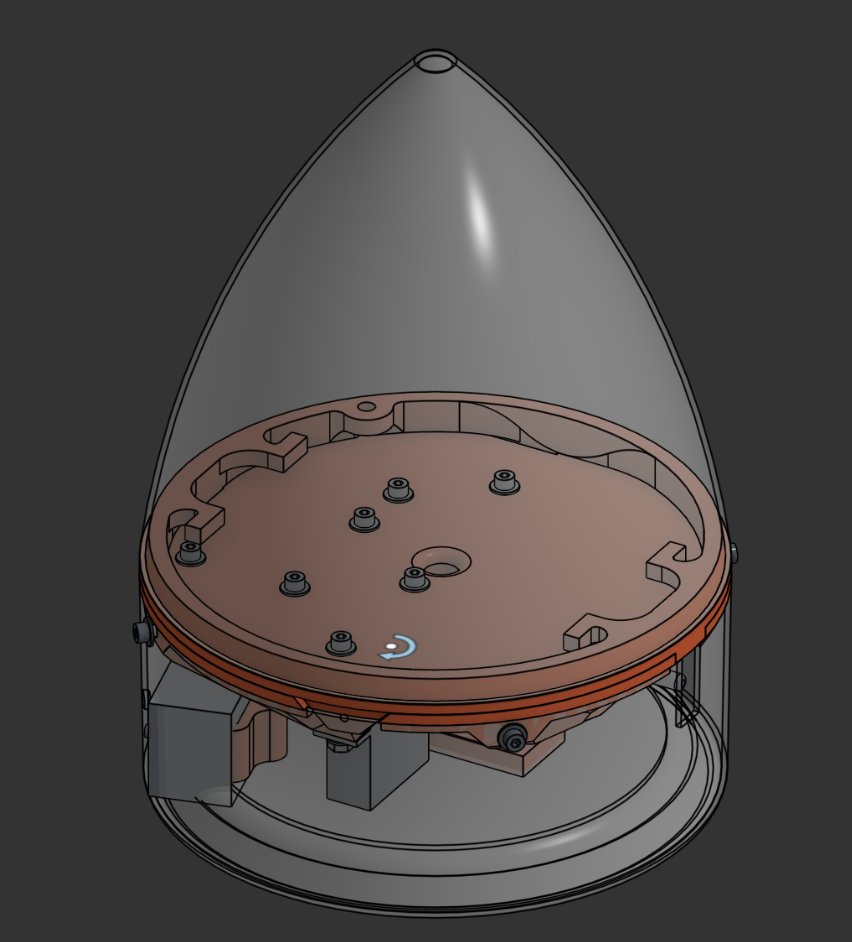
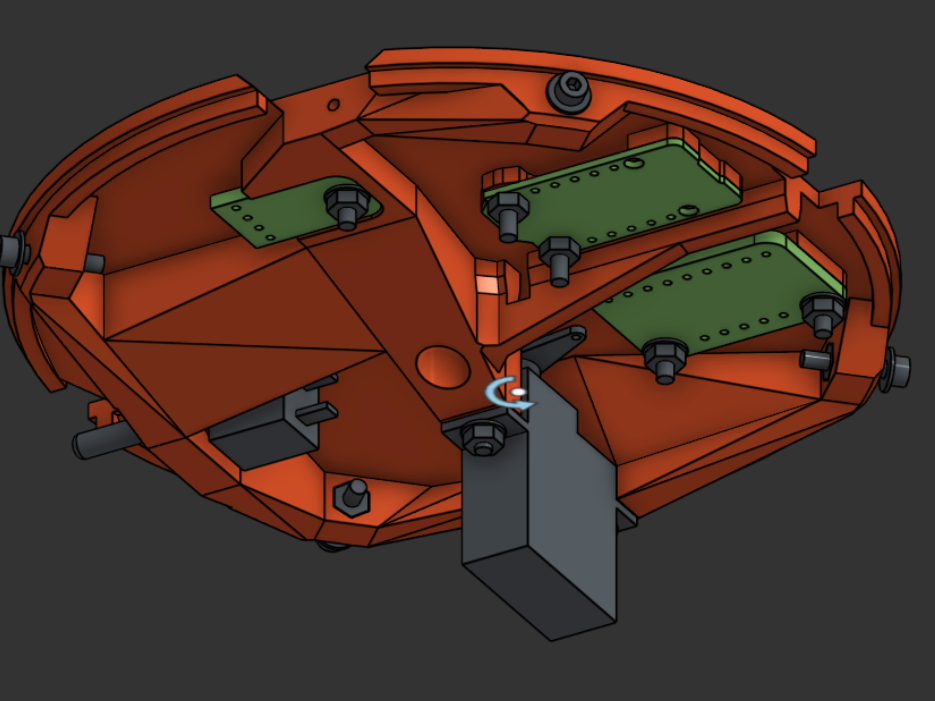
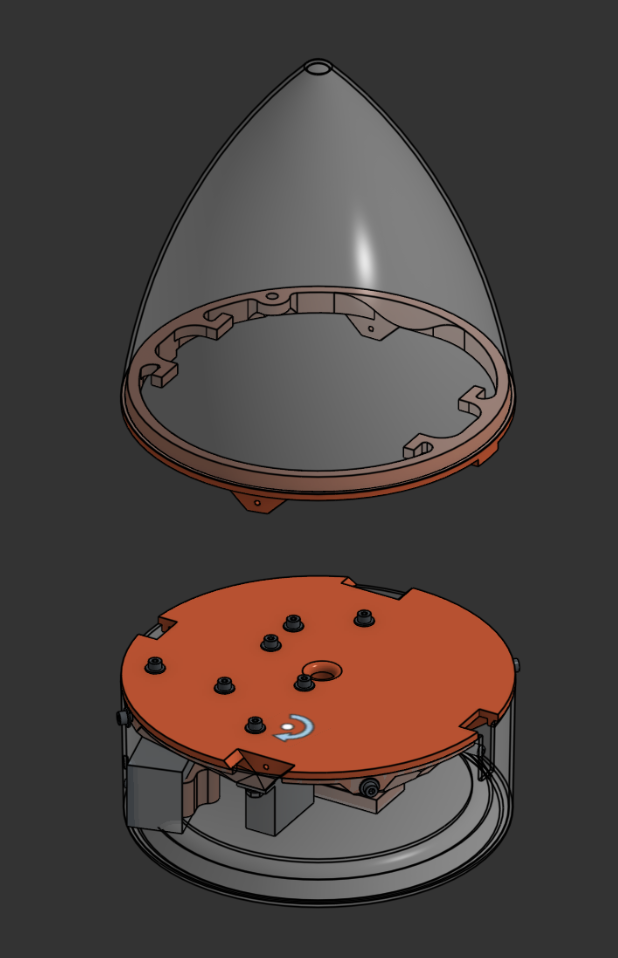
The release mechanism in this version was a slot-pin design. A servo rotated to retract two metal pins from two slots, separating the nose cone from the base plate. The video to the left shows the pins engaging with and then disengaging from the locking mechanism.
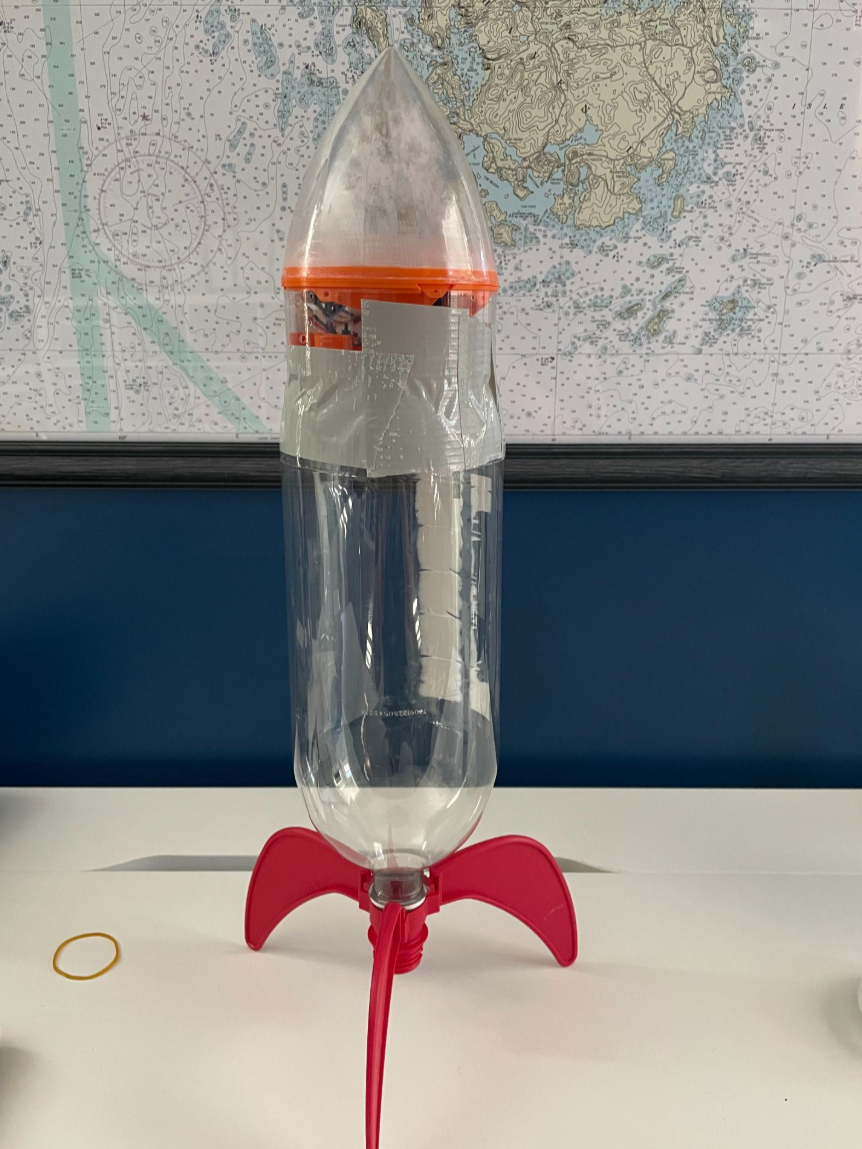
The entire system, pictured to the right, weighed 197 grams without the altimeter. This version was 30 grams lighter than the second version and 120 grams lighter than the first version.
As previously mentioned, I used vacuum-formed parts to reduce rocket weight.
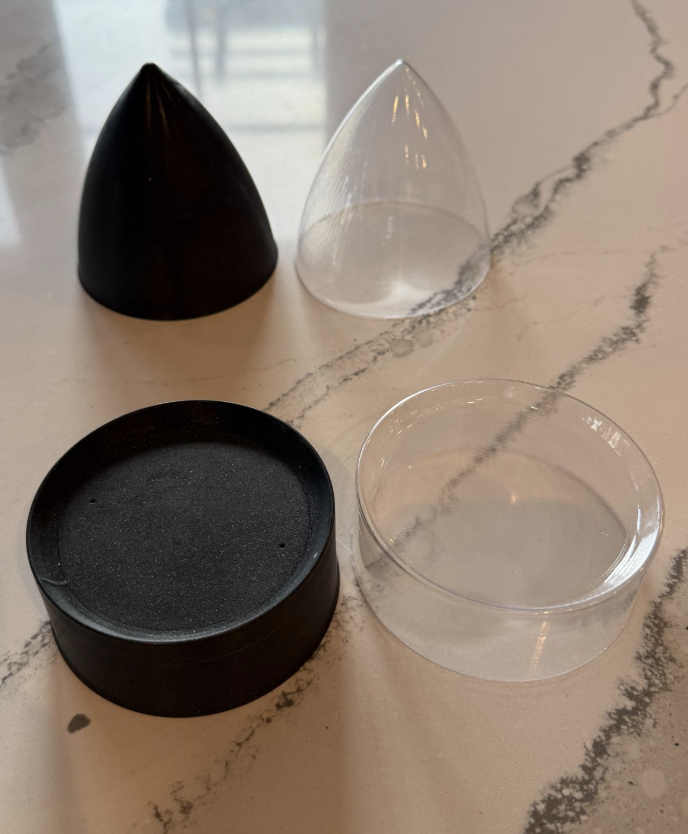
The primary challenge with vacuum-formed parts was perfecting my manufacturing workflow. To the far left is a video of my school’s vacuum former. It produces high-quality parts but requires careful mold design and post-processing techniques to get precision vacuum-formed parts quickly. To the left is a photo of the vacuum-former molds, next to the parts they produce.
Vacuum-formed plastic proved to be substantially more durable than 3D-printed materials. My previous 3D-printed cones cracked when I dropped them on the ground. Now, vacuum-formed cones can survive a crash from more than 200 feet. They also proved to be significantly lighter. A vacuum-formed nose cone shell weighs 13 grams, whereas a similar 3D-printed nose cone shell weighs 25 grams.
For this third version, I also redesigned the parachute ejection mechanism.
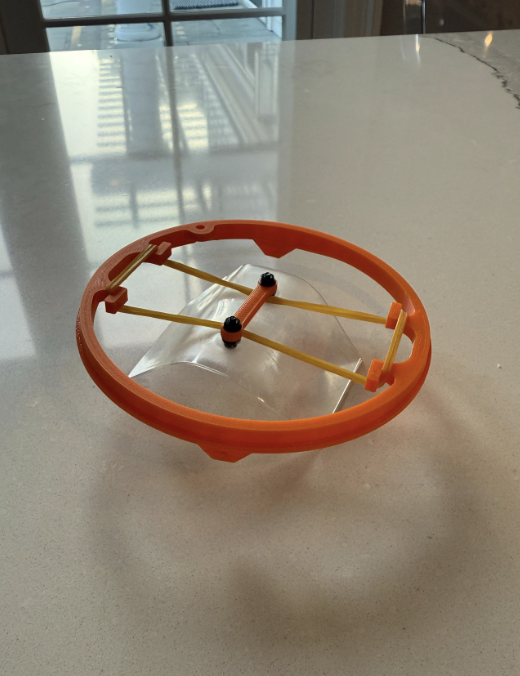
It took two different iterations before I developed a final design. In this final version, four tensioned rubber bands ejected the parachute. This system proved lighter, easier to assemble, and more space-efficient than previous Version 3 prototypes. To finalize it, I fabricated a plastic cup to help contain the parachute and prevent it from tangling with the rubber bands. However, rubber bands held under tension slowly stretch and lose their pull. To prevent this phenomenon, known as “creep,” from leading to mid-flight failure, I plan to replace these rubber bands with metal springs in my fourth iteration.
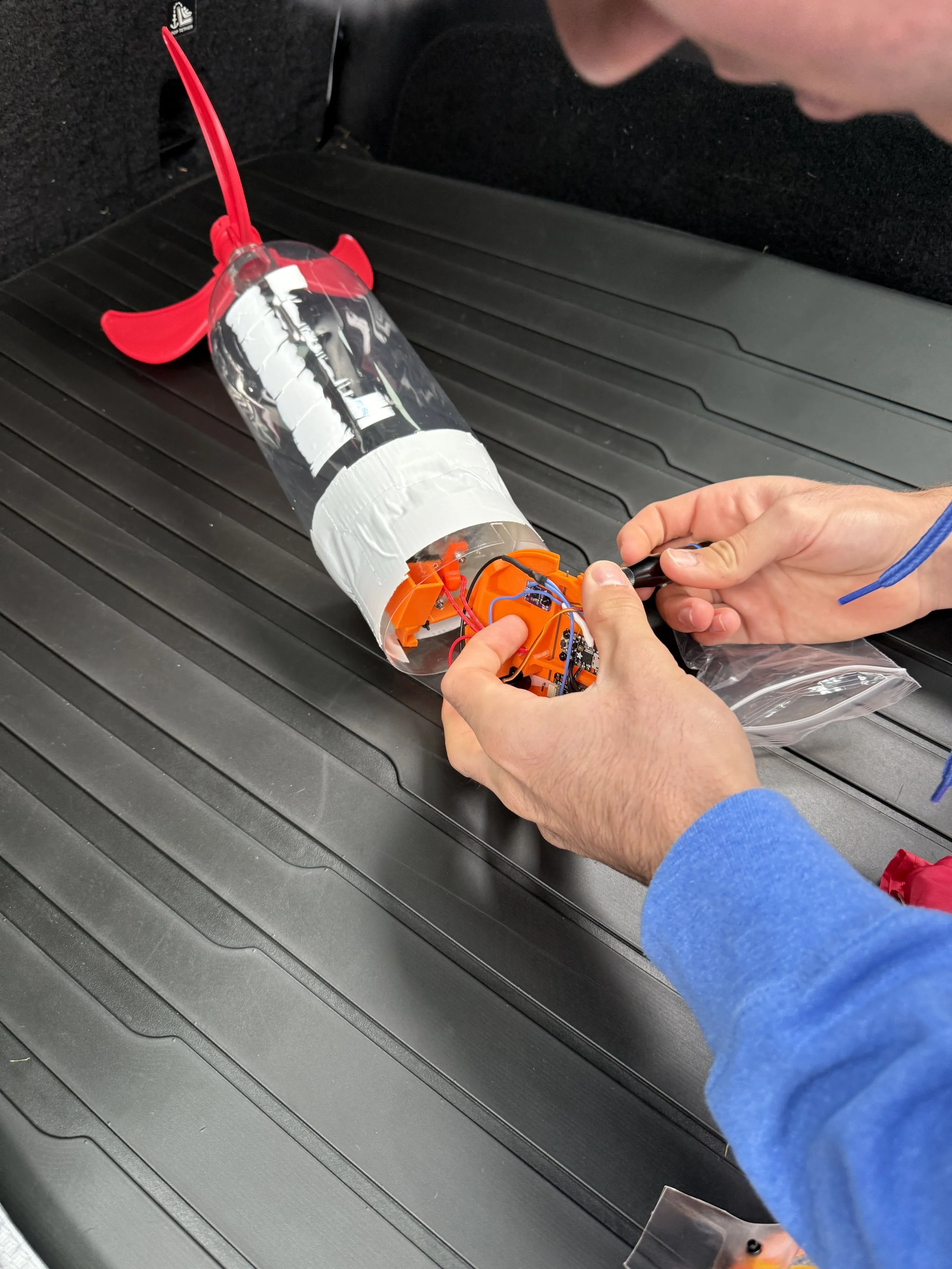
These are initial tests from the day before launch. These tests help me verify servo function, resolve code issues, and identify any mechanical malfunctions before flight.
With this new design, I also updated the orientation-tracking software. In my first iteration, I integrated angular velocity data about the x- and y-axes and then deployed the parachute as soon as the rocket pitched past 90°. If the rocket pitched solely about the x-axis or solely about the y-axis, this system was effective. However, combinations of rotations could yield incorrect orientation estimates, which would prevent the chute from deploying. For example, if the rocket pitched 45° about the x-axis, rotated 180° about the new z-axis, and then rotated -45° about the new x-axis, my old algorithm would predict that the rocket was pointing upward, still ascending, and would not deploy the parachute. Yet, in this scenario, the rocket would have pitched 90° and would have crashed.
Therefore, I developed a new orientation-tracking program in this third iteration. I applied the same concept of trapezoidal sums, but I tracked the rocket’s orientation at every moment with a set of three orthonormal orientation vectors.
In my first two launches, the parachute ejected but never fully inflated. Thankfully, the partially inflated chute produced enough drag to slow the rocket and prevent it from breaking on impact. After these failures, I determined that the cord connecting the parachute to the rocket body was too long. Because this rocket only flew to about 200 feet, it did not have enough altitude to fully extend such a long cord.
After shortening the cord, I had three consecutive successful launches, with the highest reaching 212 feet. This was a new personal record at the time.