Rocket V1
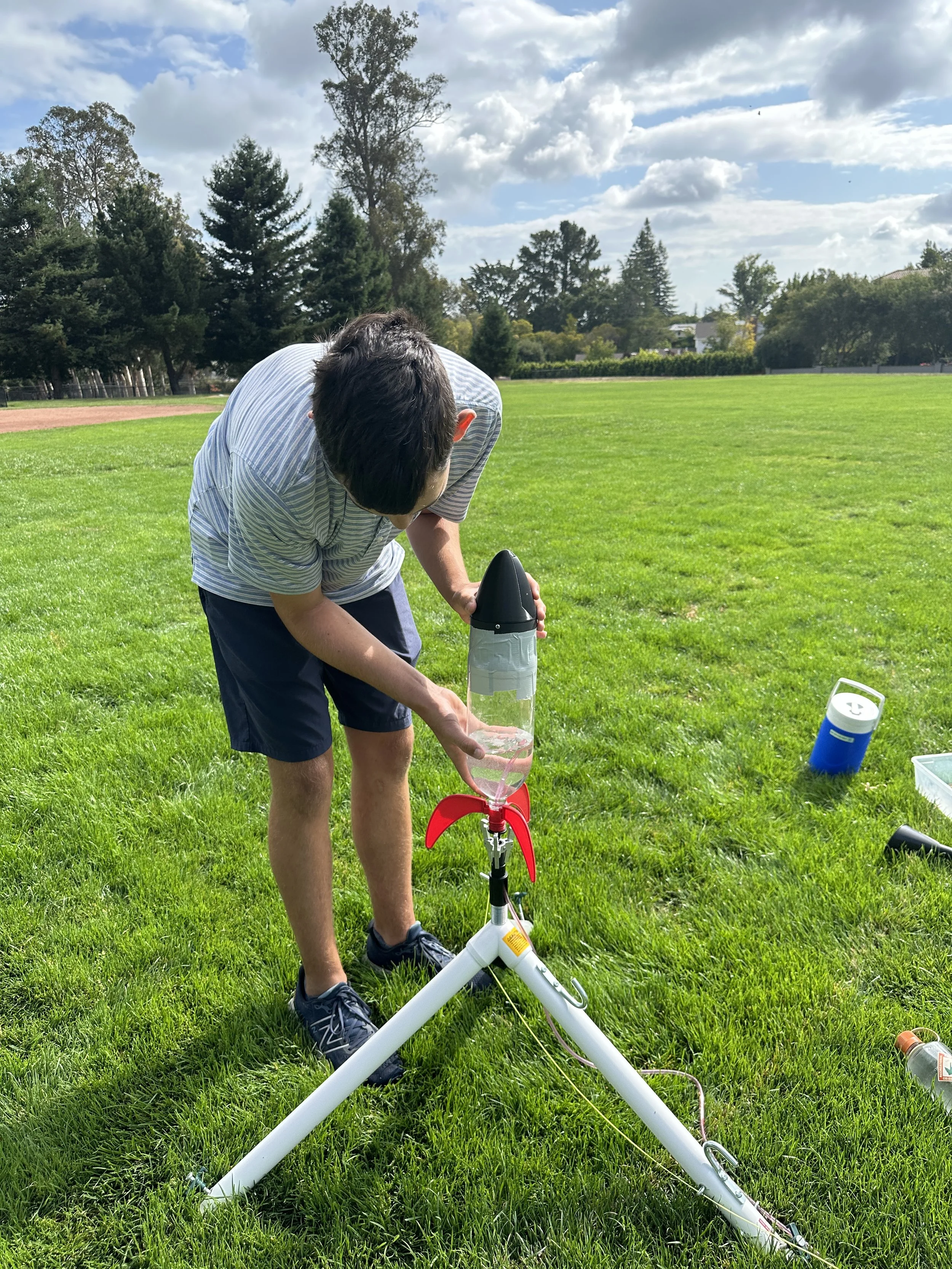
This was the first iteration of my parachute deployment system. It served as a proof of concept for detecting apogee and deploying the parachute automatically.
What makes my approach unique is my use of a gyroscope for apogee detection. Instead of programming a set delay time from launch to deployment, I wanted a method that would be independent of human error, in the event that I forgot to adjust the deployment time despite a higher launch pressure. These mistakes with a basic timer system could lead to project-ending crashes.
To detect apogee and then deploy a parachute, I used an Arduino, a servo, and a gyroscope.
In my system, the gyro sensor returned angular velocity data to the Arduino. However, to deploy the parachute, I needed to know the rocket’s orientation in degrees. Once the rocket pitched or yawed past 90°, I knew that it was starting to descend. To find the orientation, I integrated the angular velocity over time with trapezoidal sums. This system had potential advantages over solutions with barometers, which can have noisy data when they are placed in direct external airflow. However, no solution is perfect, and this integration approach suffered from sensor drift over time.
To reduce noise, I had the gyro take samples only after the strong thrust phase. Furthermore, if gyro outputs were below a certain threshold, then they were not included in the integration. Known as a deadband filter, this simple code adjustment helped reduce numerical drift over time.
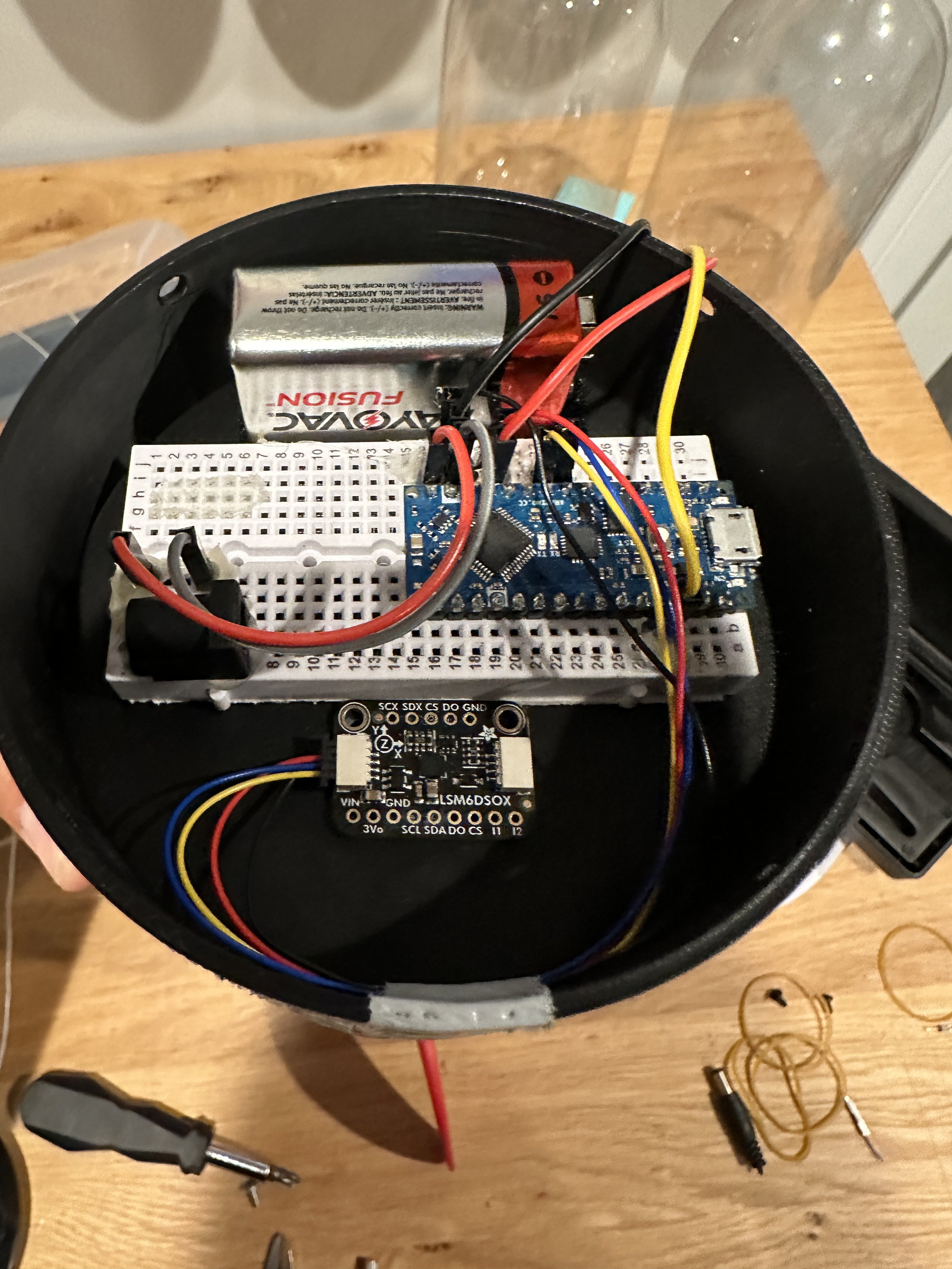
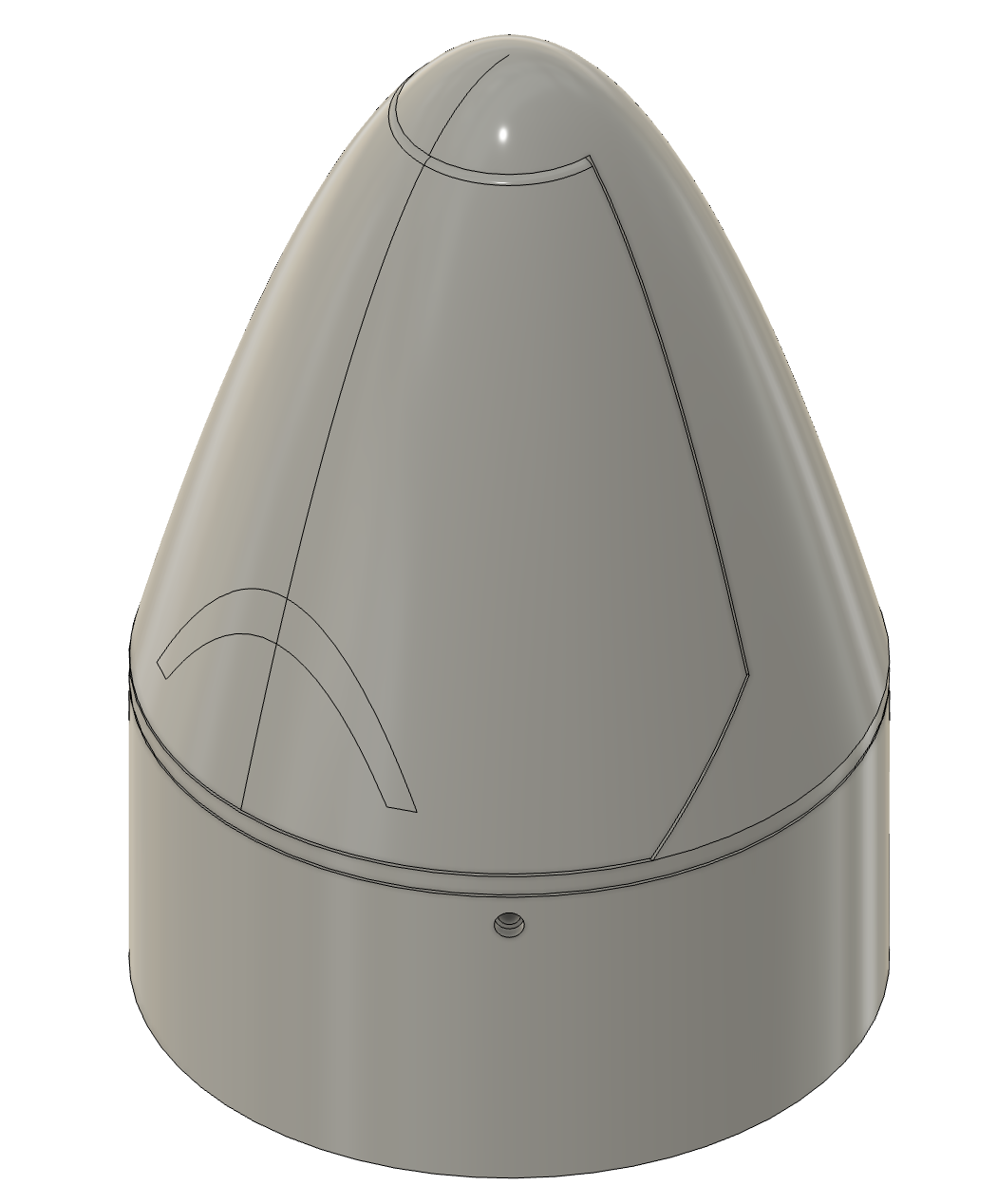
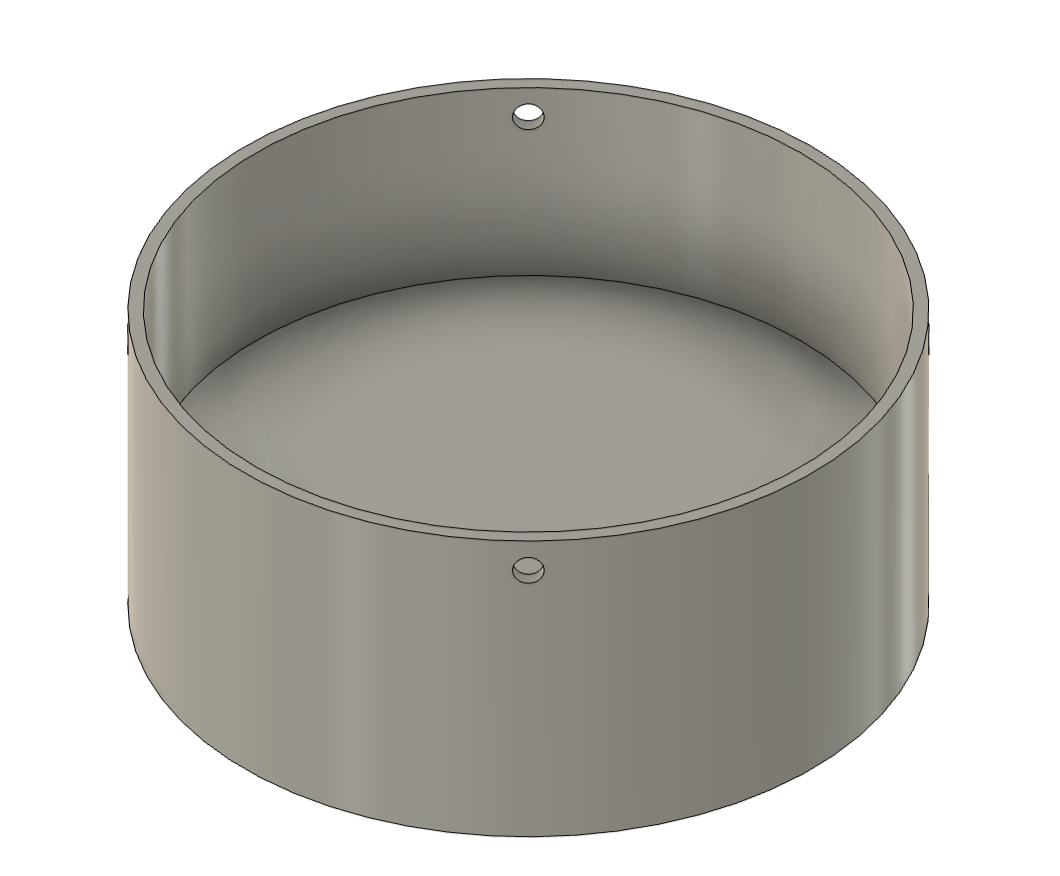
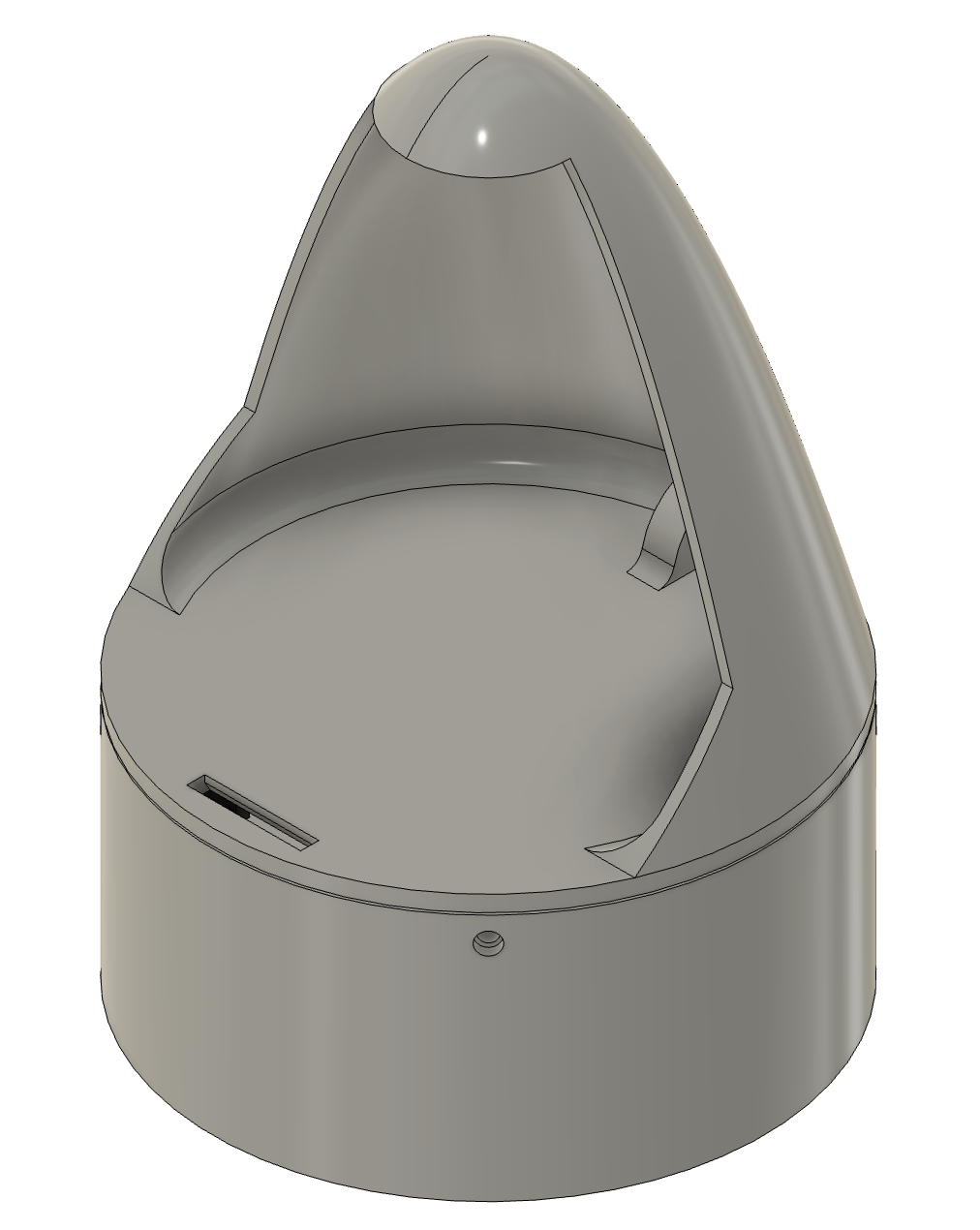
The CAD designs are pictured on the left. In this design, the nose cone consisted of two half-shells. The larger half-shell was bolted to the electronics bay, which was in turn bolted to the rocket fuselage. The parachute was packed into the larger half-shell and connected to the smaller half-shell by a cable. The larger and smaller half-shells were connected to each other by a 9-gram micro servo. When the servo engaged, a plastic spring separated the two half-shells. The smaller half-shell pulled the parachute out of the larger half-shell with a cable while the rocket descended in free fall. This worked consistently until the smaller half-shell failed to detach.
At this point in the design process, I had not optimized for weight. Most parts were thicker than necessary. I hoped that, in the event of a crash, the parachute system would remain intact for future testing. Ultimately, almost all 3D-printed components broke in a crash. This influenced my exploration of vacuum-forming as an alternative manufacturing technique in subsequent nose cone designs.
This is a video of the first launch, and it was successful. I launched the rocket two more times that day, and both were also successful. I never measured peak altitude for this system, but I estimate that it peaked at about 100 feet.
I designed this system to verify that my method of angular velocity integration could reliably detect apogee. As a result, I never gave much consideration to the parachute ejection mechanism. Once the two half-shells separated, I assumed that the smaller half-shell would pull the chute out with a cable. However, during the fourth launch of the system two weeks later, the chute-ejection spring failed to separate the two half-shells. Therefore, the chute did not deploy, and the rocket crashed and broke. This prompted a redesign, with a focus on both optimizing weight and increasing spring-ejection force.