Rocket Launcher
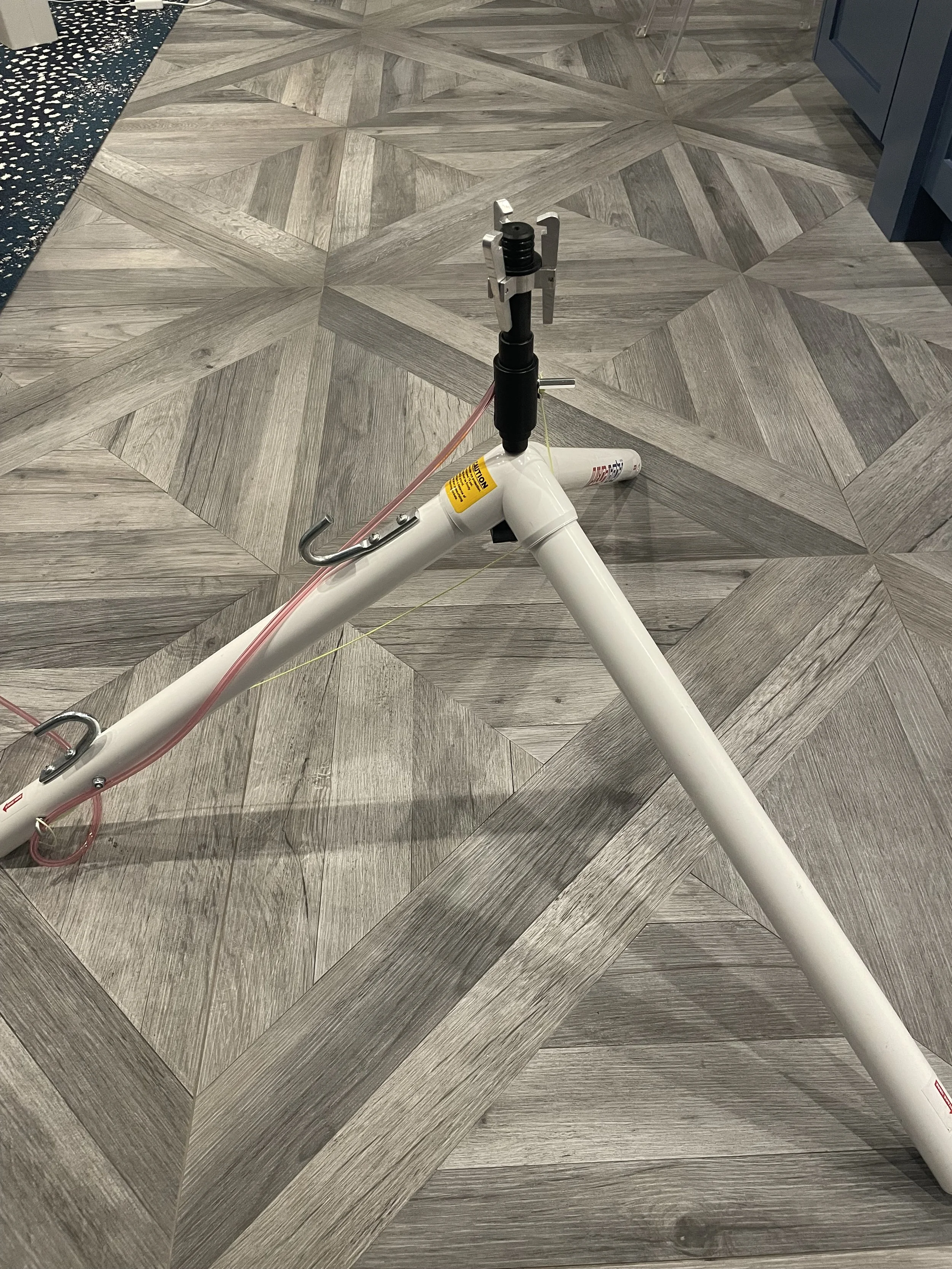
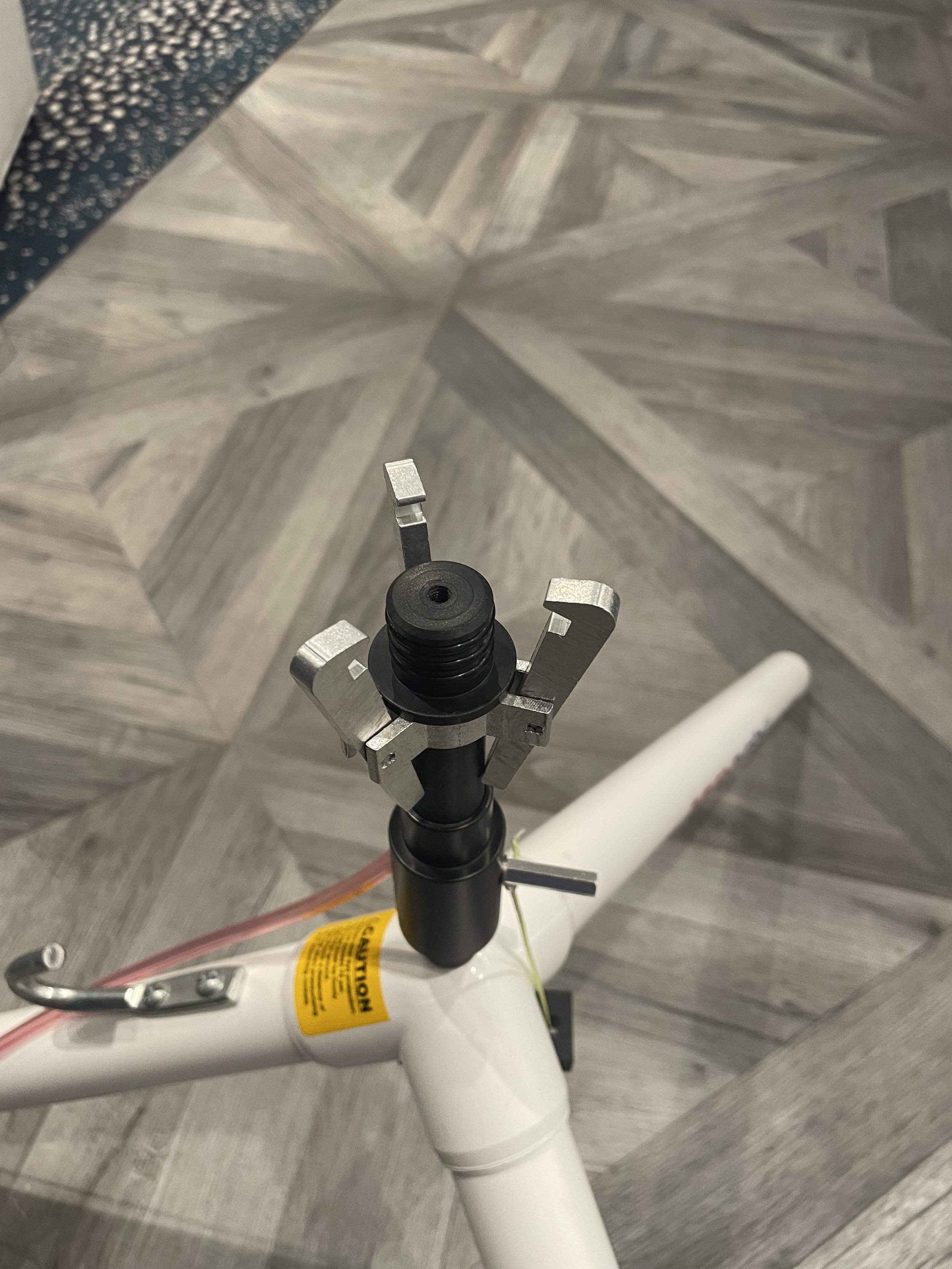
The first launcher I used was the AquaPort II, pictured to the right. I launched Versions 1 and 2 of the rocket on this device and made early launches of Version 3. The AquaPort II is an off-the-shelf launcher for water bottle rockets, with a maximum pressure of about 70 psi. The AquaPort II is a simple device constructed mostly of plastic parts. To launch the rocket, the user pulls on a thin cable that releases a sleeve that opens three clamps attached to the nozzle of the fuselage, thereby releasing the rocket. After finishing my design of Version 3 of the parachute deployment system, which enabled the rocket to consistently launch and land without damage, I decided to push for higher-altitude launches. Given the thin plastic tubing, plastic seals, and the lack of metal-to-metal pipe fittings of the AquaPort II, I determined it would be best to design my own launcher that could withstand higher pressures and enable high-altitude launches.
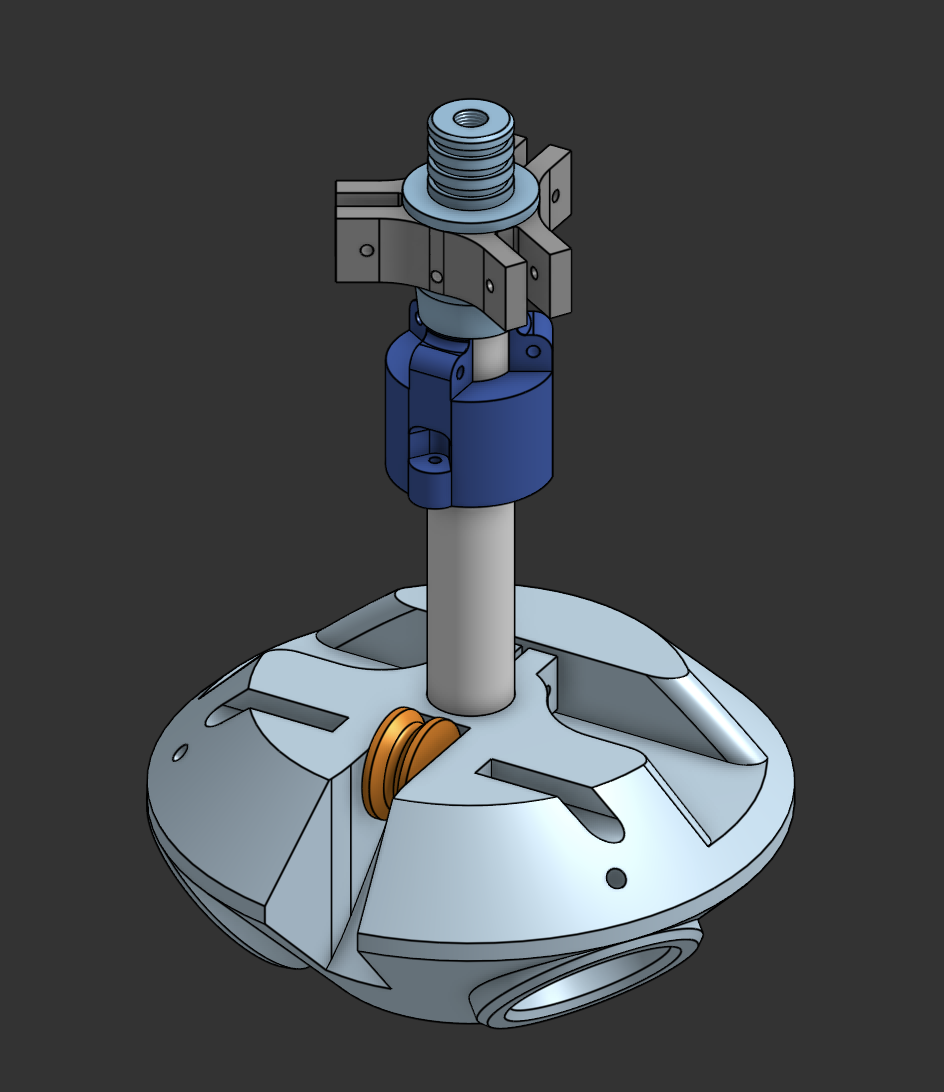
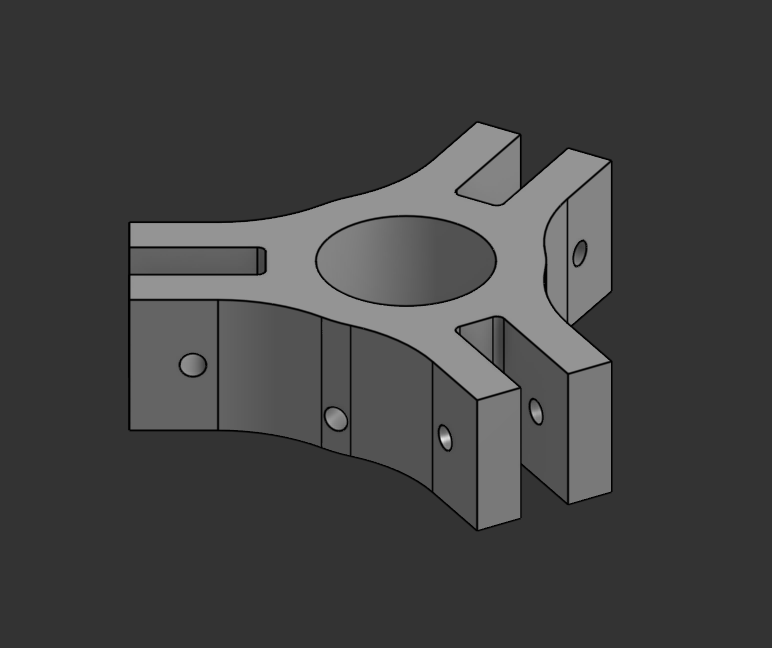
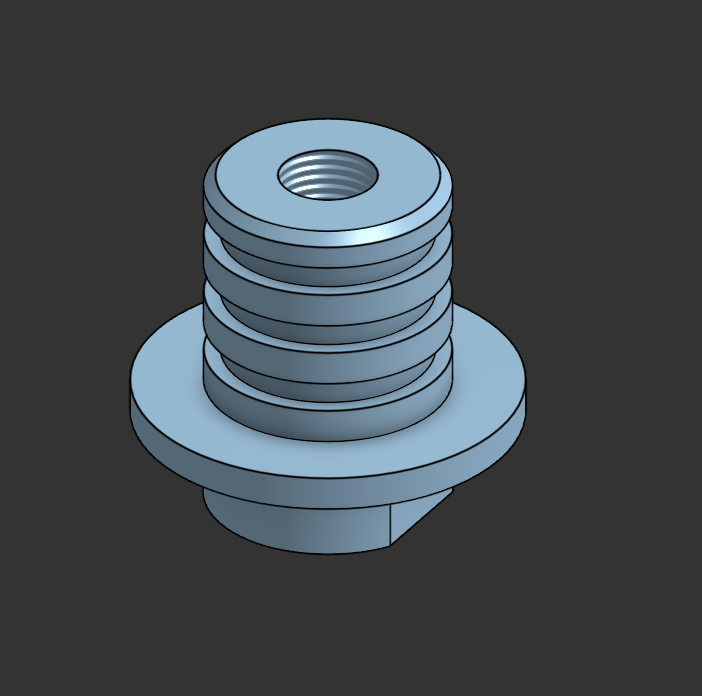
The first step of this process was the most critical: the design of the launch clamps and rocket seal. I researched O-ring seal types and designed an aluminum plug with triple O-ring redundancy so that the rocket launcher could withstand high pressures on the launch pad.
I also redesigned the clamp mounts and the clamps themselves to make them out of stronger aluminum alloys or thicker material altogether. In general, I designed for overkill and ran a finite element analysis in Fusion 360 to ensure that my launcher could withstand extreme pressures of up to 500 psi. I also added a cable-pulley mechanism similar to that of the AquaPort II to initiate the launch and designed a launcher base with removable legs for easy transportation from my home to the launch site.
When it came time to pressure-test the launcher, I discovered a flaw in my launch clamp design. Each of the three launch clamps contacted only a small region of the nozzle of the fuselage. This resulted in three concentrated points of stress on the rocket nozzle. Under high pressures, the rocket nozzle would fracture at these three points. I worried that, under extreme pressures, the rocket could break free of the launcher and fly uncontrollably. As a result, I redesigned the three clamps so that they distributed the load evenly across the entire surface area of the nozzle, which eliminated the stress-concentration fractures in all subsequent pressure tests.
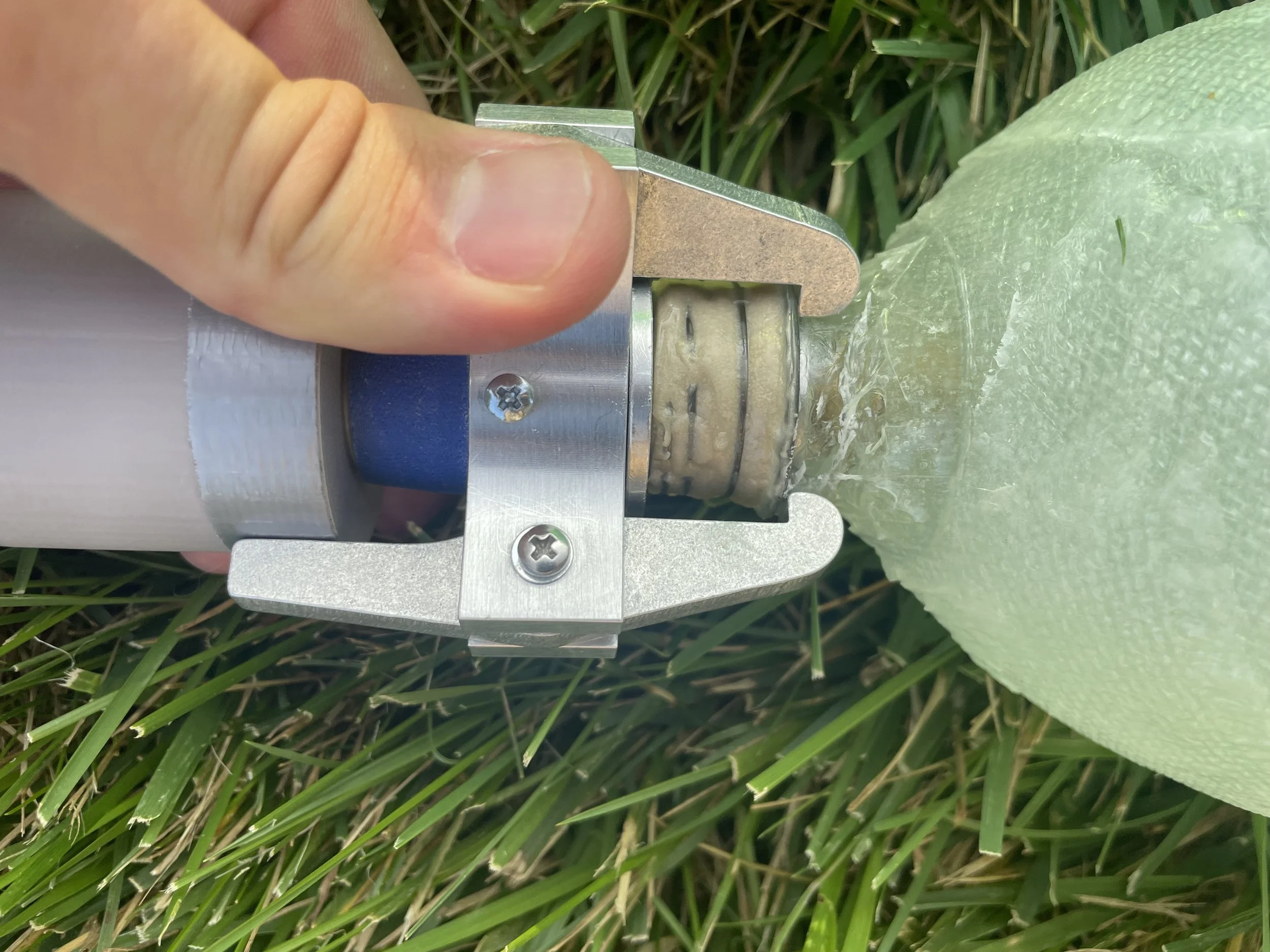
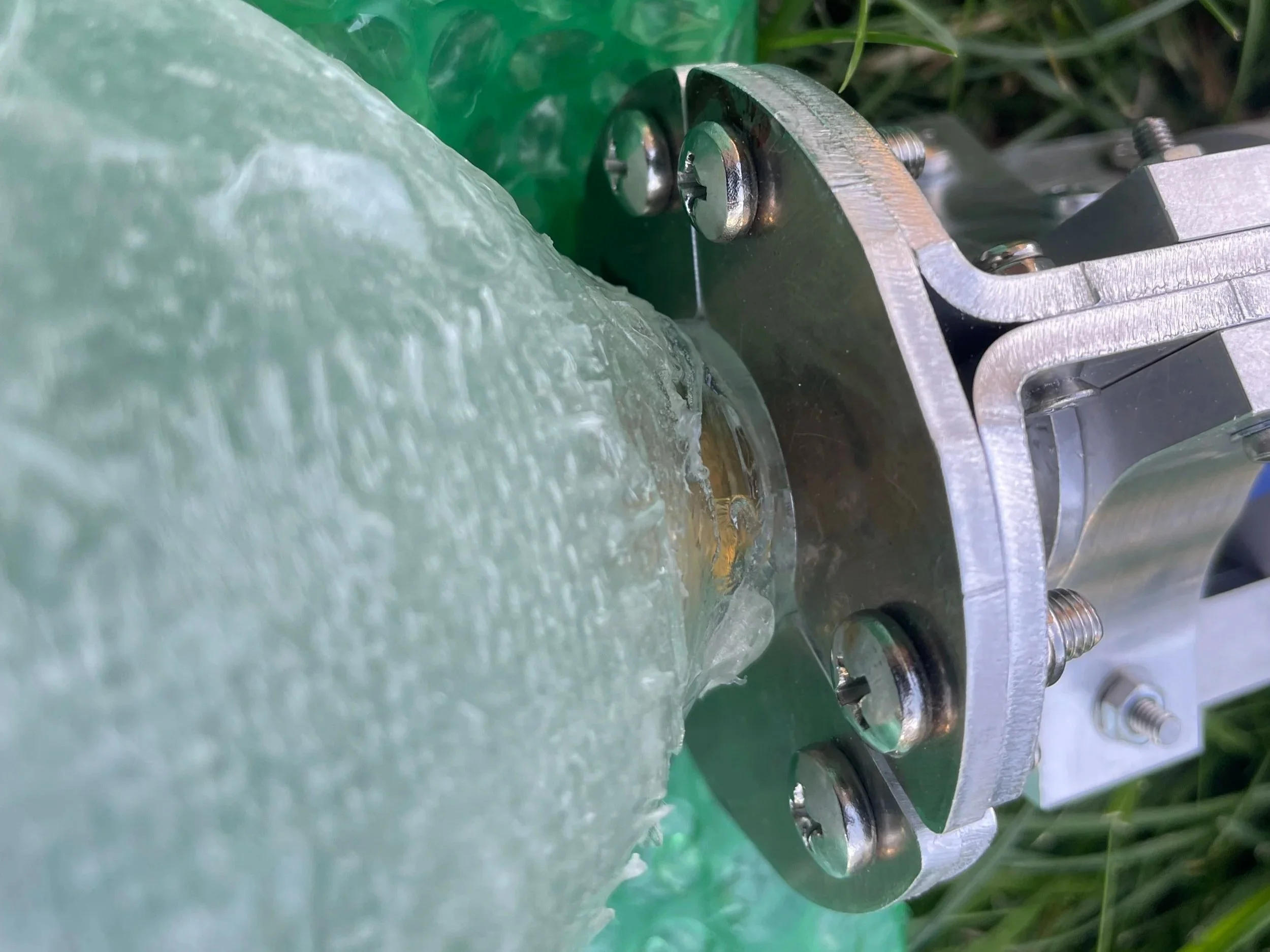
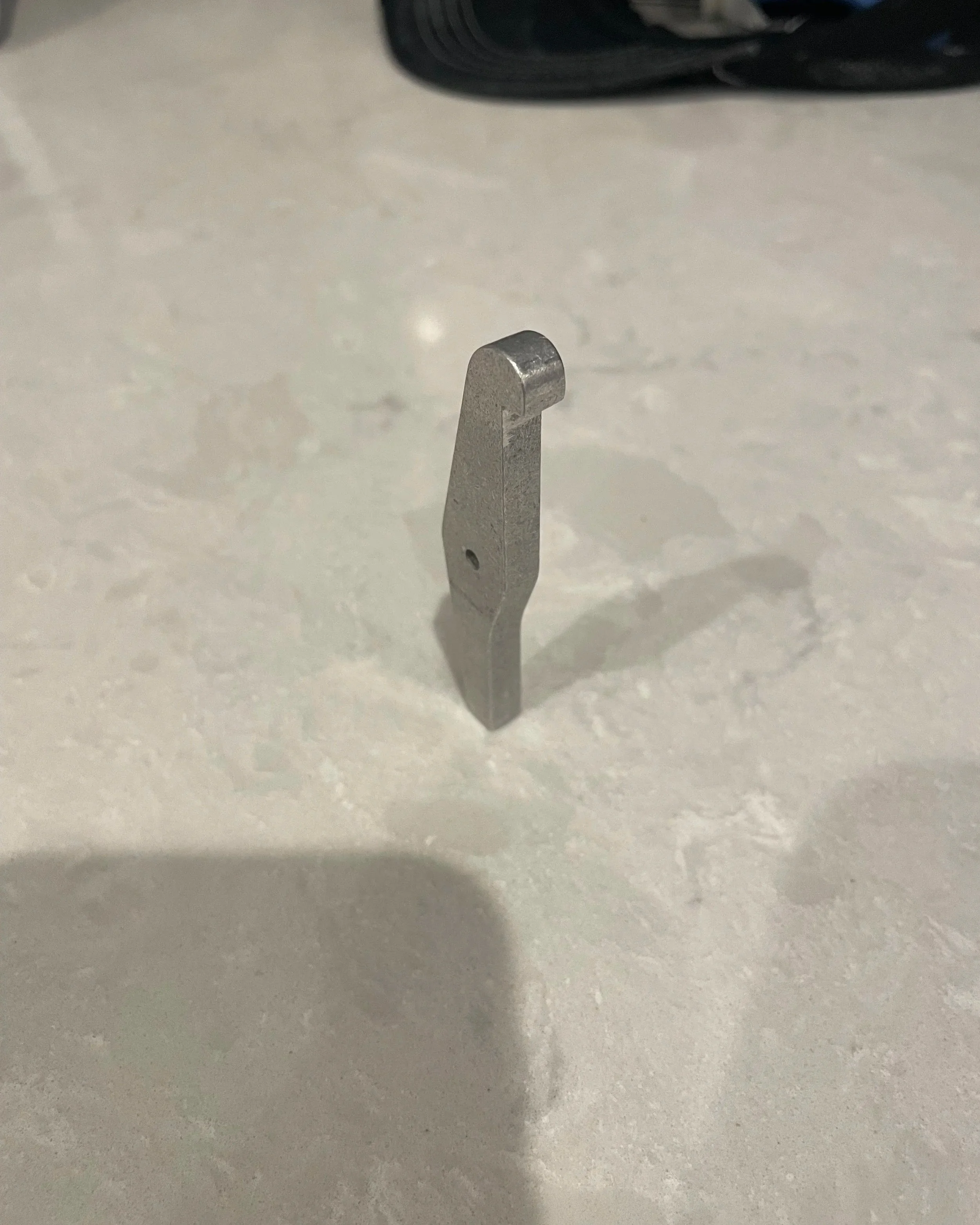
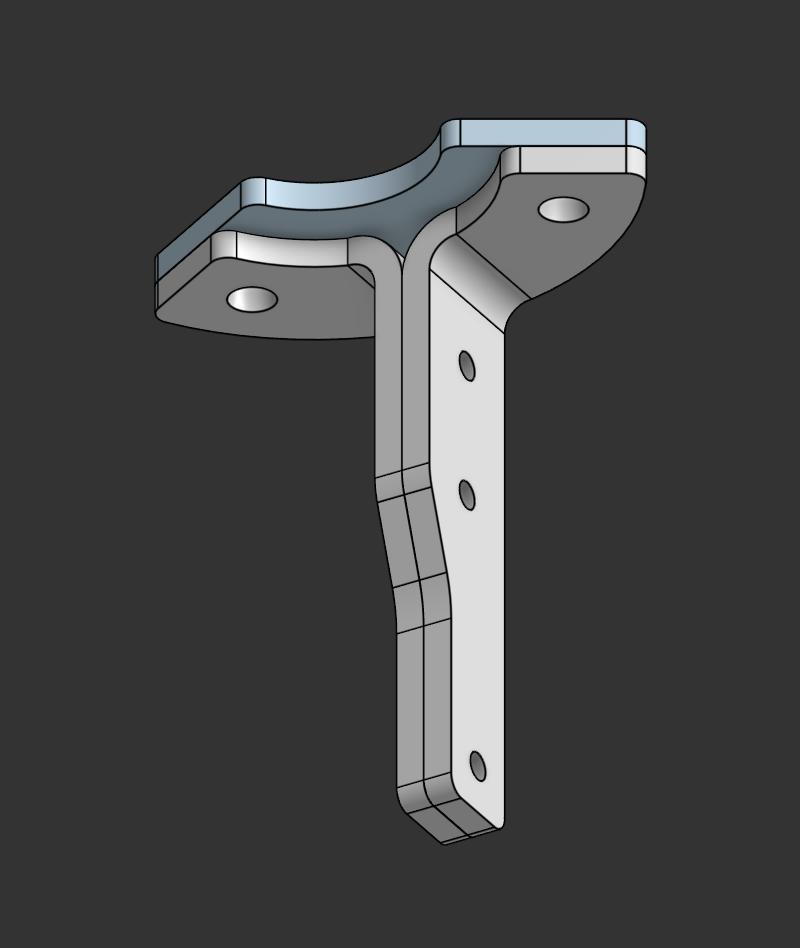
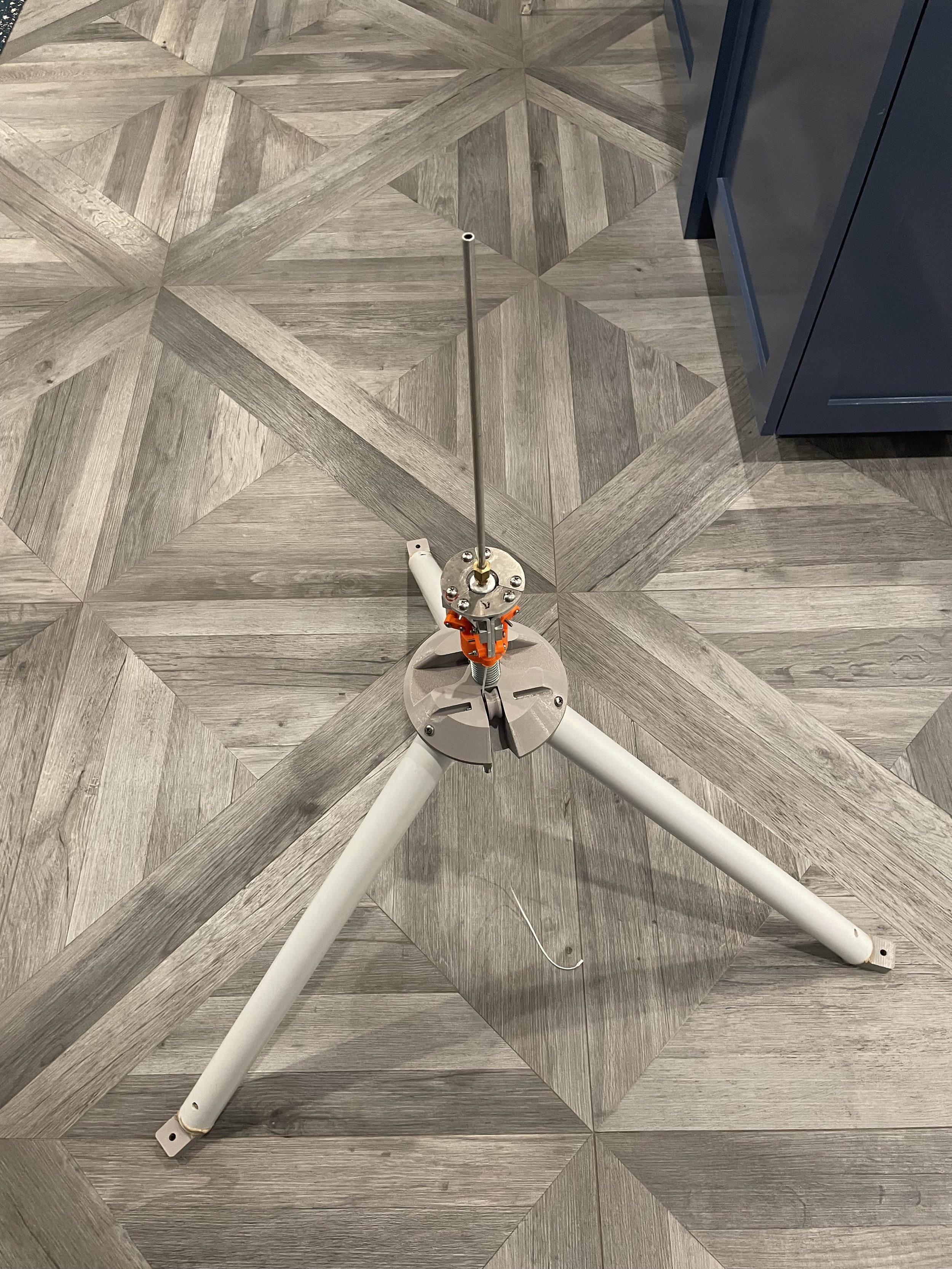
After several launches with this apparatus, I made a few more modifications to improve performance. First, I added proper footpads so that my launch stakes could penetrate deeper into the ground and prevent the launcher from tipping under launch forces.
Second, I removed the simple sleeve mechanism and replaced it with an over-center linkage attached to each launch clamp. Previously, the launch clamps were pushed out of the way by the force of the rocket at liftoff. However, since they were not actively retracted, there were flights (as shown on the left) in which a subset of the clamps released late. This nudged the rocket off course. With these new linkages, I now actively retract the clamps when I pull on the cable, which promotes a clean trajectory off the launch pad.