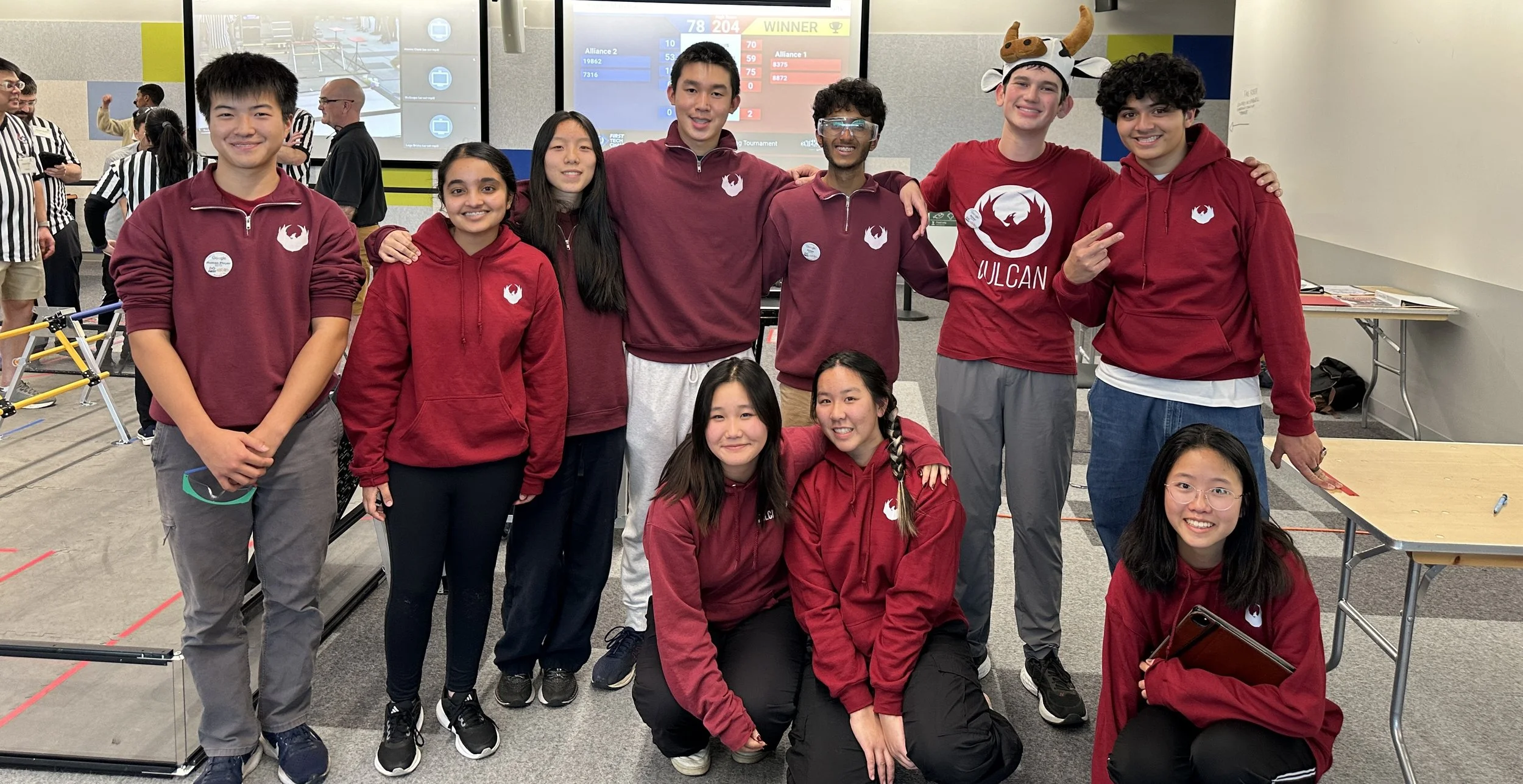
Vulcan Robotics
August 2023–March 2024
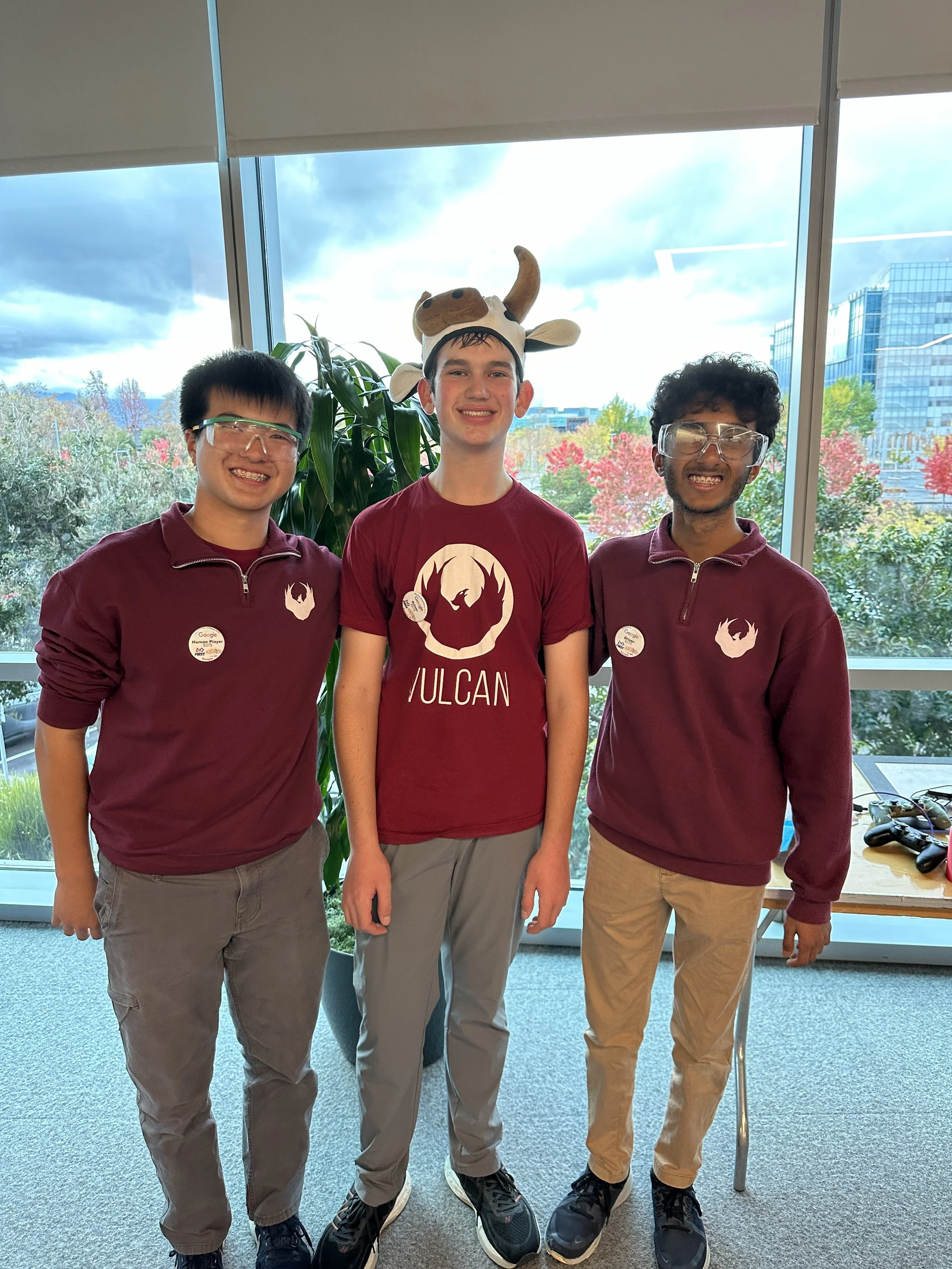
I applied to, interviewed for, and was accepted onto this independent team in the summer of 2023, and we began our design and development work soon after. Unique to Vulcan was its student-run organizational structure. We worked out of a teammate’s garage, brainstormed, prototyped, and prepared for competition on our own, without adult direction or mentorship. Additionally, we ran our own fundraising efforts and community outreach. As a member of the fundraising team, I independently raised $3,000 to fund the program. Being part of a student-run team provided an incredible learning experience. When we succeeded, we celebrated, knowing it was the result of our own work, and when we failed, we knew that we could trace the failure back to our mistakes to learn and improve.
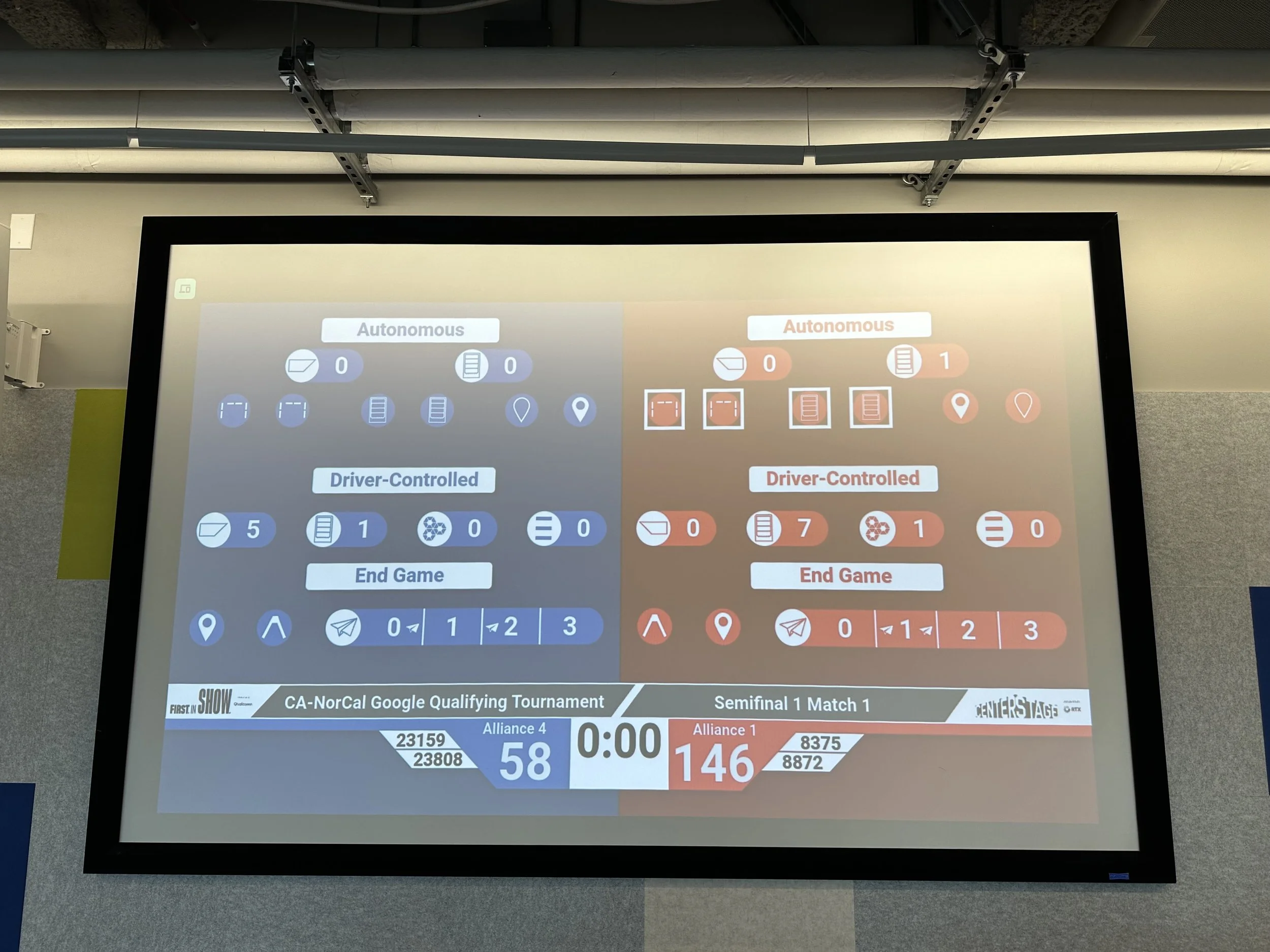
In the 2023–2024 FIRST Tech Challenge season, CENTERSTAGE, robotics teams prepared a robot for a qualifier in an attempt to qualify for a regional tournament before qualifying for the World Championship. In each match at a tournament, two pairs of teams faced off to score as many points as possible in 2.5 minutes. During each match, robots could score points by placing hexagonal game elements, called “pixels,” onto an angled backboard, called the “backdrop.” Scoring pixels on the backdrop in specific patterns awarded more points, and at the end of the match, robots could climb onto a truss structure to score an extra 20 points. Click the button above for a video explaining the game in further detail.
Robot V1
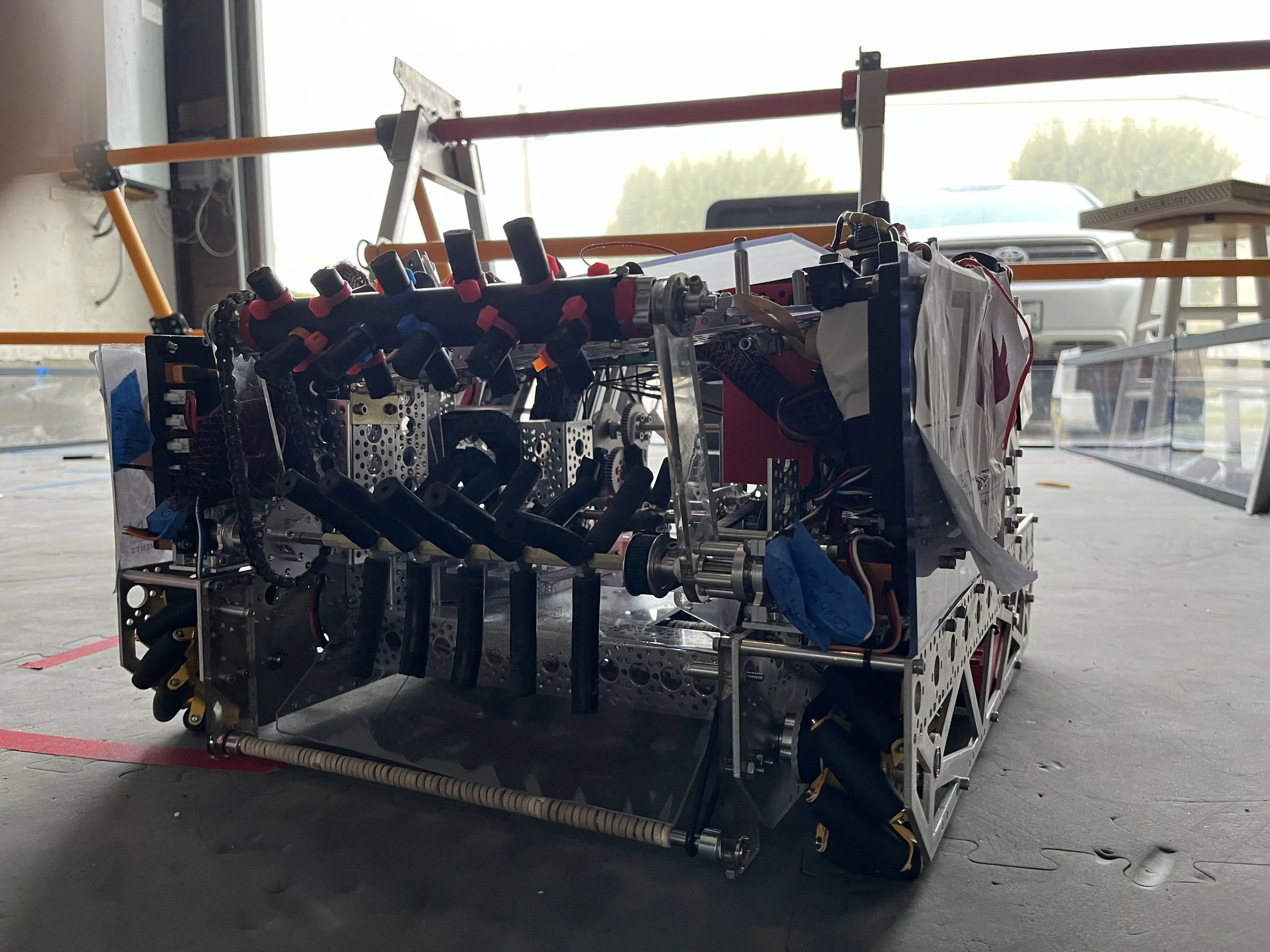
Robot Drivetrain
The drivetrain was made of 1/8-inch-thick waterjet-cut aluminum plates. It proved to be very robust and served as the chassis for our second version. The drivetrain had mecanum wheels, which enabled omnidirectional motion. If the right wheels spin in opposite directions and the left ones do as well, then the robot can translate left and right—advantageous and simple for a precision FIRST Tech Challenge (FTC) robot.
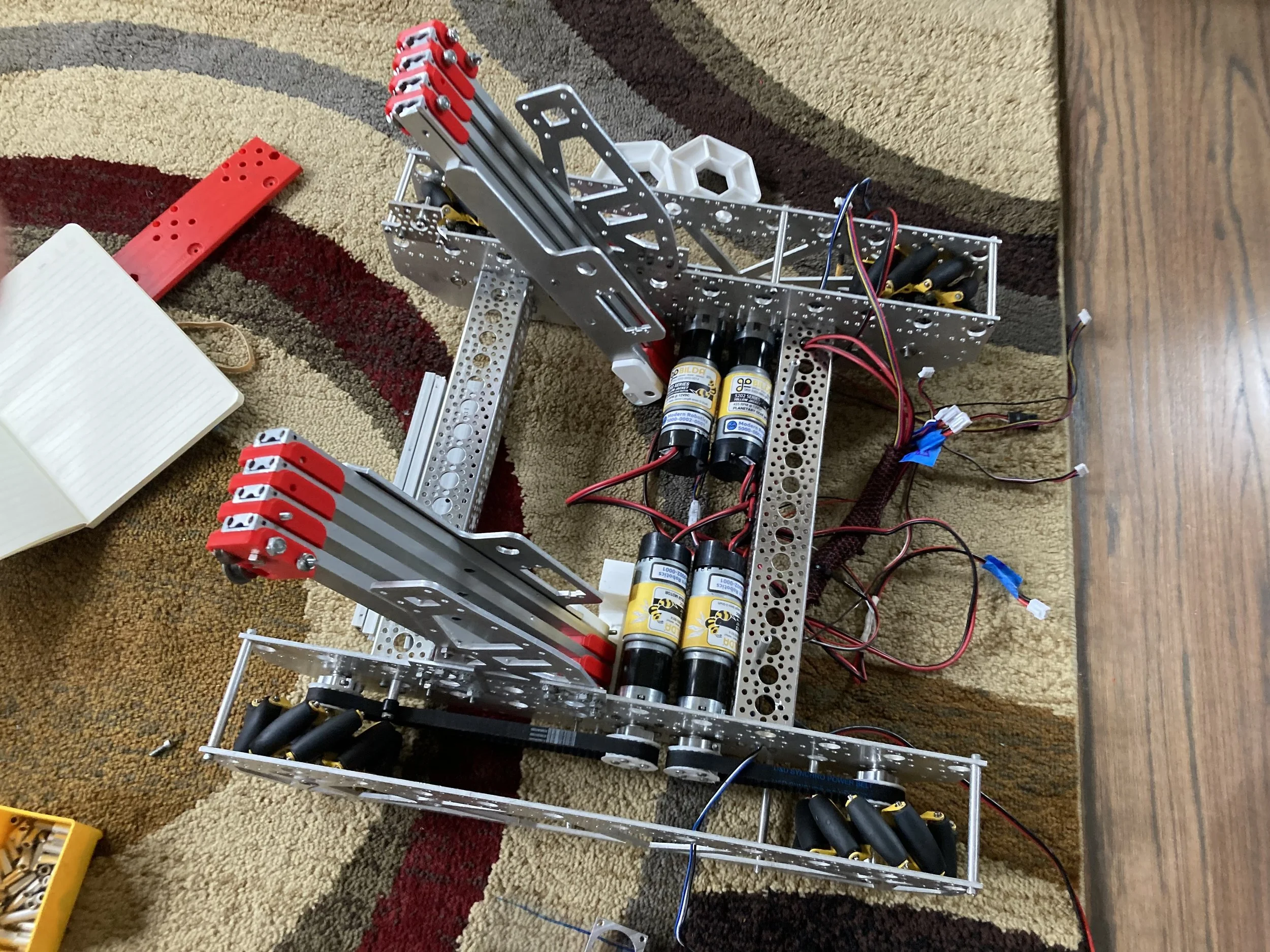
Robot Intake
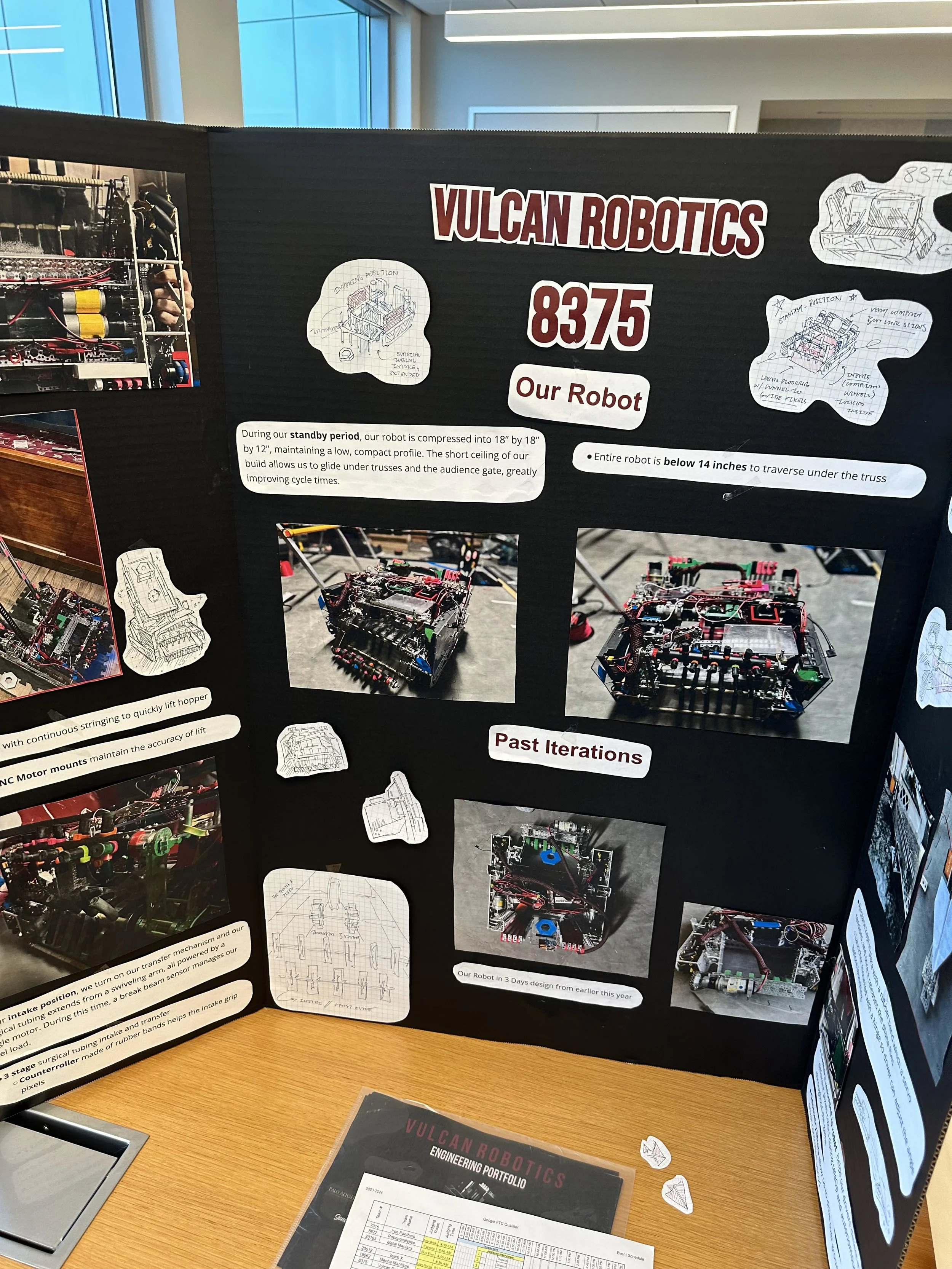
Its unique feature was a contra-rolling shaft. Wrapped in high-friction material, the contra-rolling shaft solved a critical flaw in our previous intake prototypes. Pixels were flat, injection-molded hexagons that sat flush with the ground. With pressure from the spinning intake wheels, the contra-rolling shaft could pick up the pixels without needing to scrape underneath them, which would produce friction and slow our robot down.
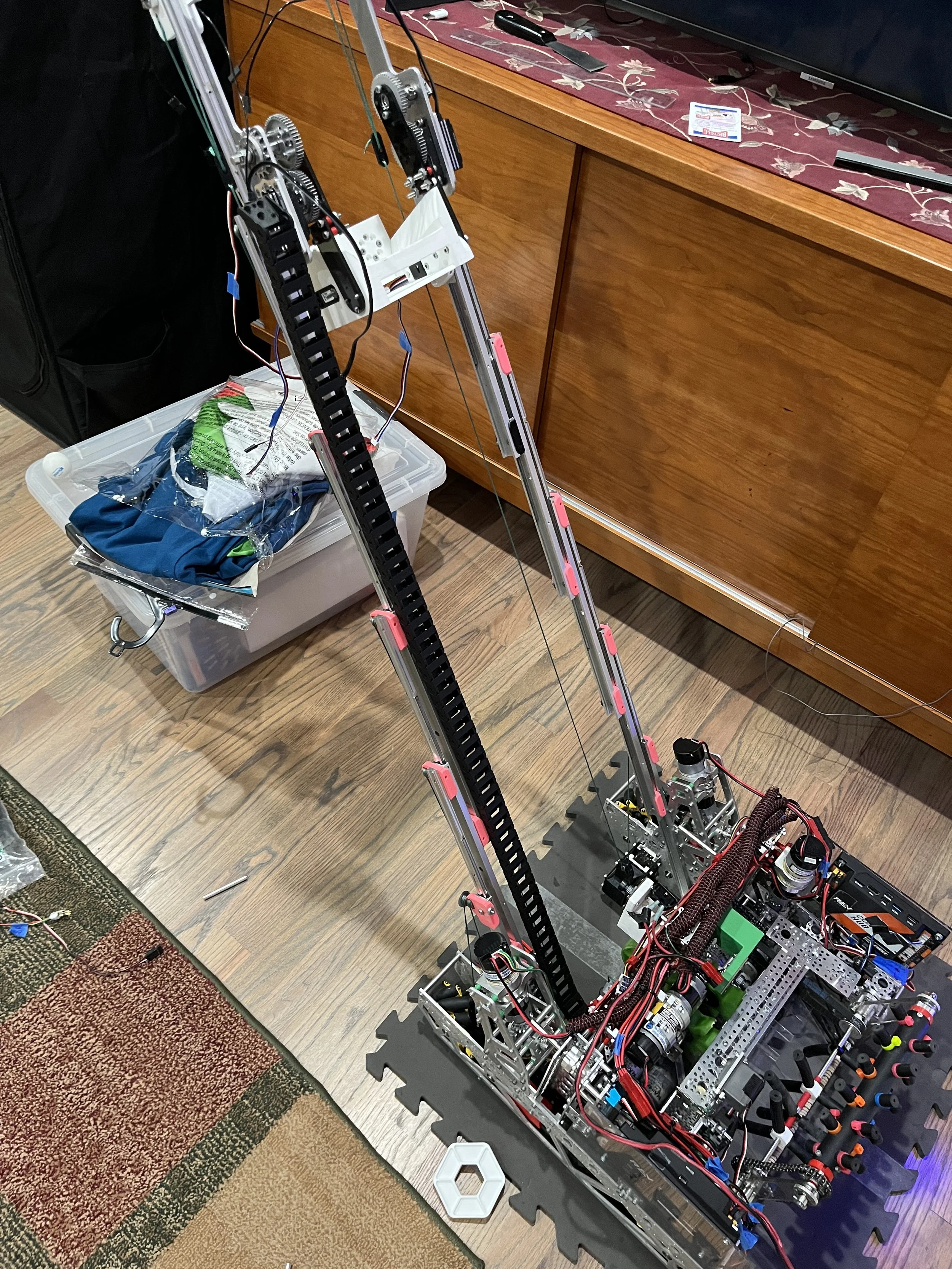
Robot Lift
We built a high-speed cascade lift to deliver game pixels from our hopper up onto the backdrop. I laser-cut prototypes from acrylic, then custom-designed the motor mounts for our second lift, after we decided to abandon the complex bevel-gear system in favor of a more reliable direct drive. Compact lifts like this one were critical in CENTERSTAGE because robots needed to sit below 12 inches to pass under a certain truss, while still reaching almost 4 feet in the air to drop pixels and score points.
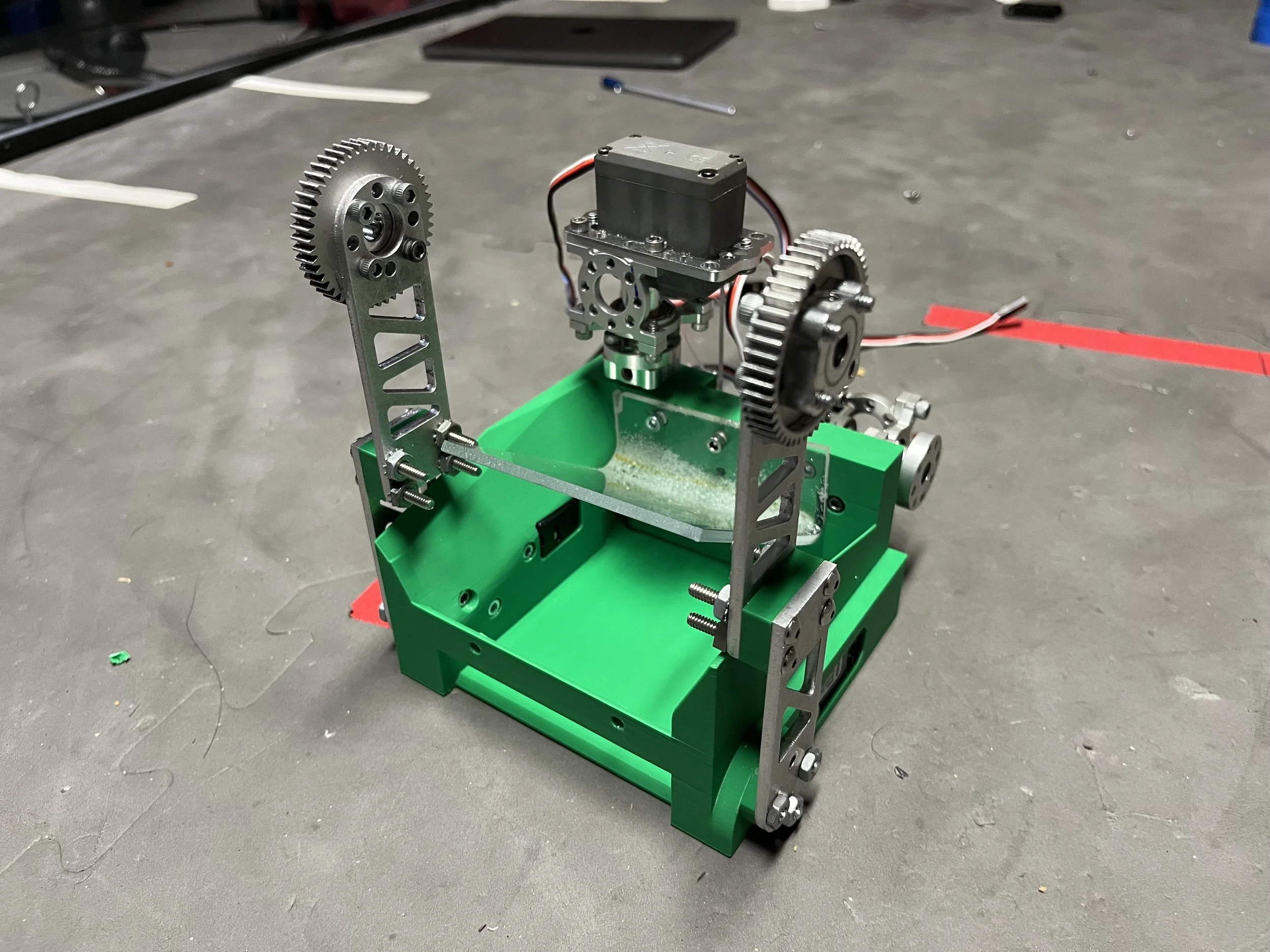
Robot Bucket
Most teams at our competition opted to use a claw to grab the pixels. Because of our high-speed intake device, we wanted a method that would allow us to push pixels quickly into the deposit mechanism without the need to line them up precisely. This bucket, which I custom-designed, used a paddle-and-door system to eject the bottom pixel while restricting the top one, enabling both one-by-one and simultaneous deployment. Though not as complex as other teams’ mechanisms, this bucket made it easy to transfer pixels from the intake, which ensured we always had pixels to score.
Robot Climbing Hook
This basic, deployable acrylic hook and winch consistently scored the extra 20 points at the end of each match. I performed finite element analysis (FEA) on the acrylic hook to ensure that it would not snap under the weight of our 30 lb robot. We used a servo-deployed arm to quickly raise the hook into position and then retracted it with a separate high-torque winch motor to lift the robot off the ground. This design helped us save time at the end of each match, which meant that we could score a few extra points before climbing onto the truss.
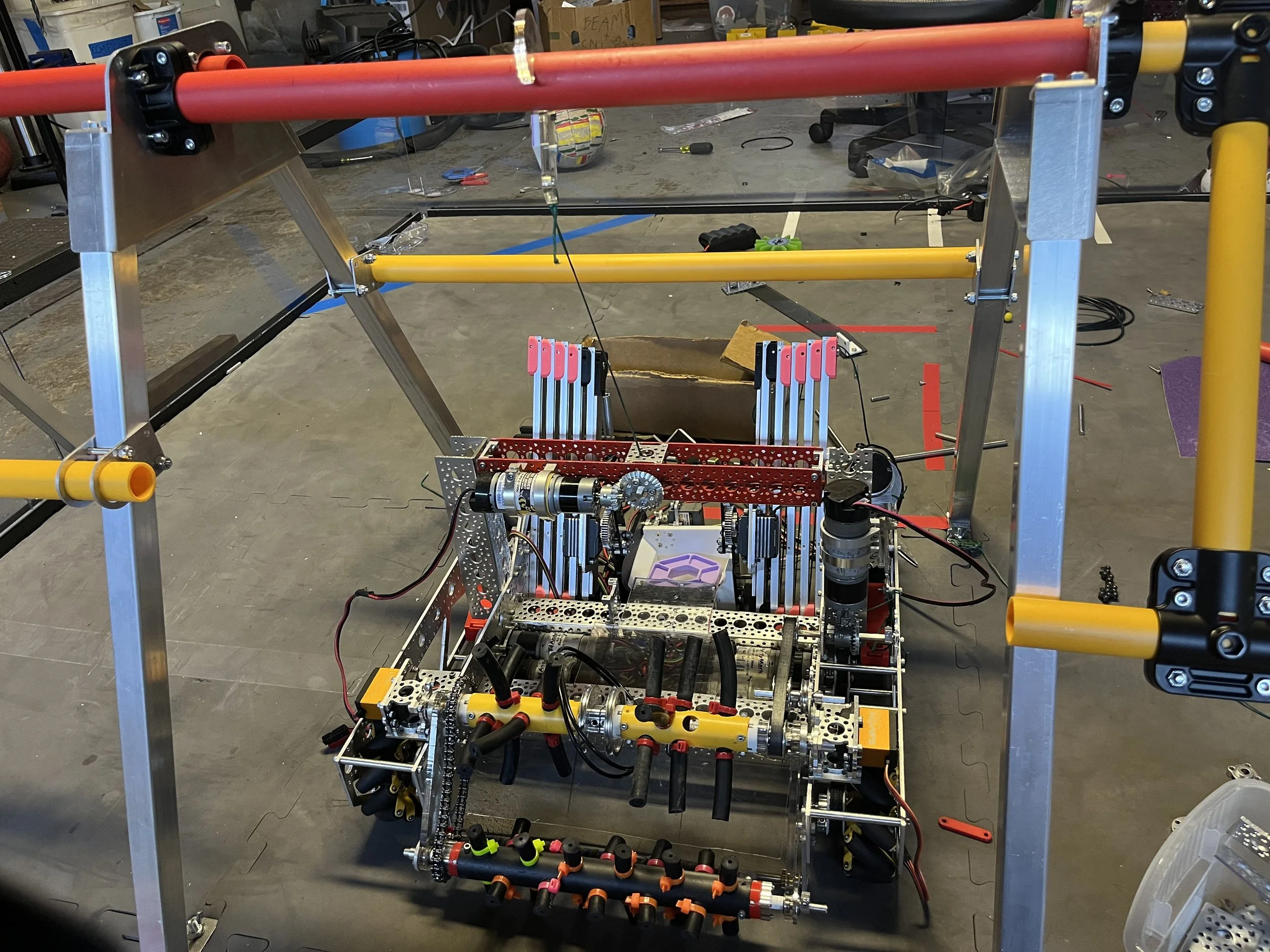
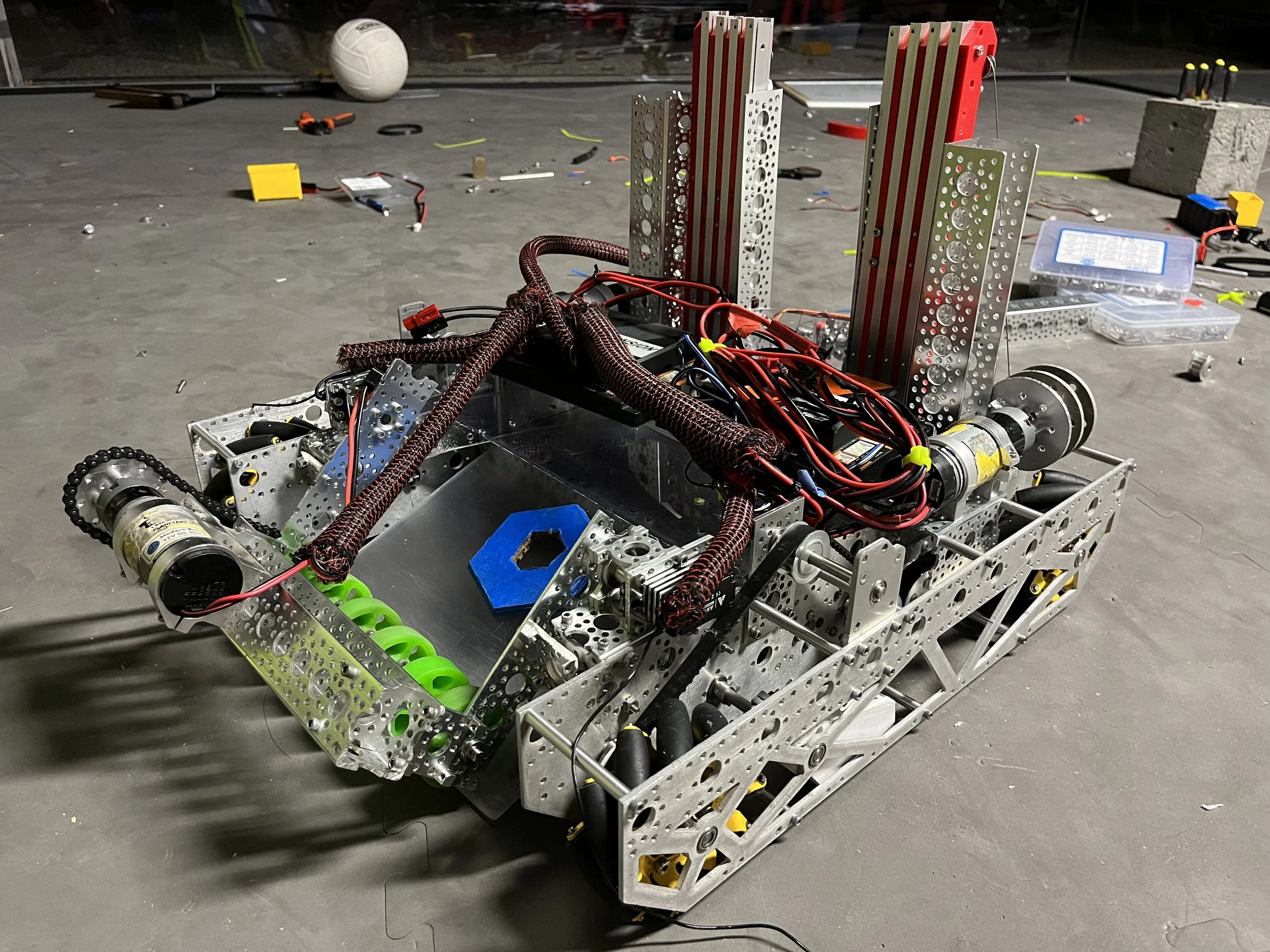
Initial prototype robot
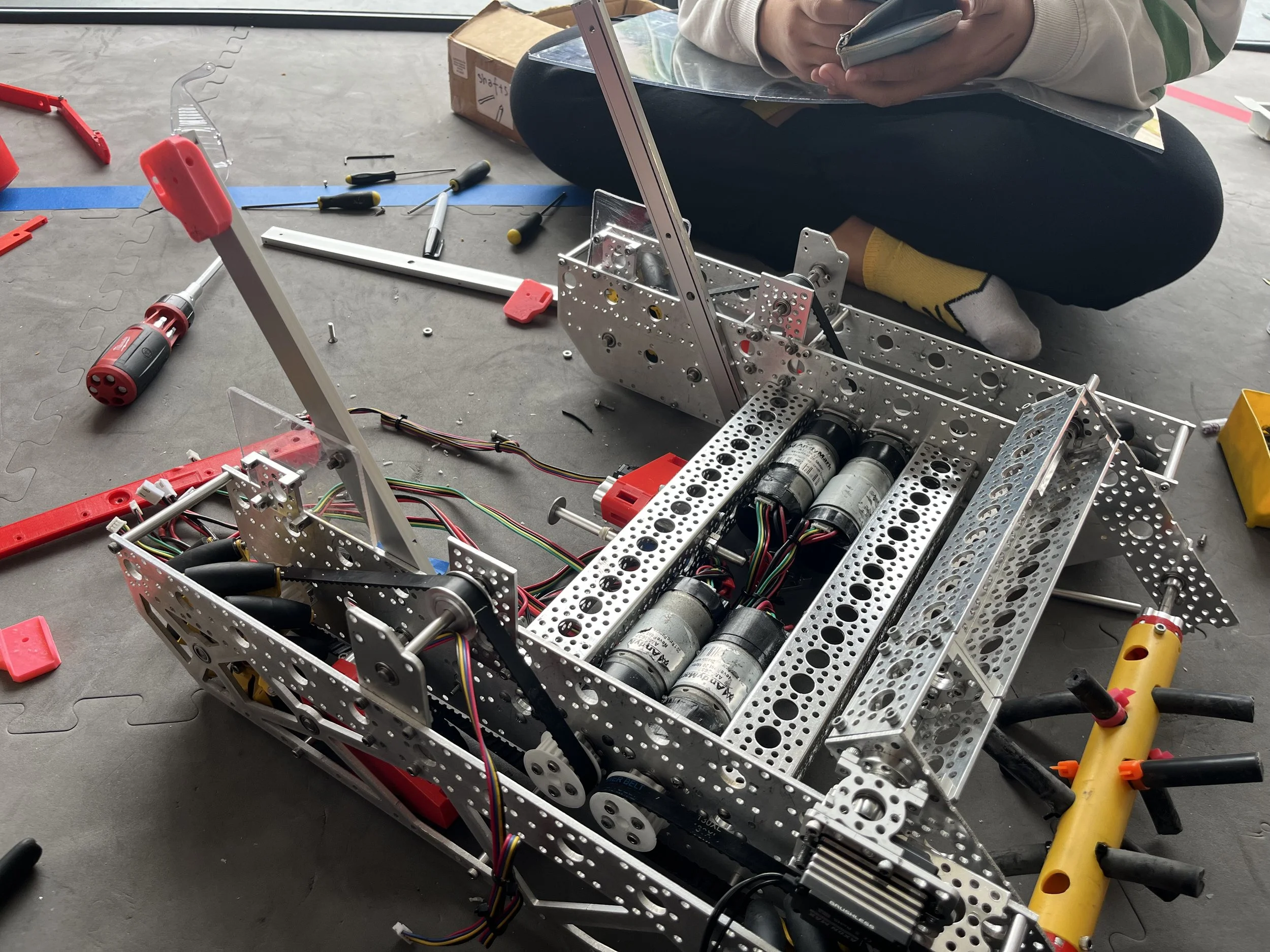
Prototype drivetrain
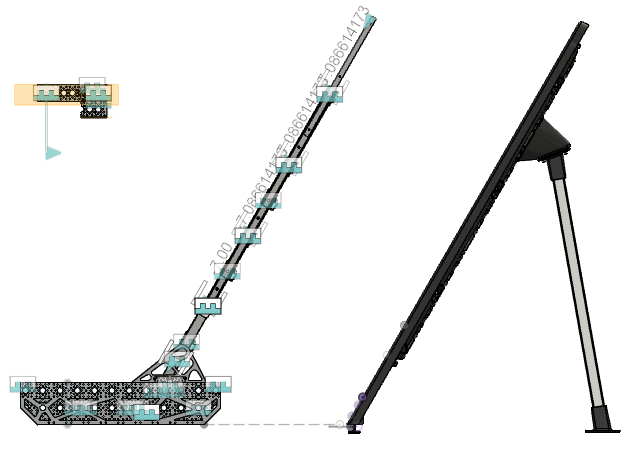
Lift design in CAD
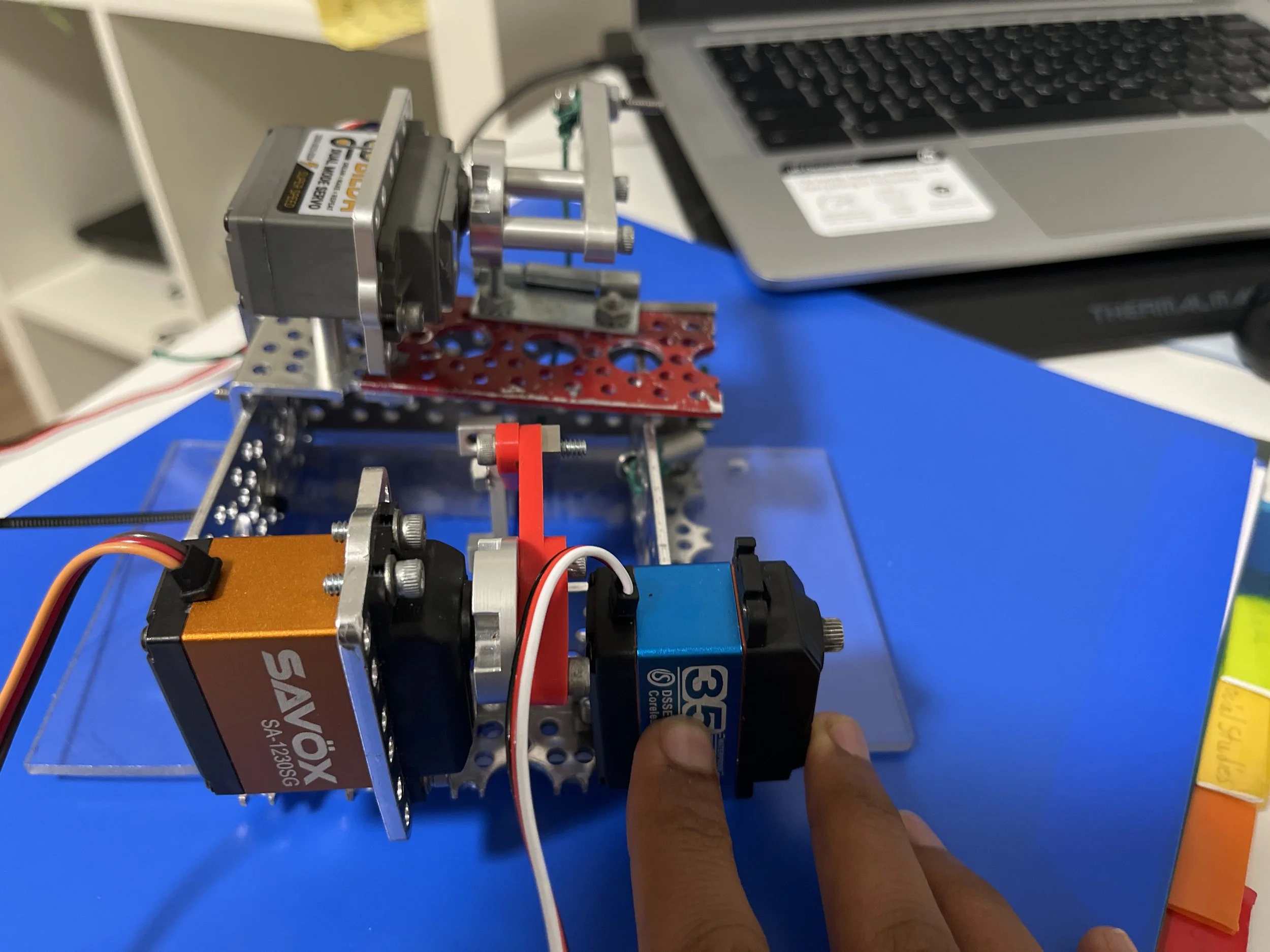
Basic bucket prototype
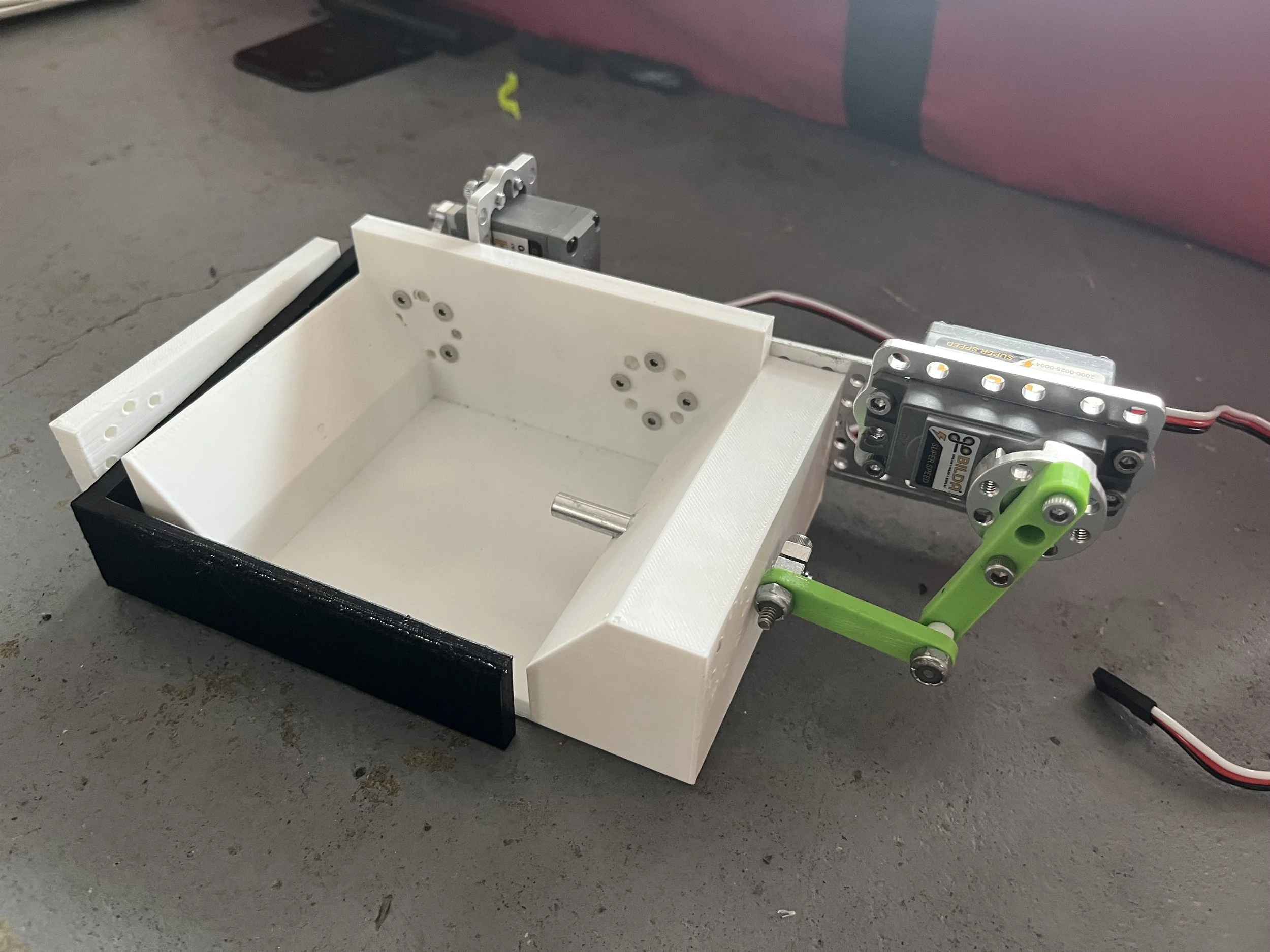
A second iteration of the bucket
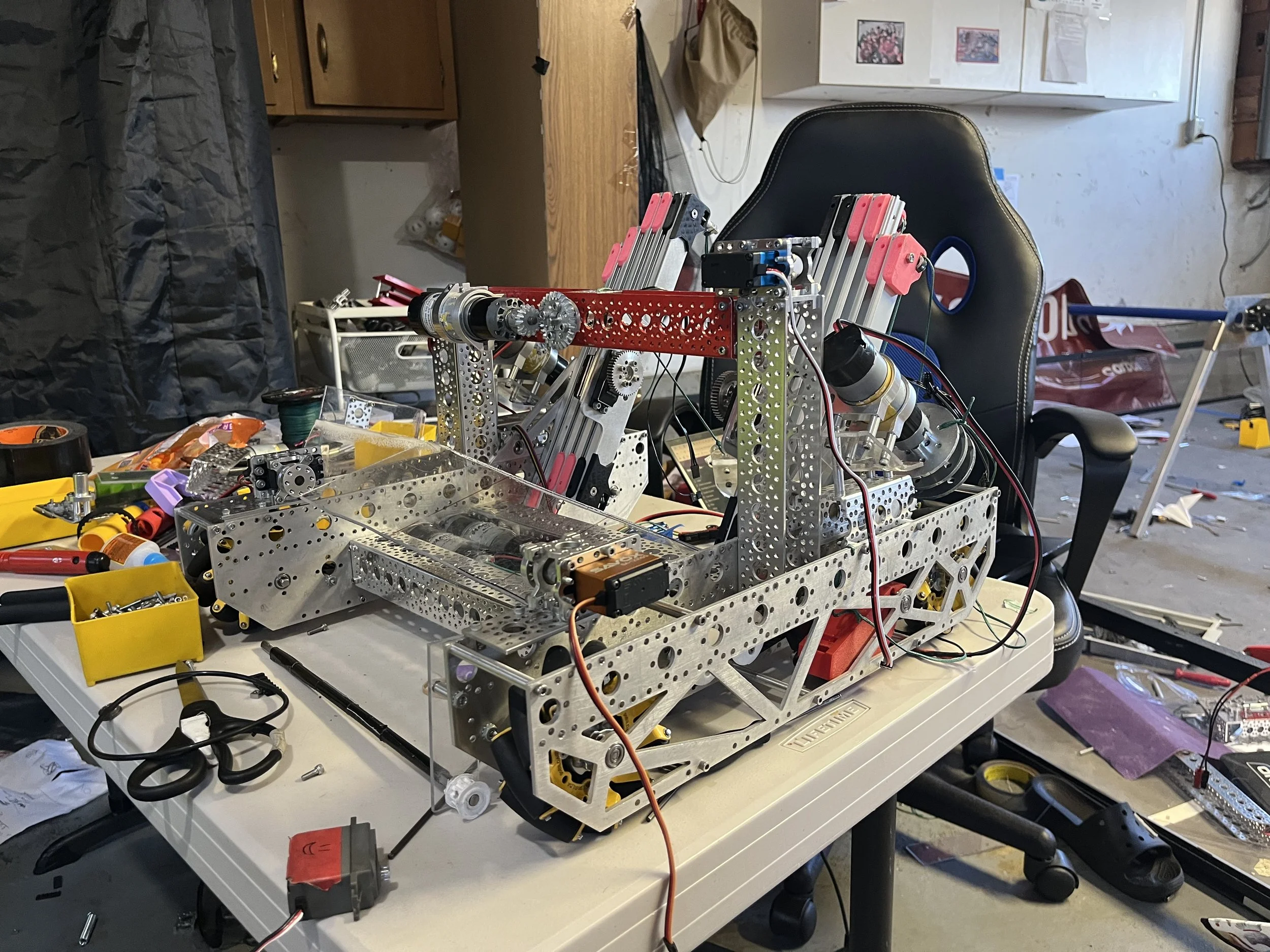
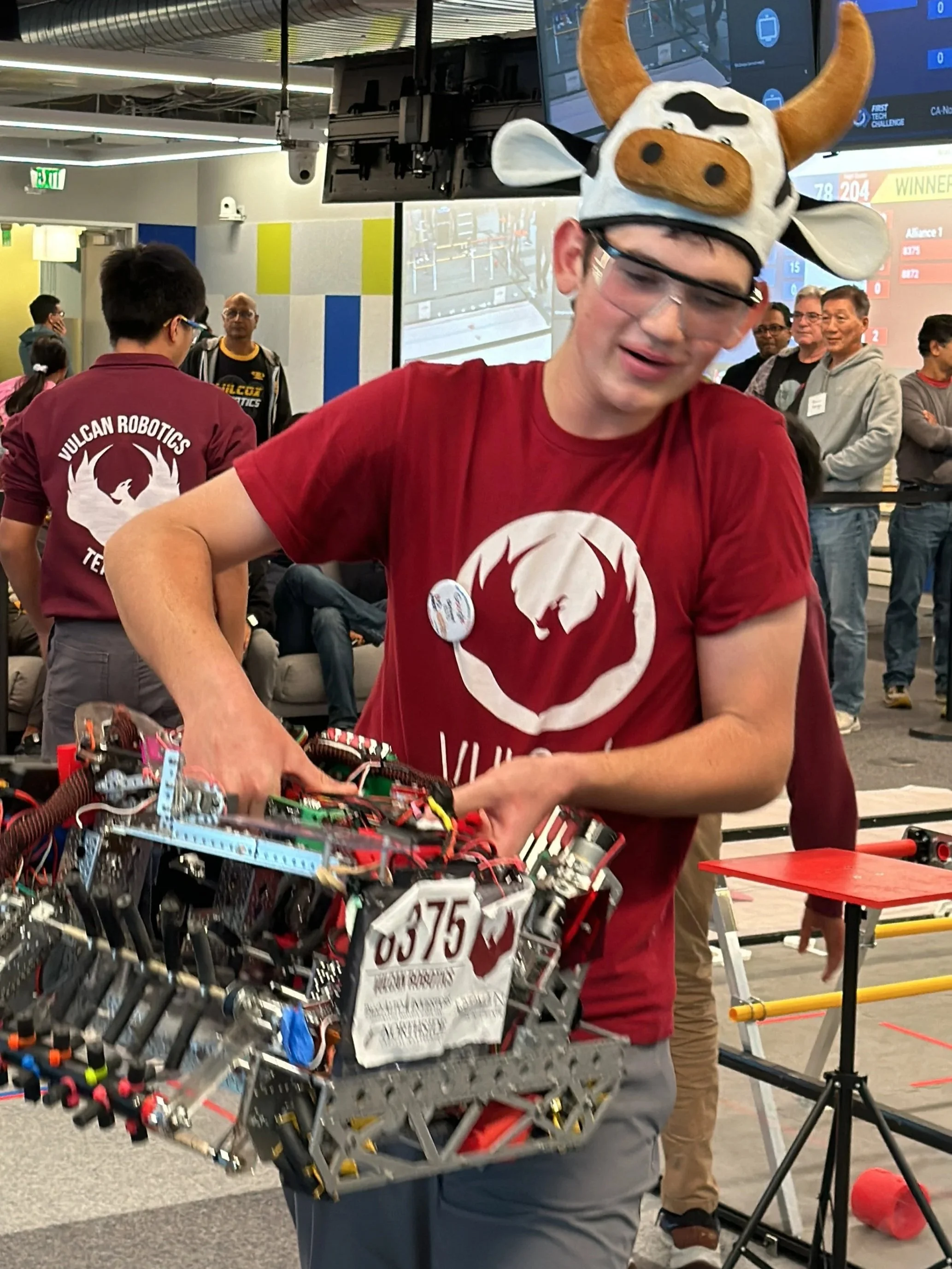
Assembly of our competition robot
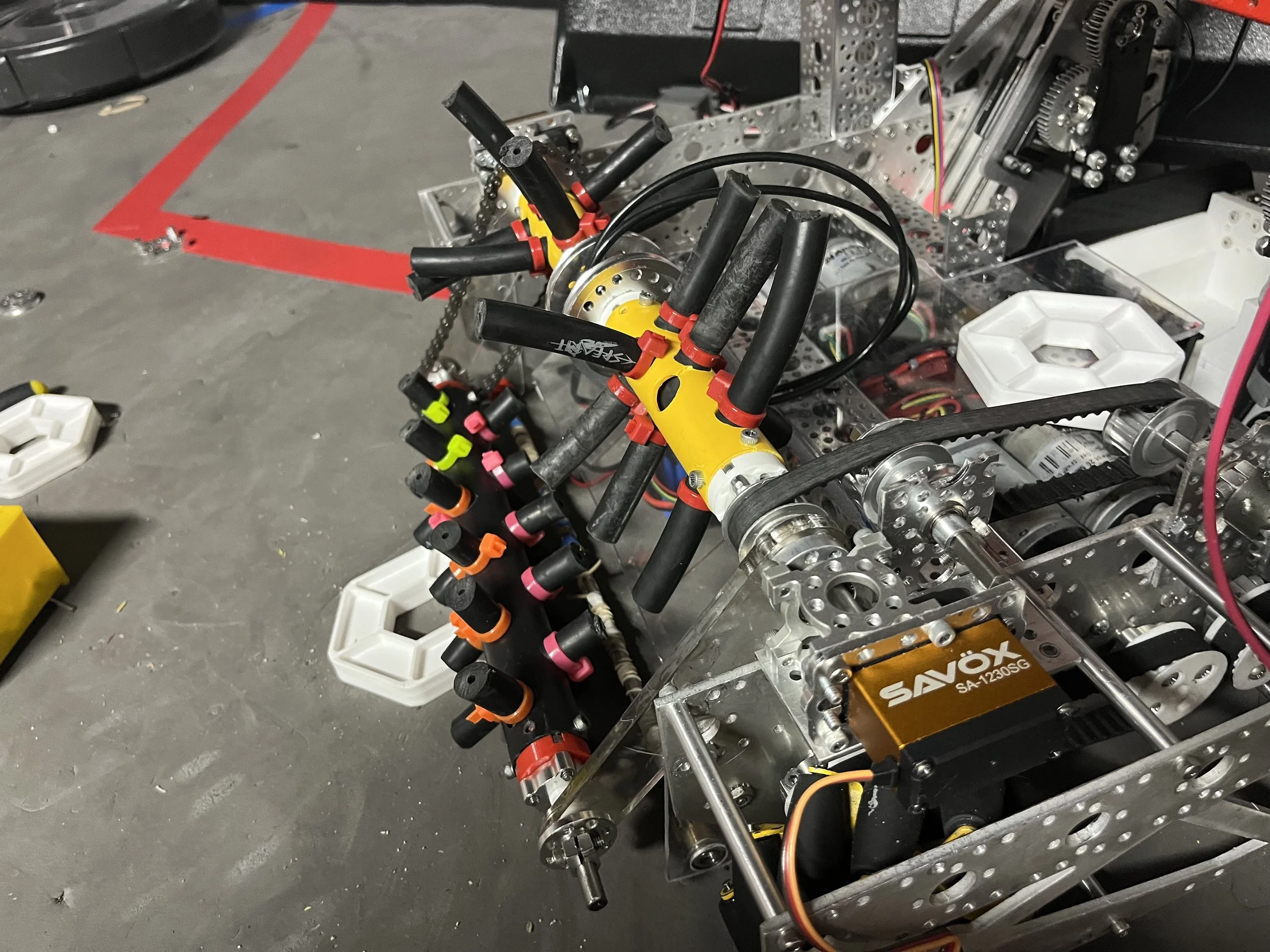
Close-up of the intake mechanism
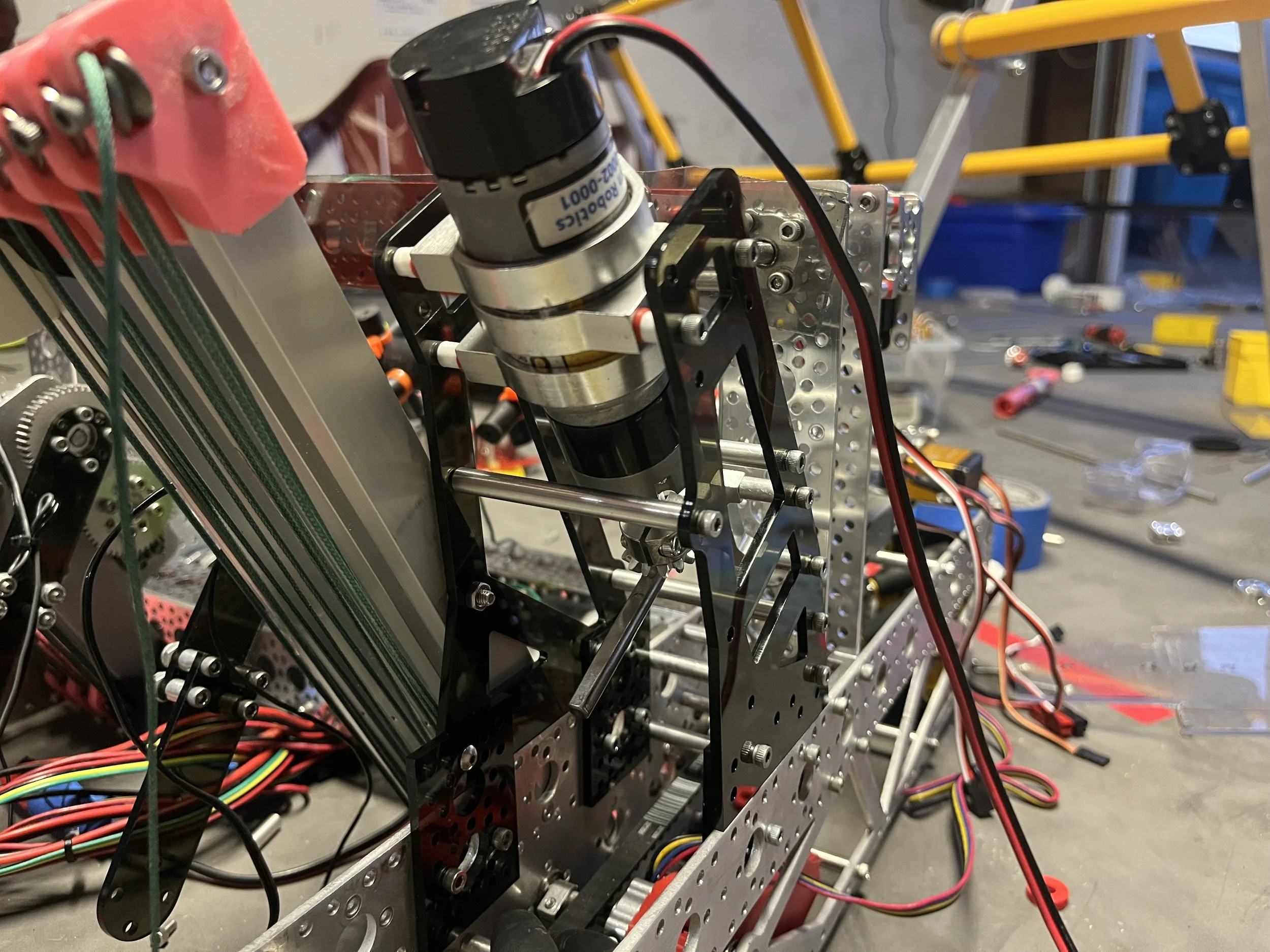
Close-up of the lift mounts
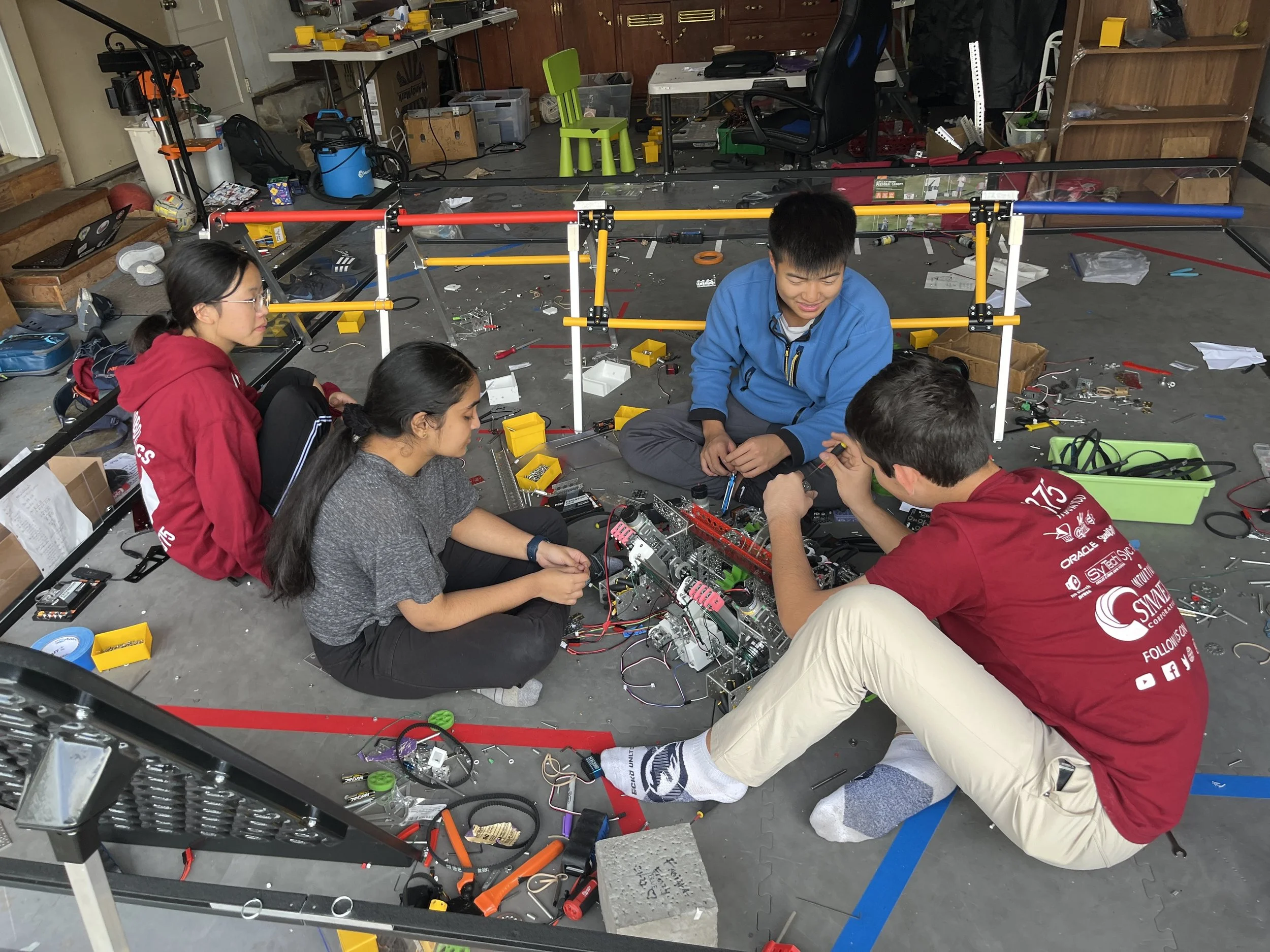
Saturday garage meetings
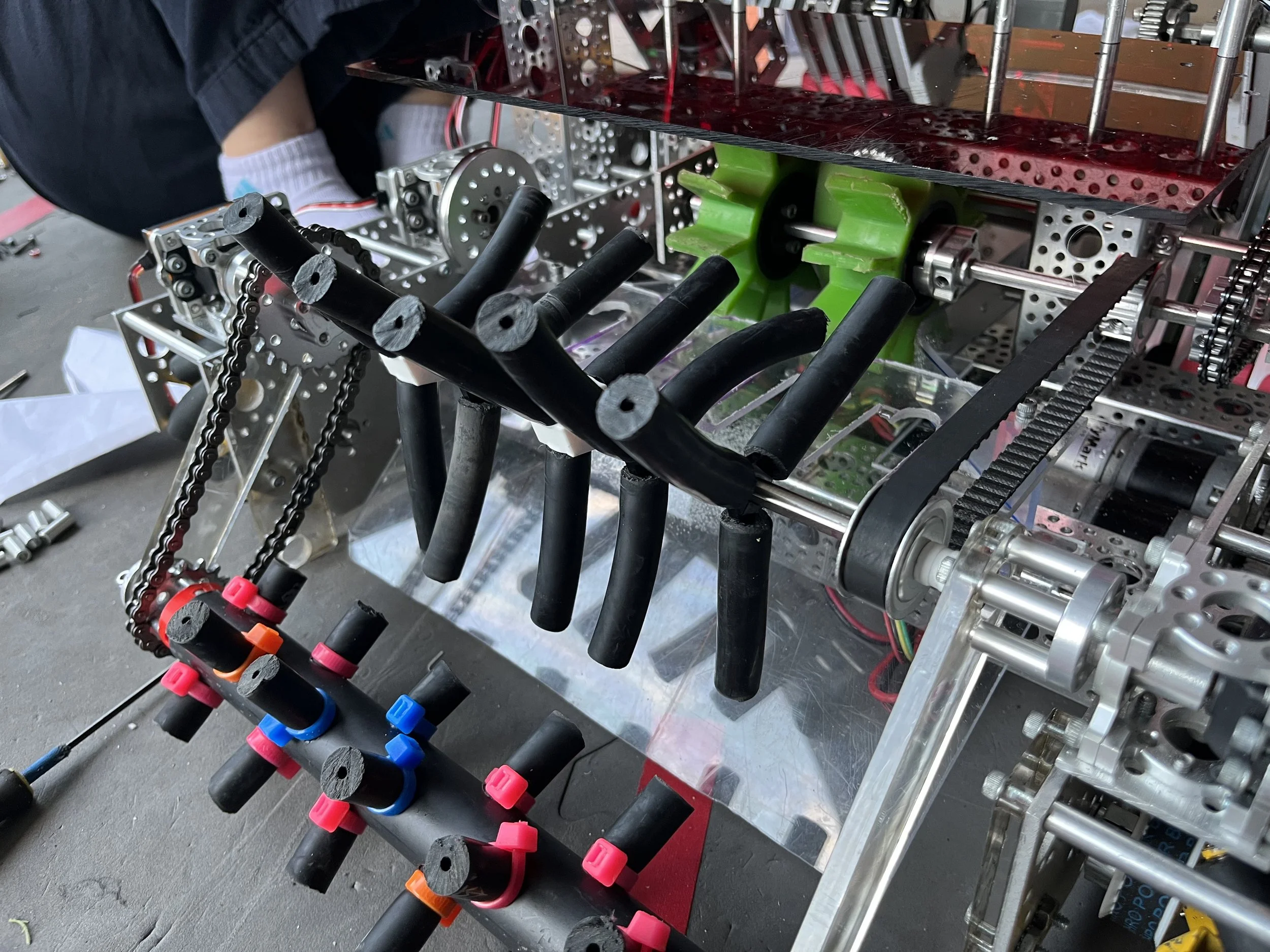
Final intake design
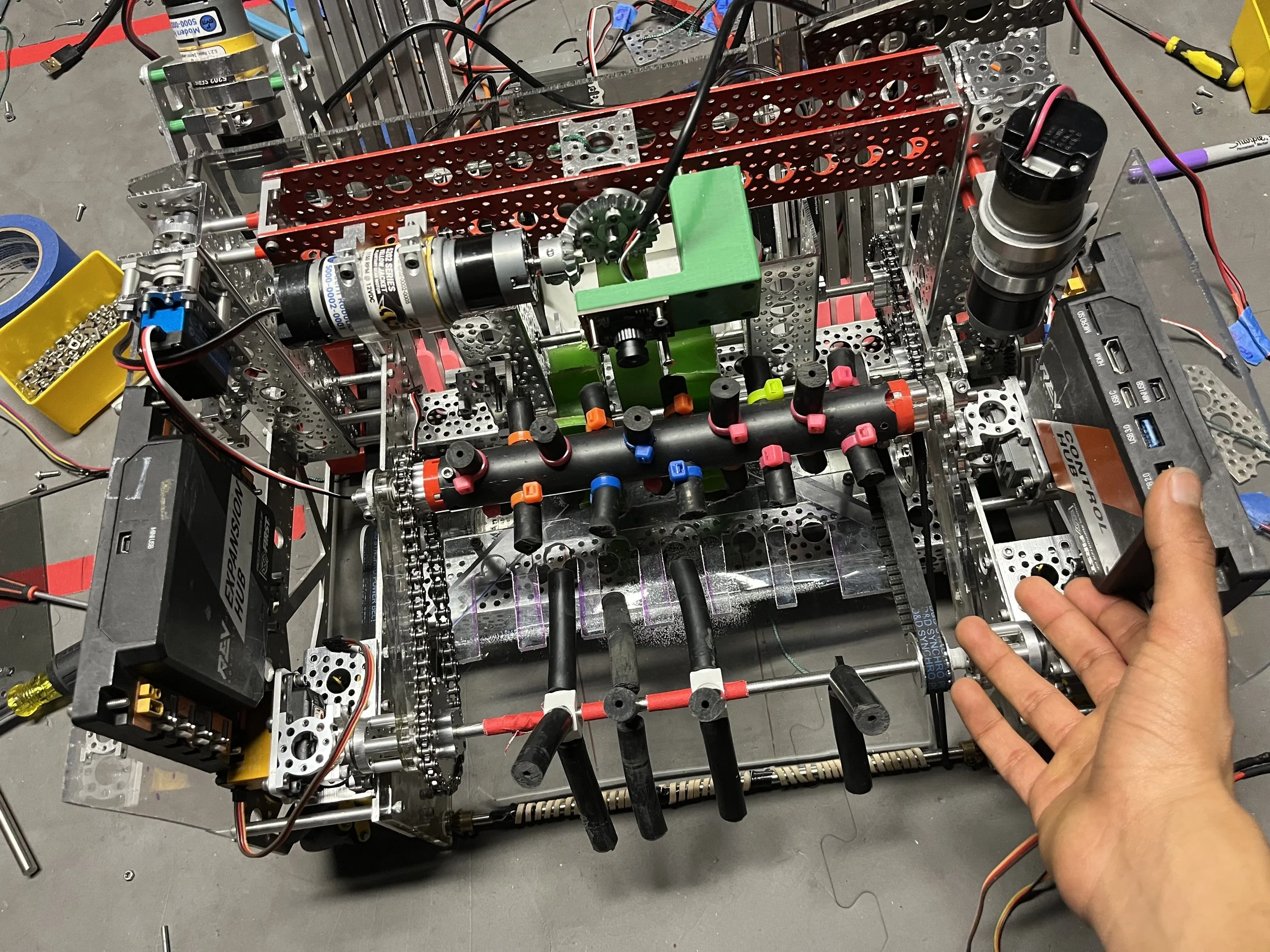
Bird's-eye intake view
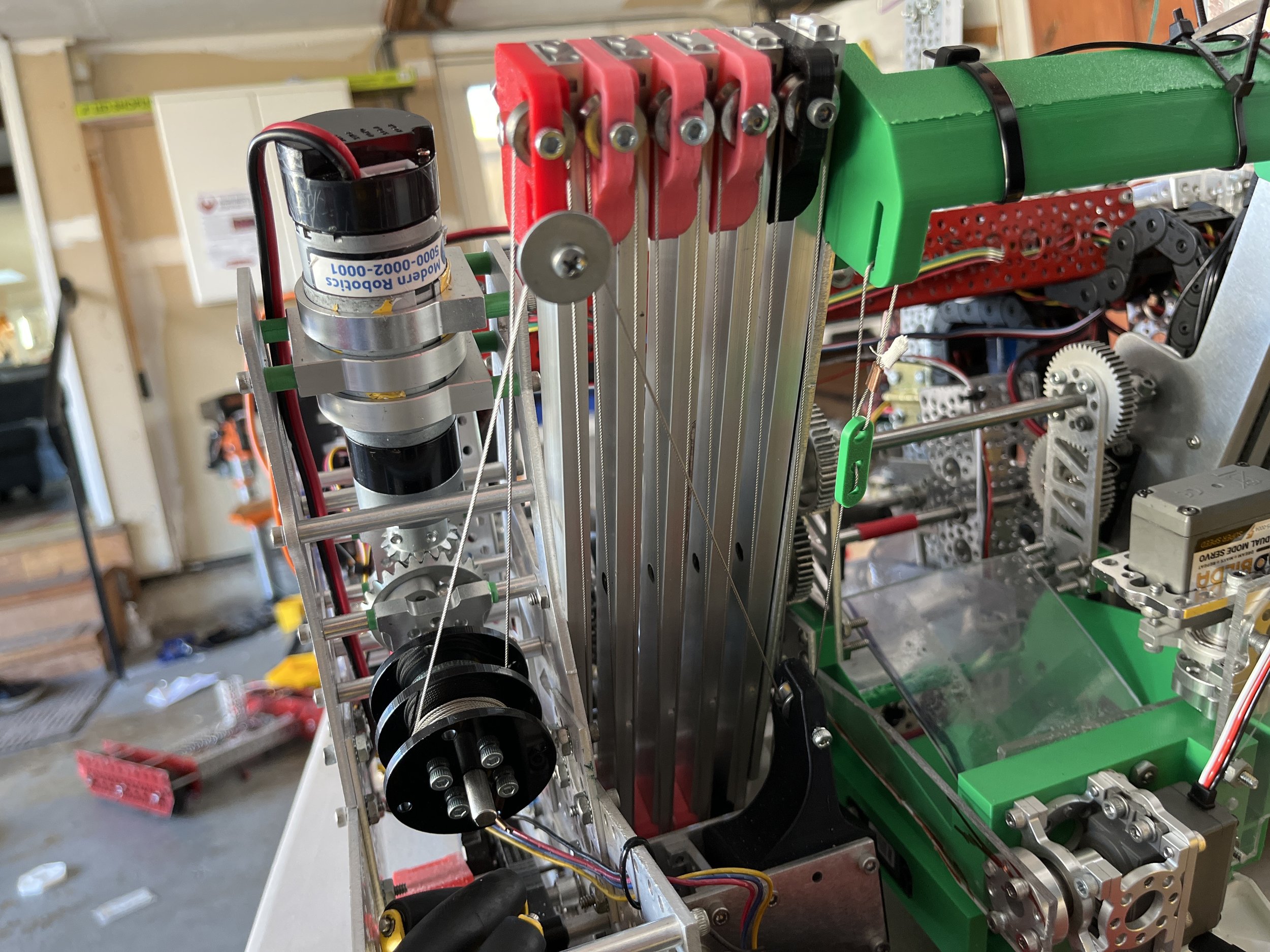
Lift motor and stringing
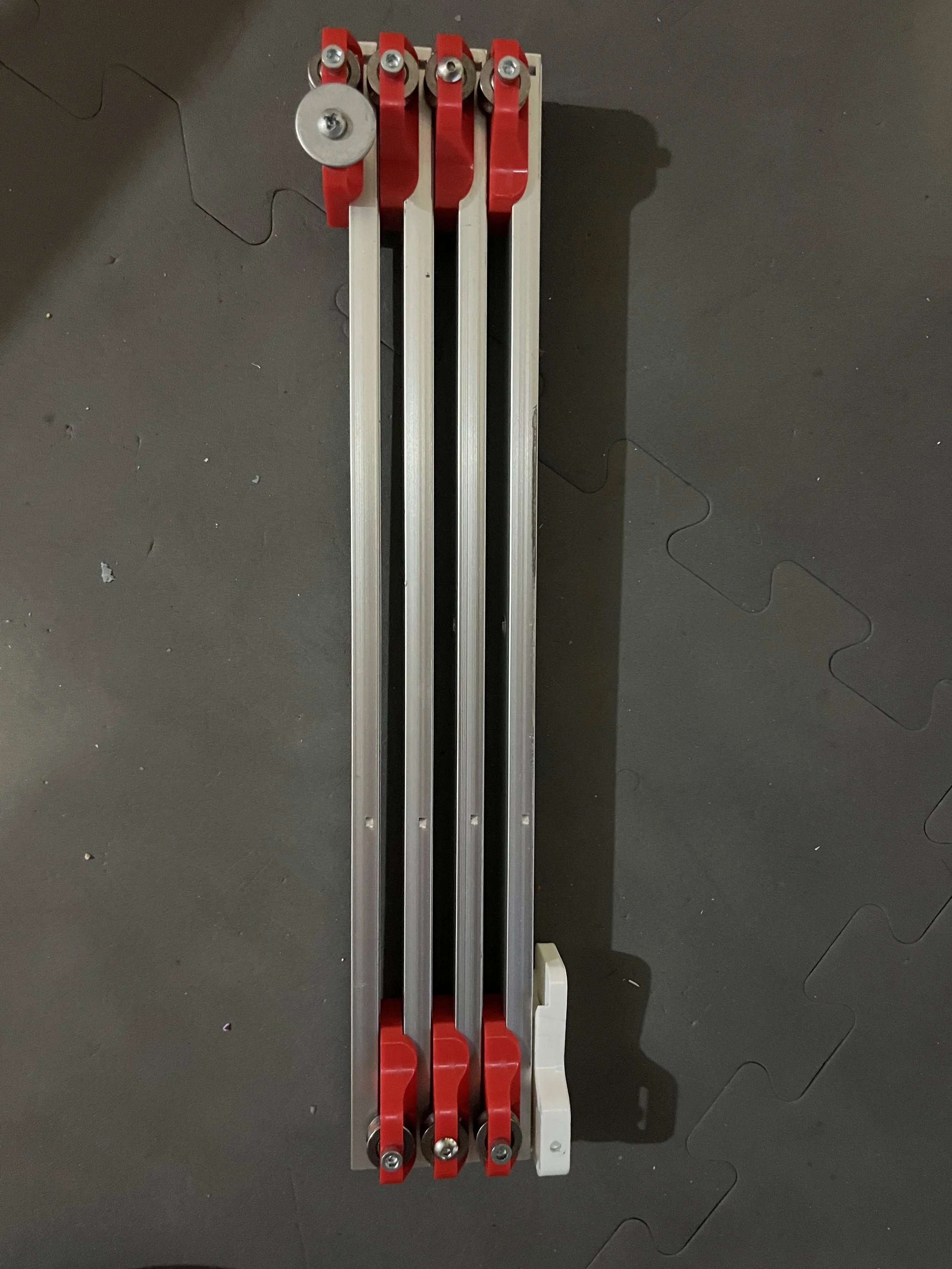
Lift slide module
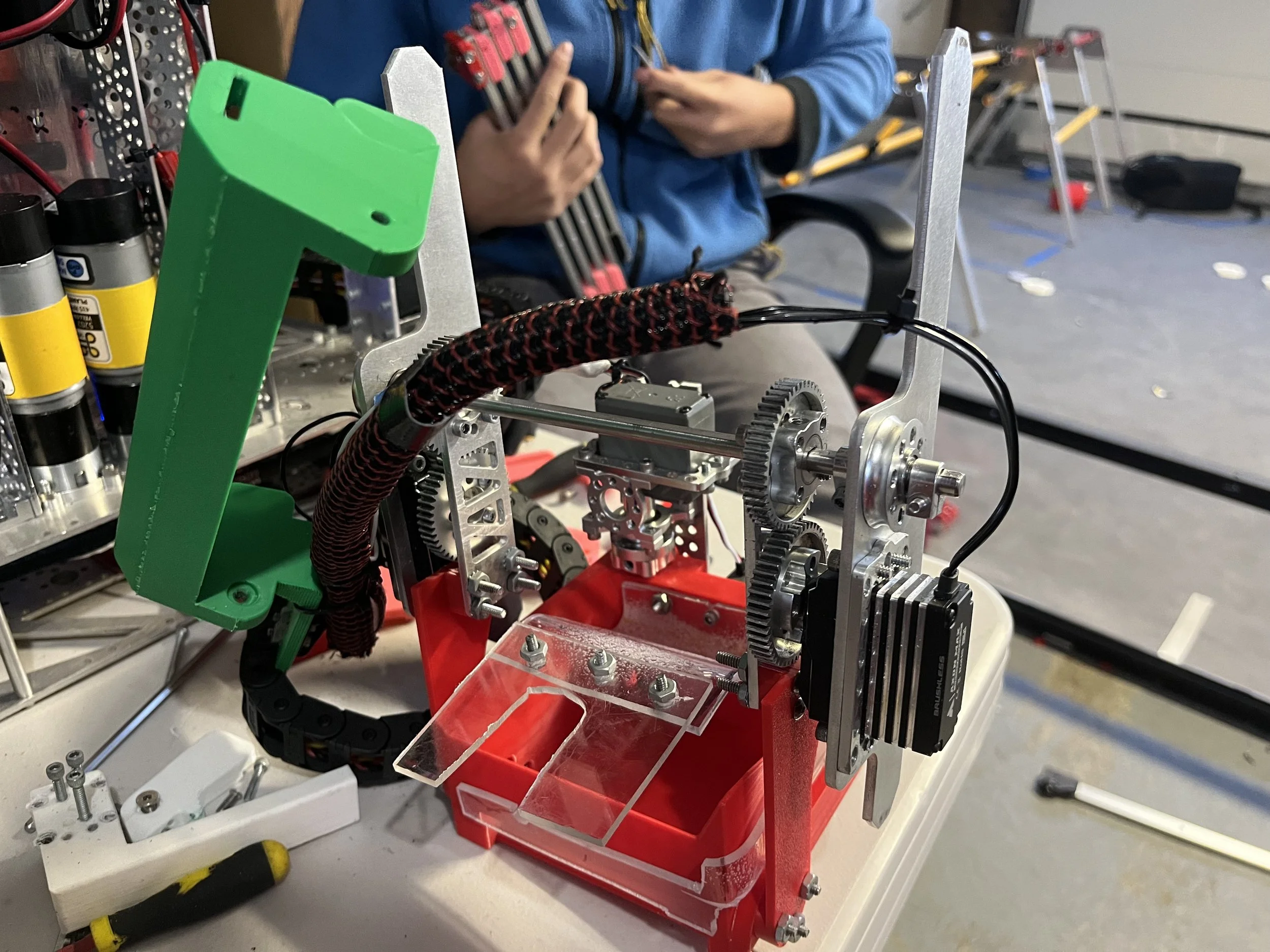
Final bucket design
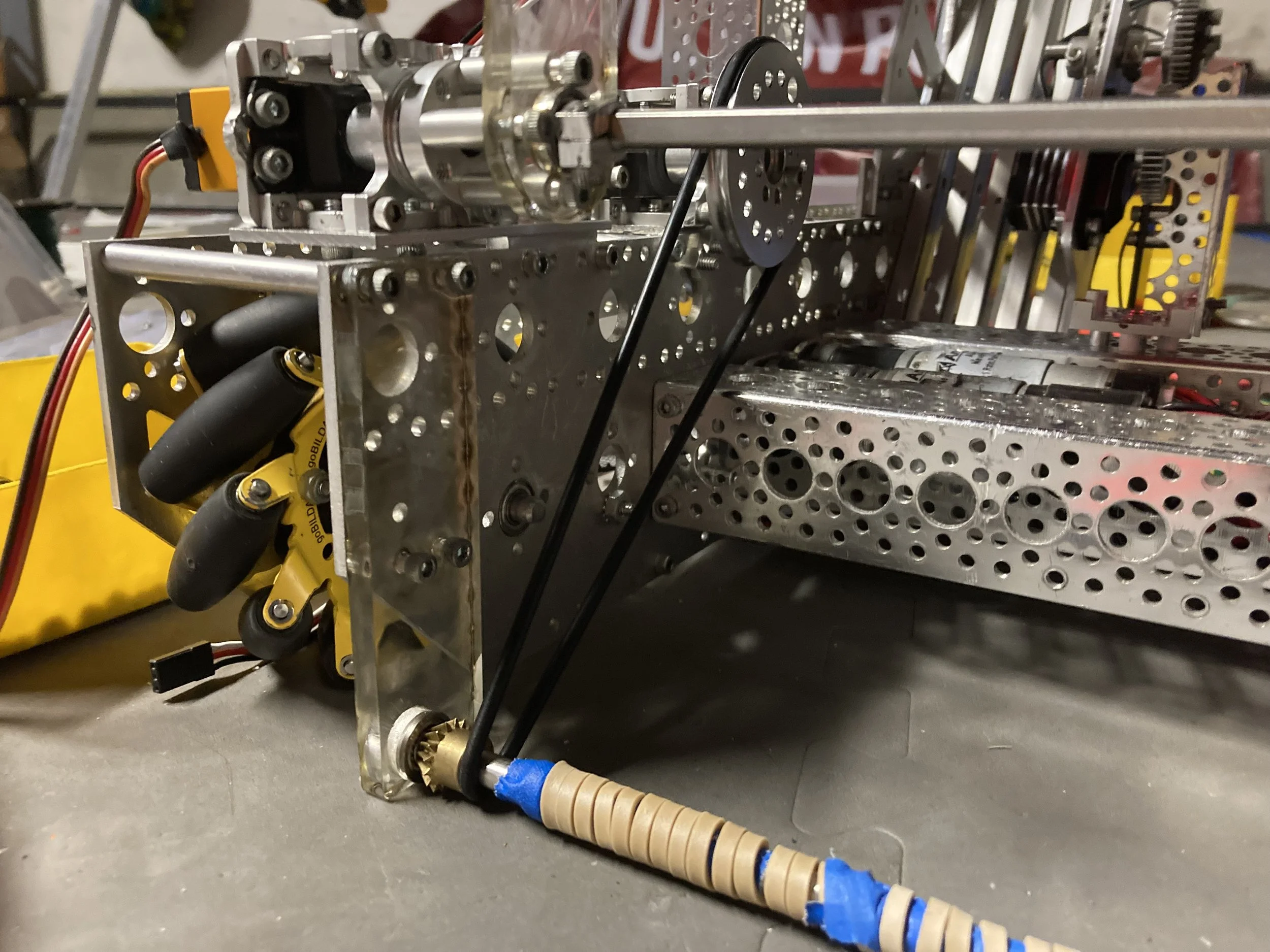
Counter-rolling mechanism in the intake
2023 Google Sunnyvale Qualifier
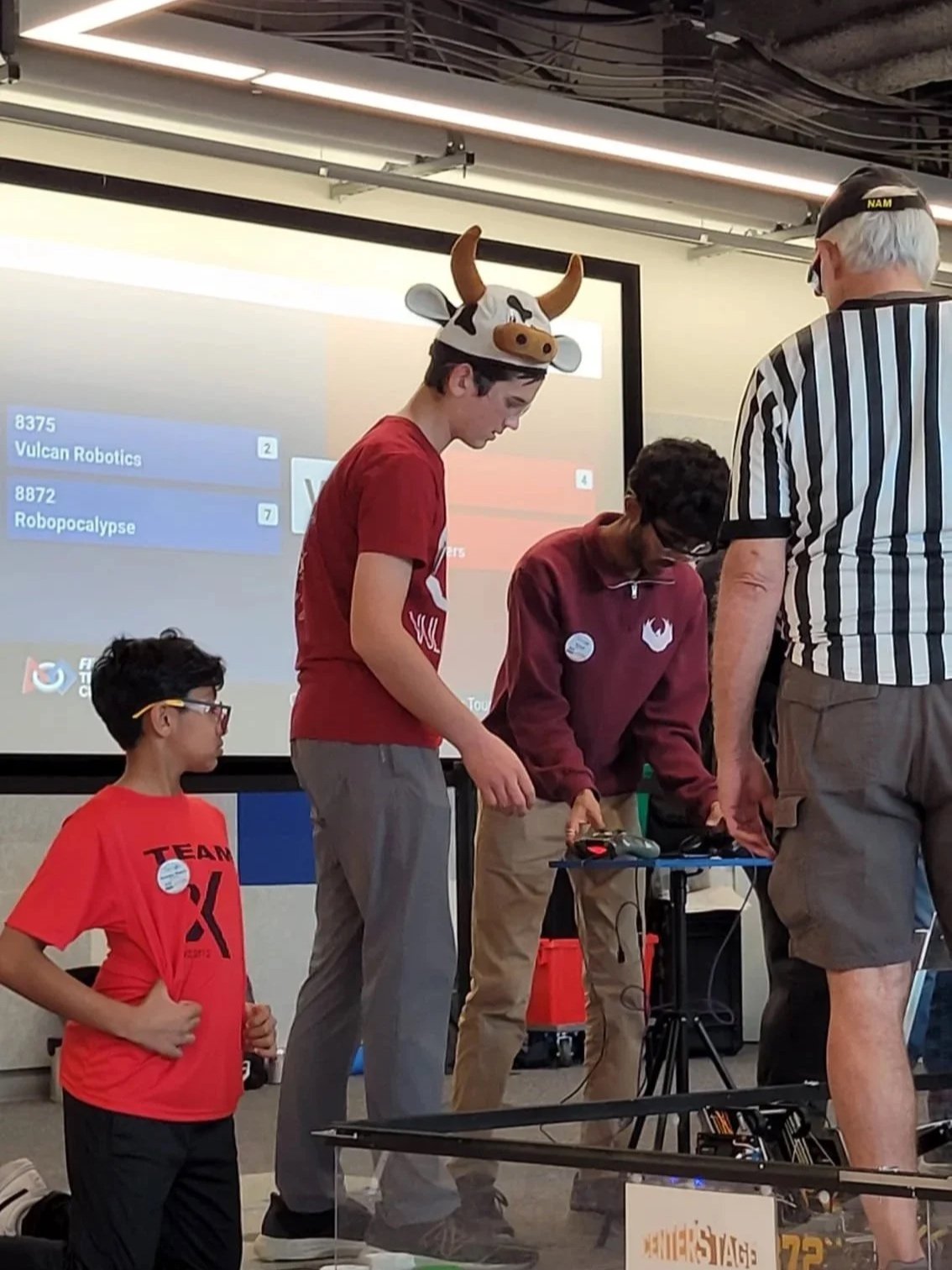
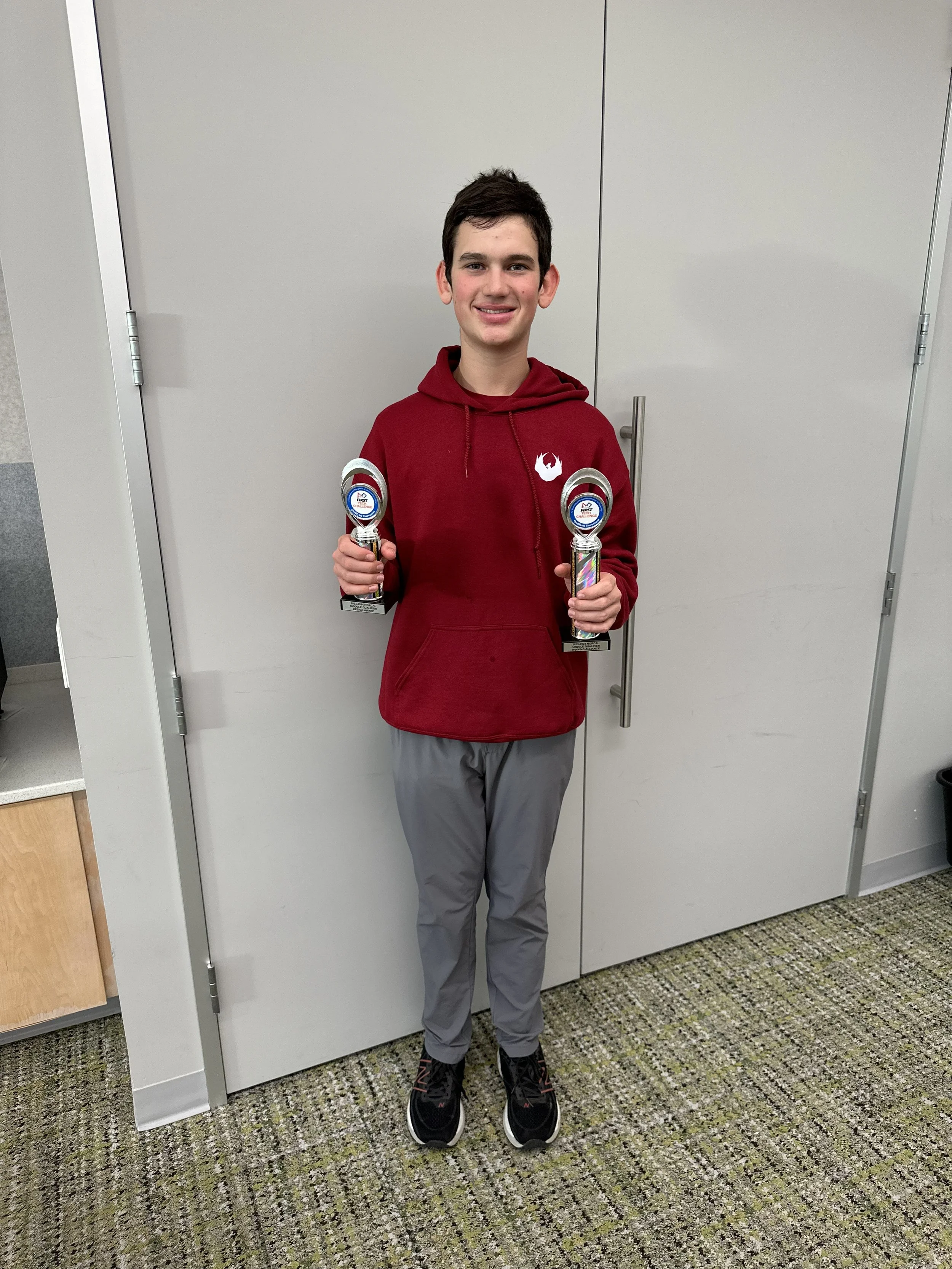
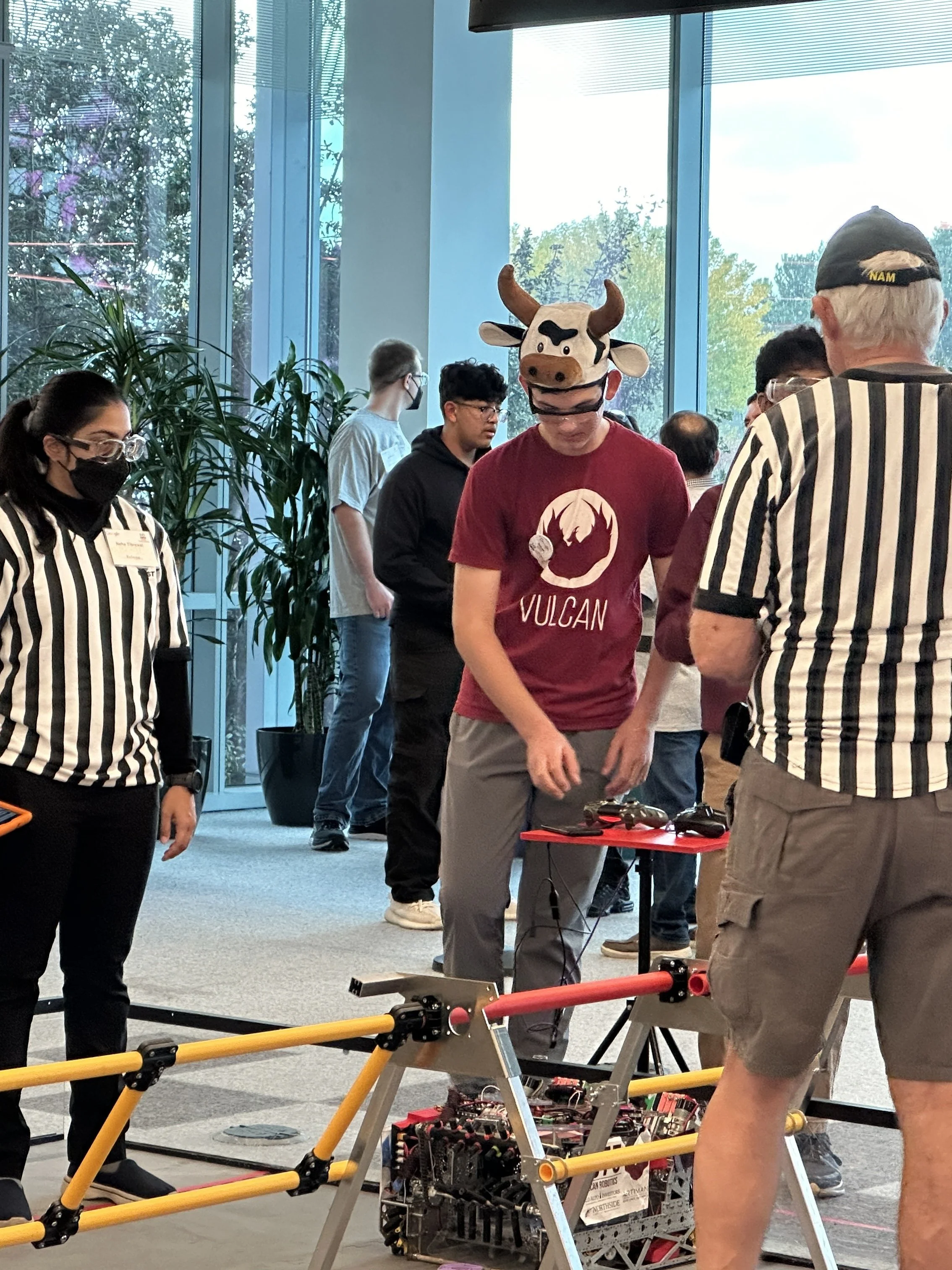
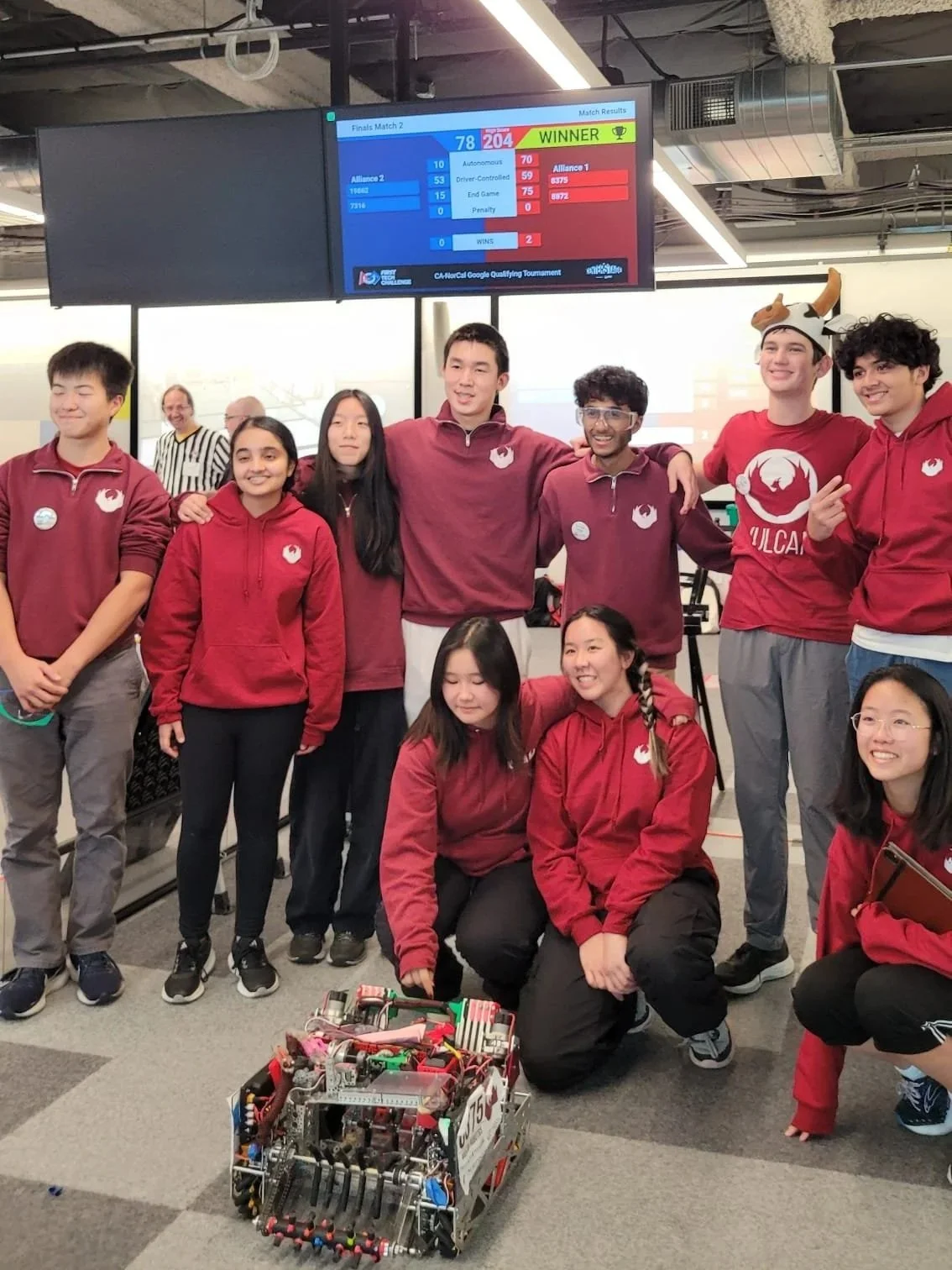
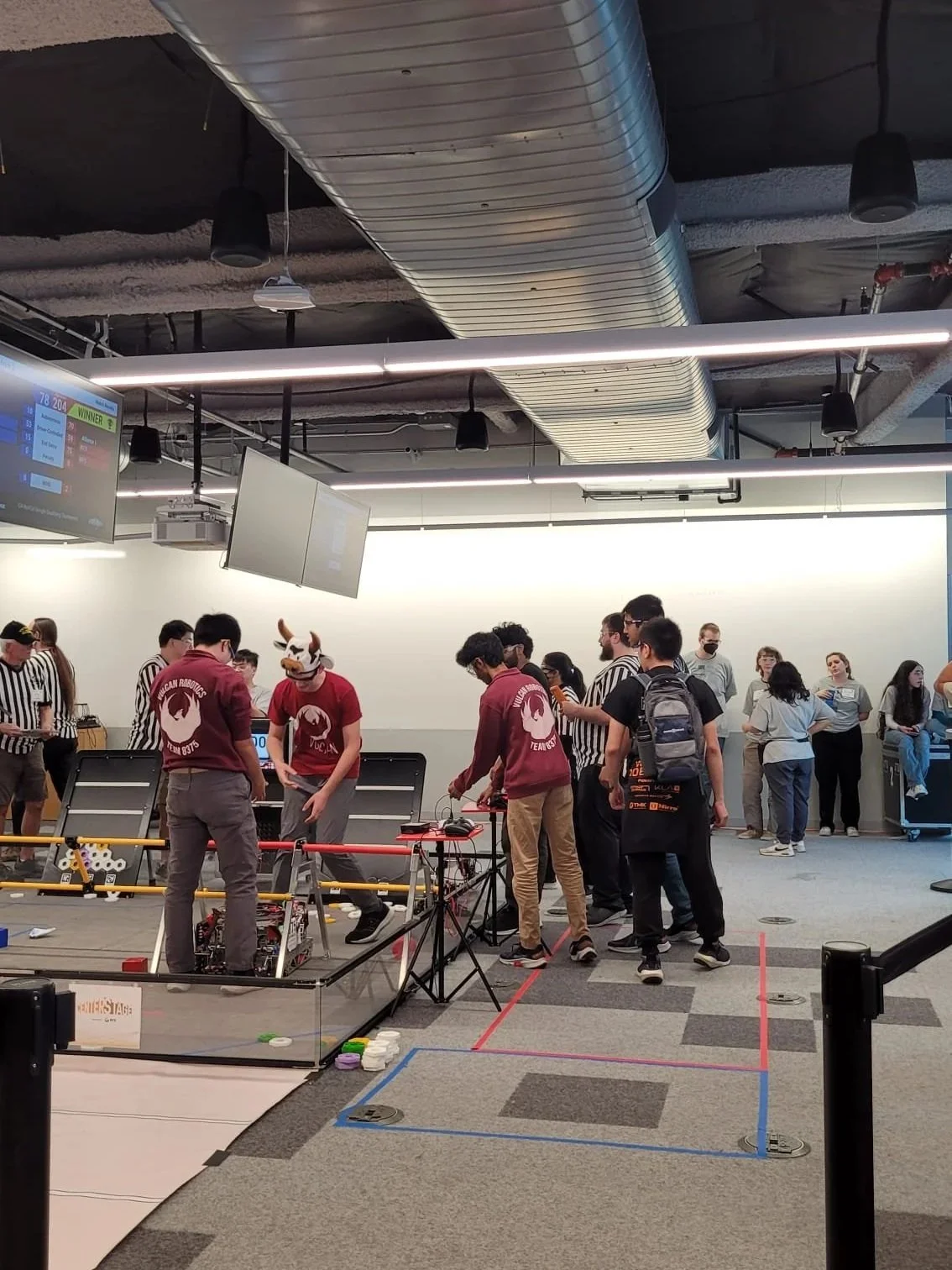
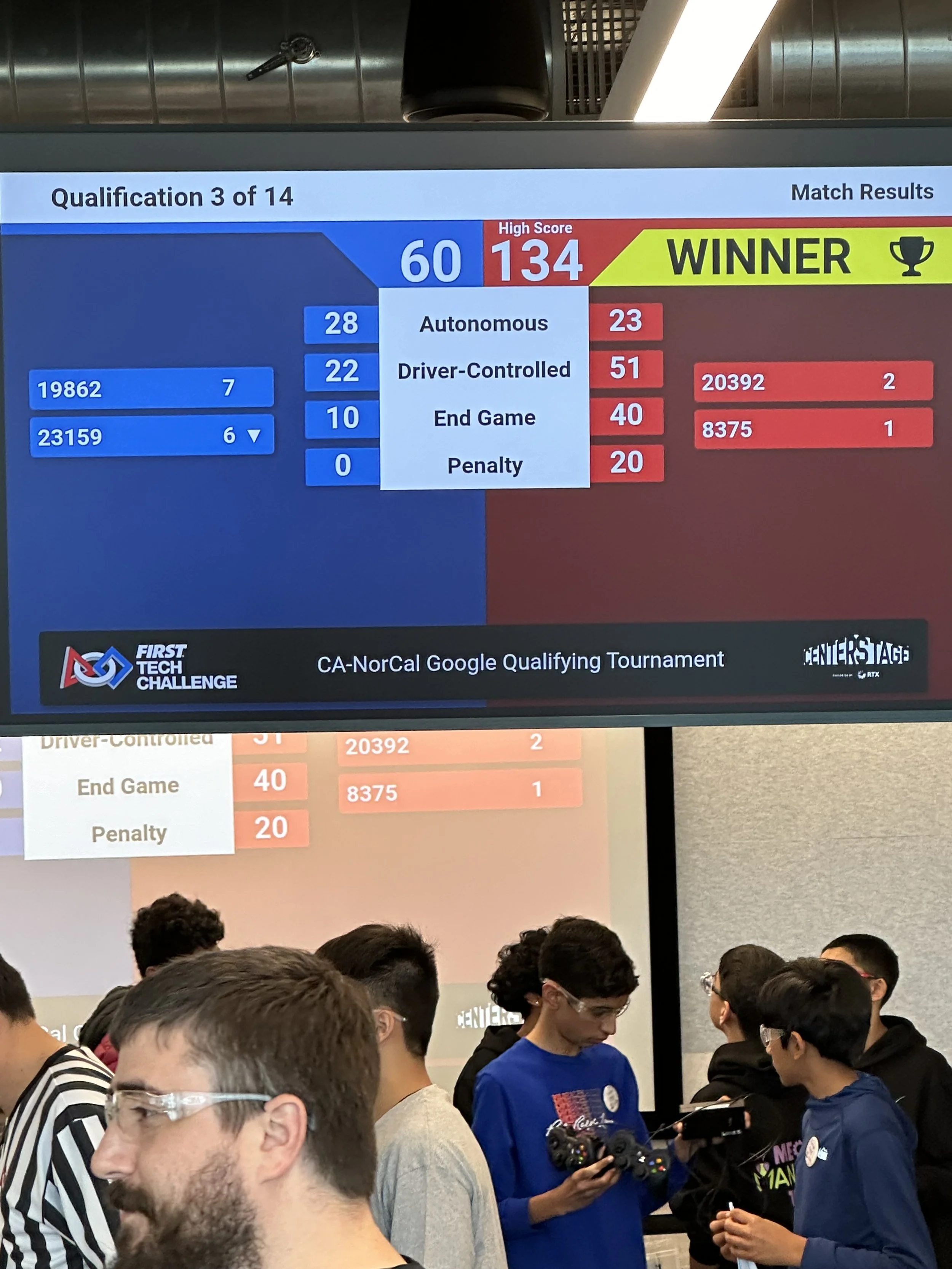
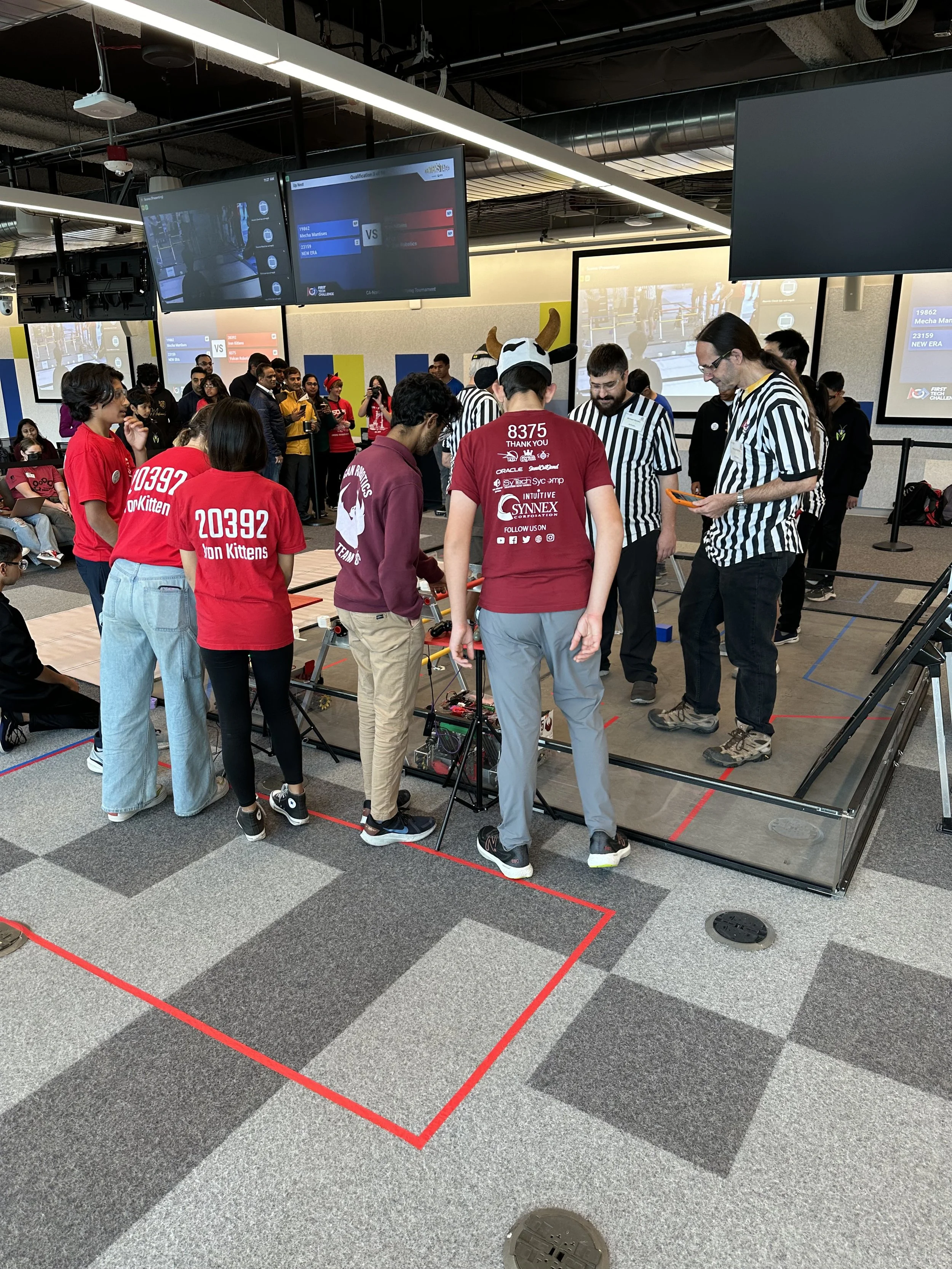
In December 2023, we won our Google Sunnyvale Qualifier as the alliance captain, undefeated throughout our nine matches. We also received the Design Award for our efforts.
Robot V2
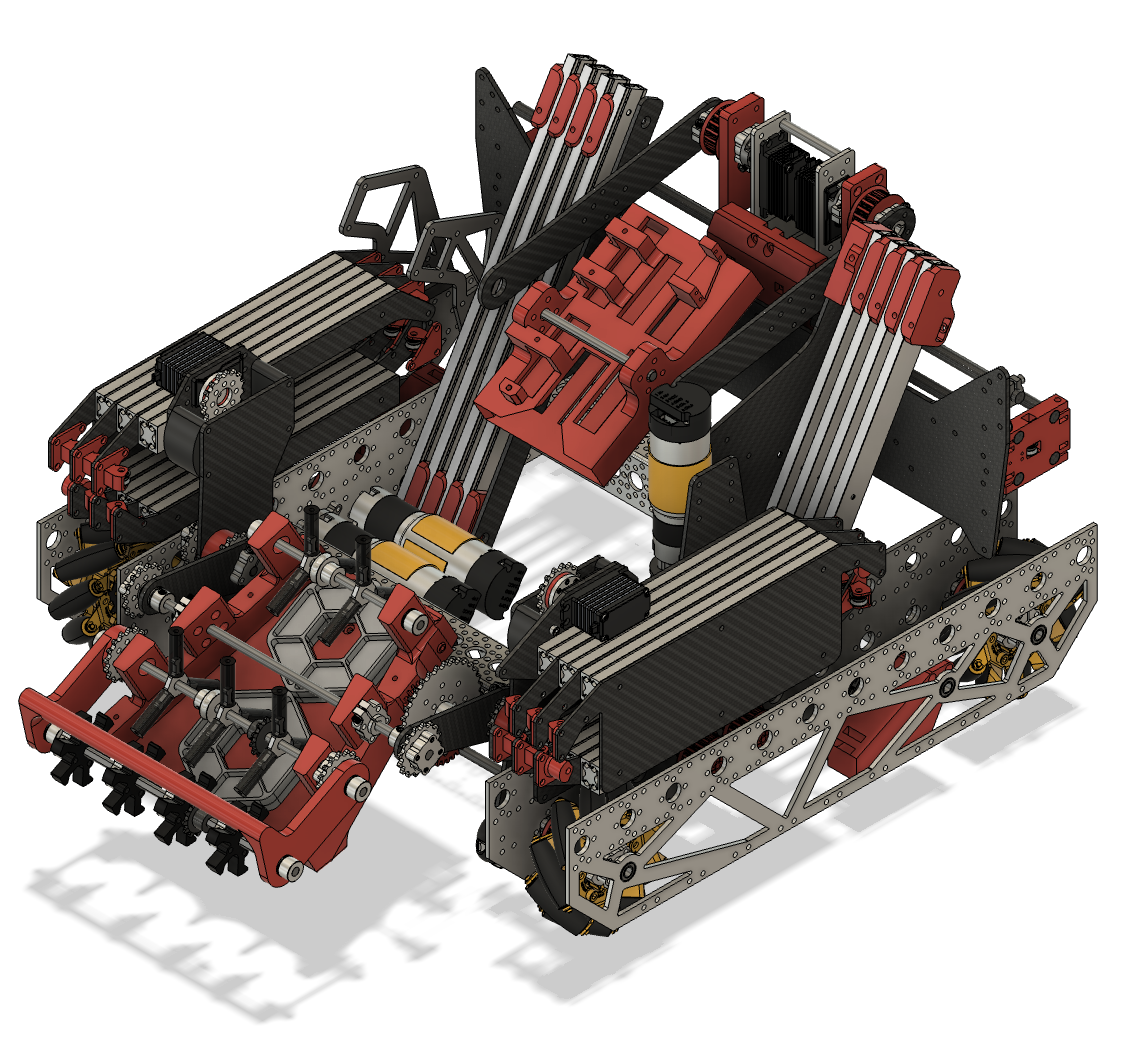
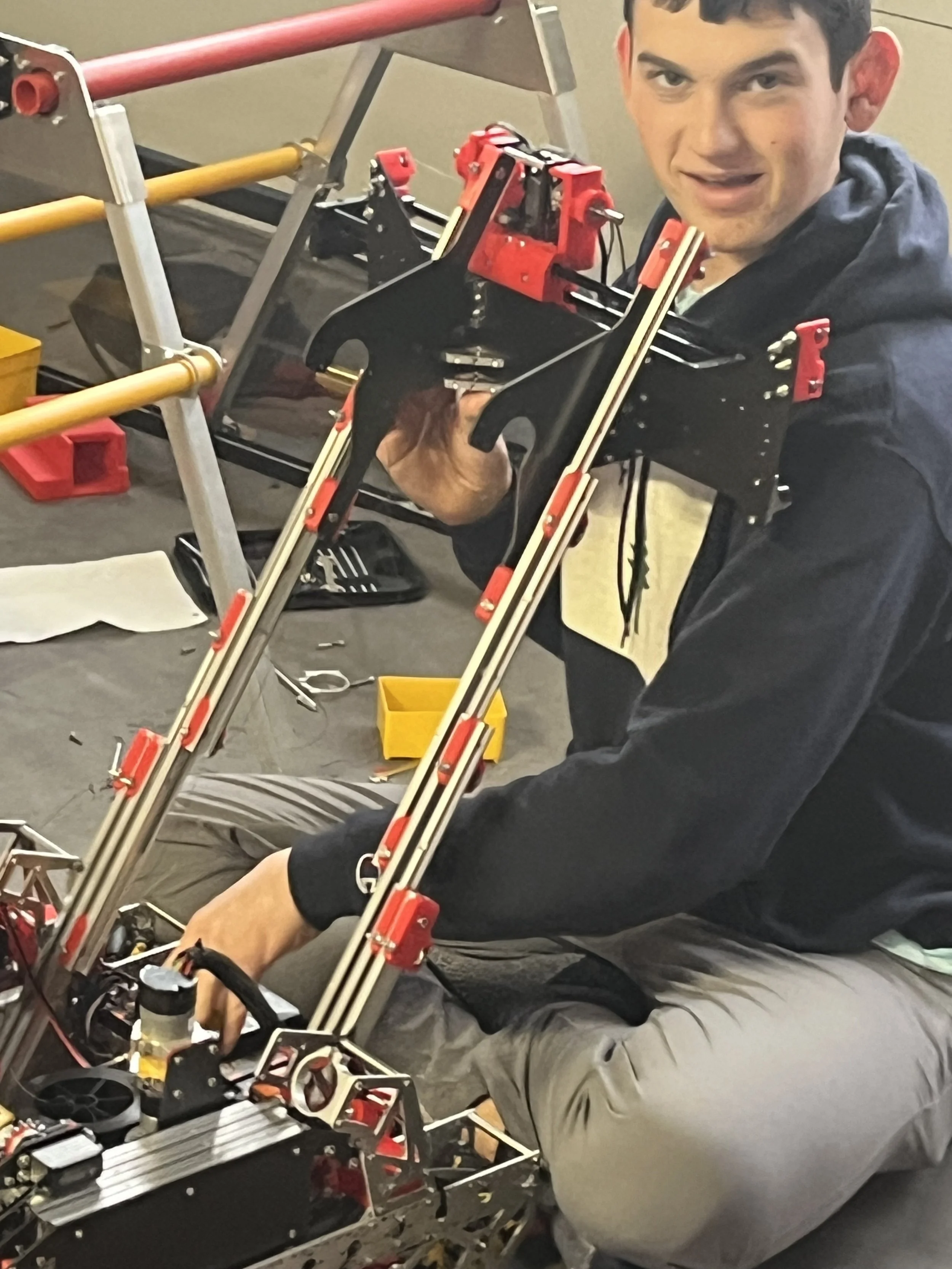
In CENTERSTAGE, a robot needed precise horizontal and vertical control of the pixels to score points. In the qualifier, we learned that driving the robot left and right to position pixels was unwieldy. To address this, I designed a custom differential lift system for the NorCal Regional. We were already using two motors to raise the pixels on our lift, and I designed a custom cable-rigging system that let the motors also control a bidirectional gantry. With two motors, we gained two degrees of freedom, increasing the flexibility of our scoring strategy. During the 2023–2024 season, I saw only one other team that built a differential lift with the flexibility and adaptability that our design possessed. At maximum extension, we could potentially place pixels on the backdrop while reaching around other robots. Ultimately, despite our best efforts, we could not get the robot to work in time for competition. I learned the value of simplicity: the most complicated and sophisticated solution is not necessarily the best.
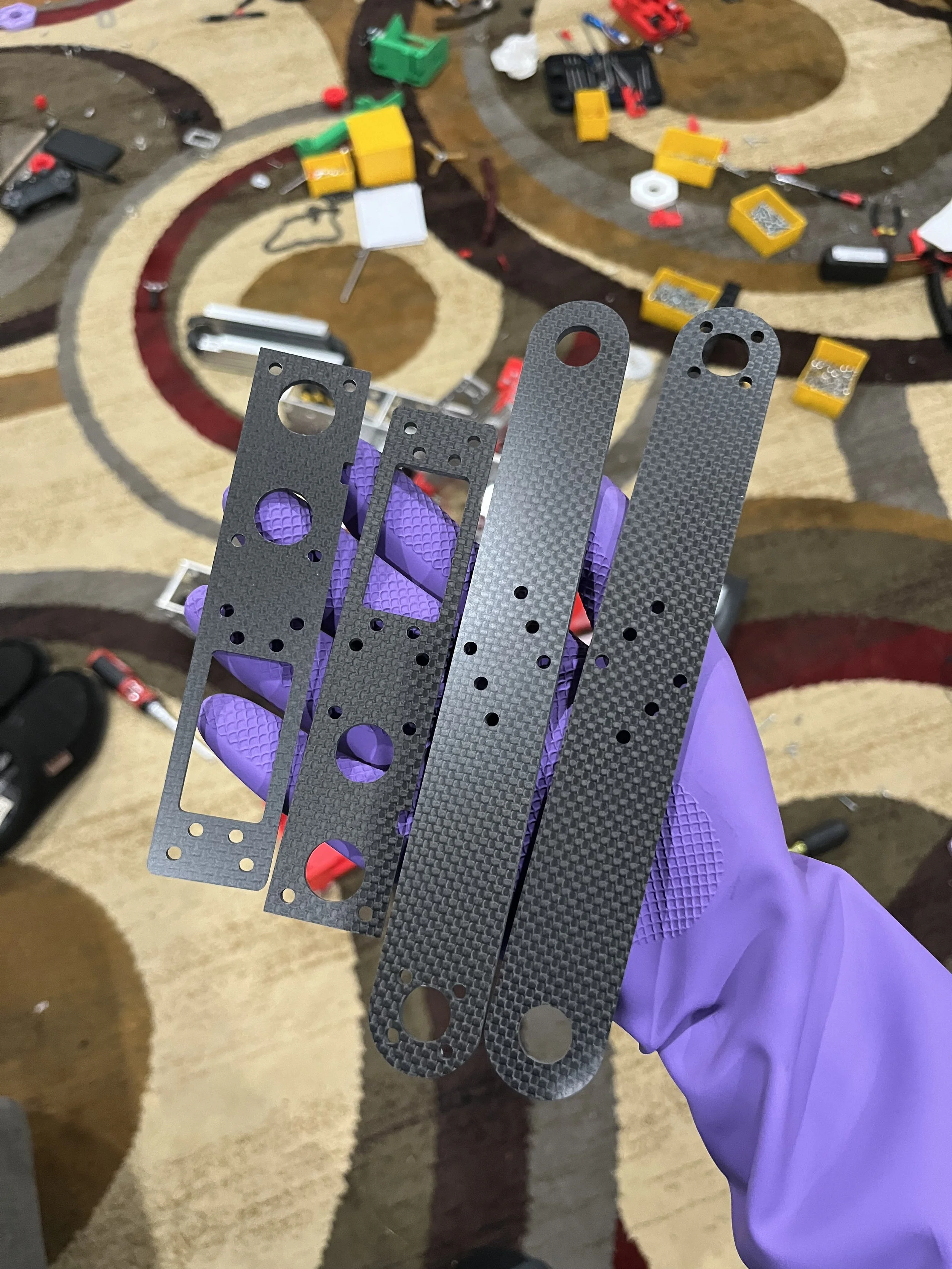
Carbon-fiber parts
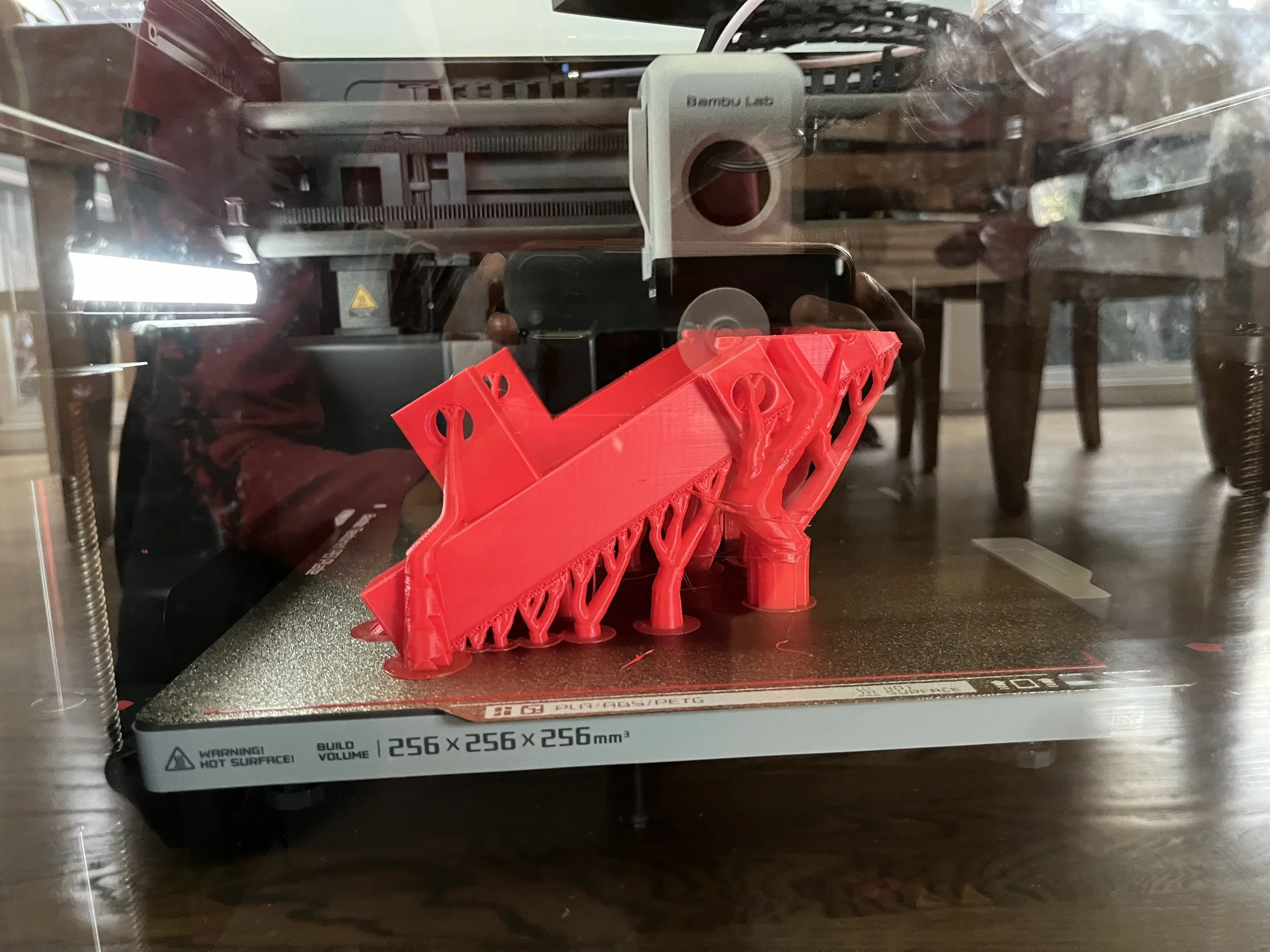
3D printer
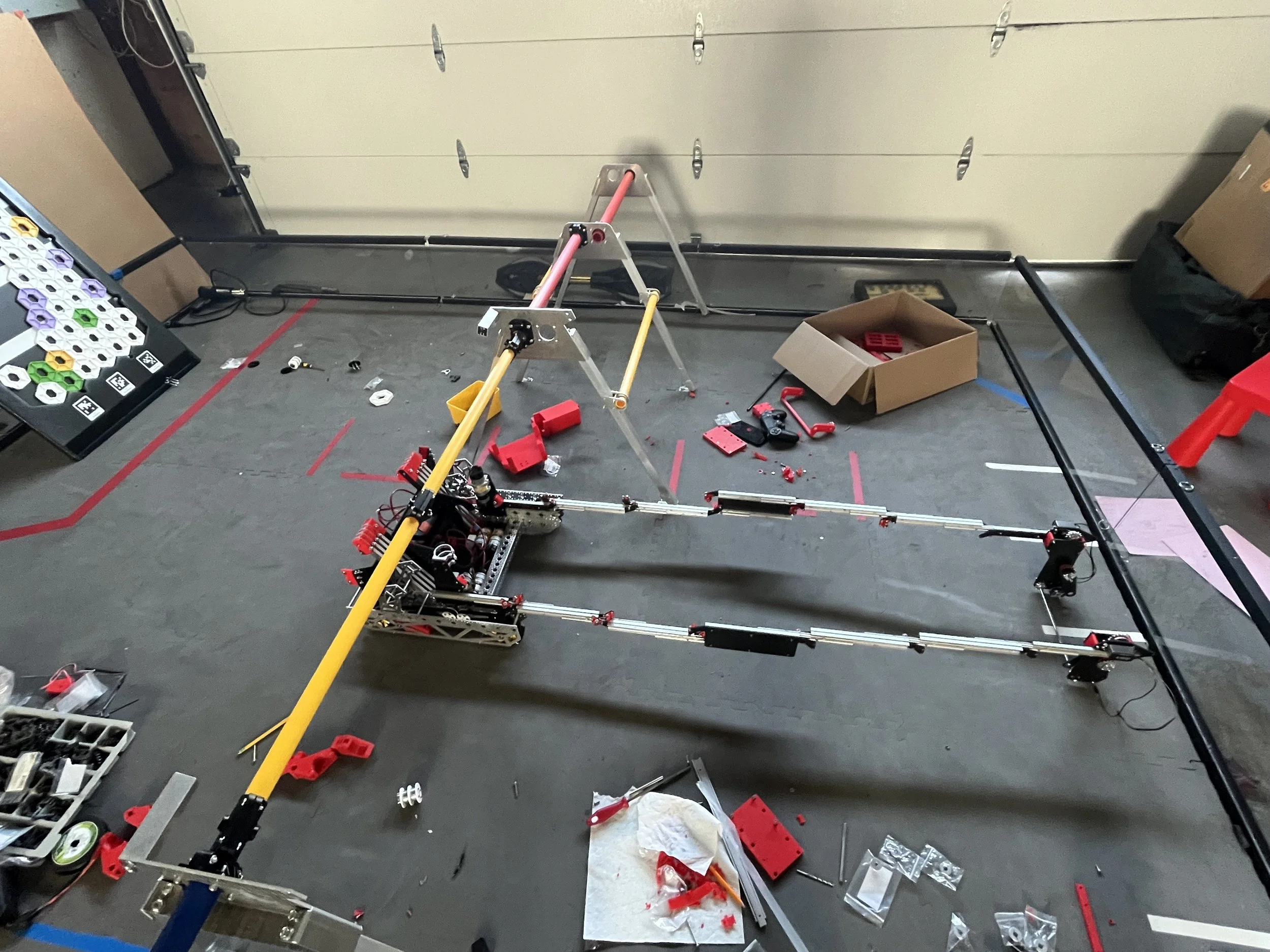
Extending intake
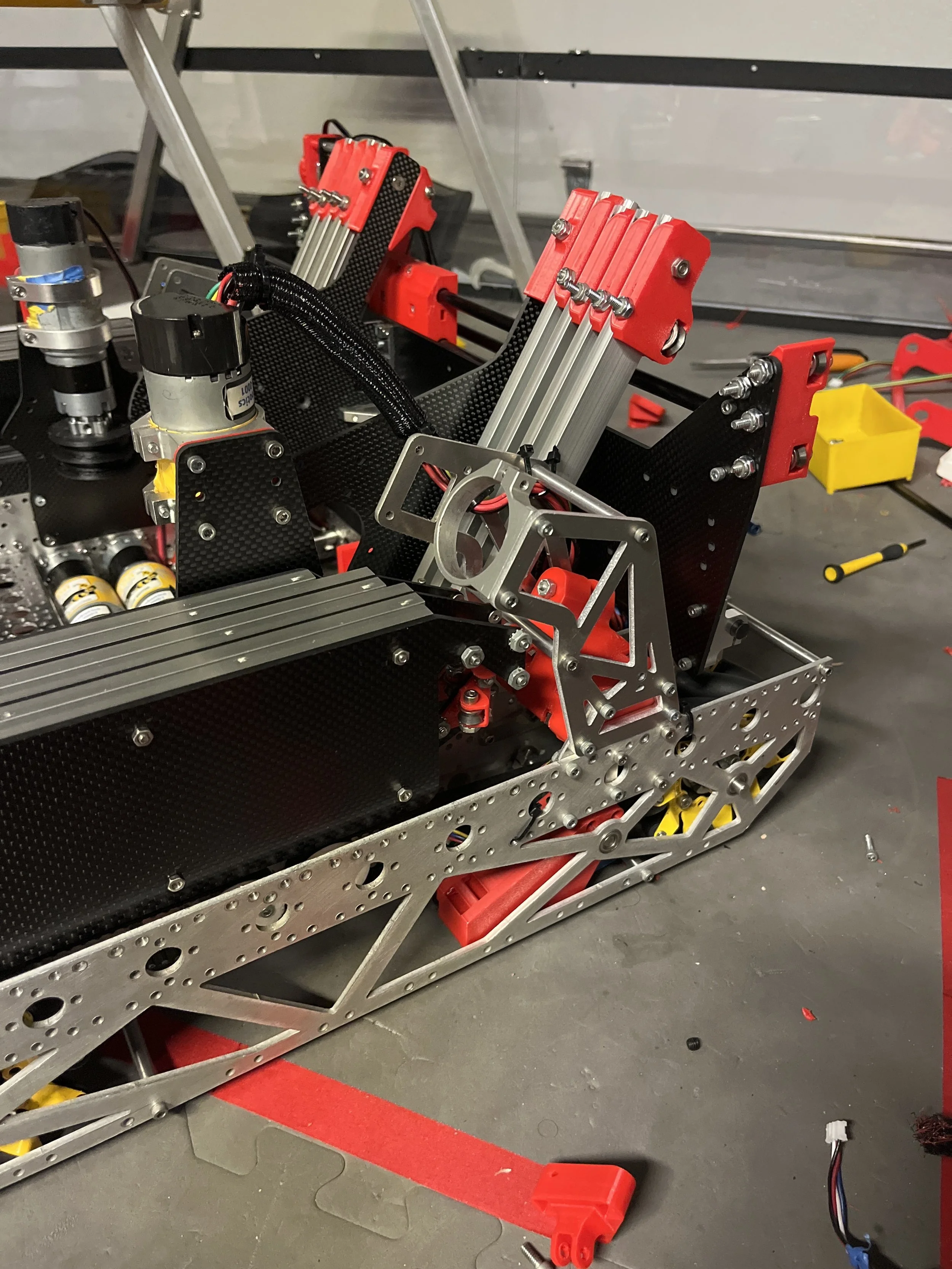
New motor mounts
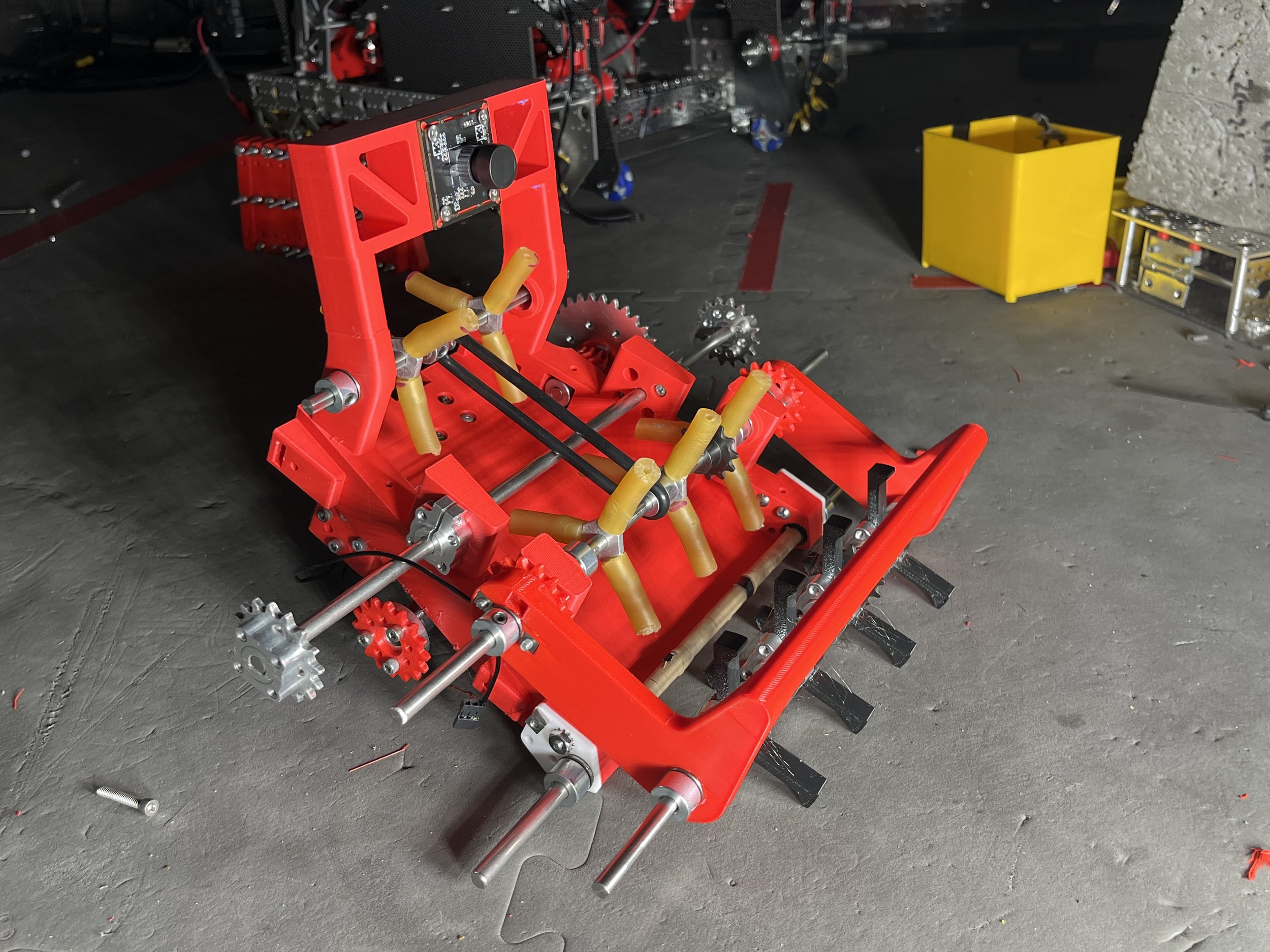
New intake
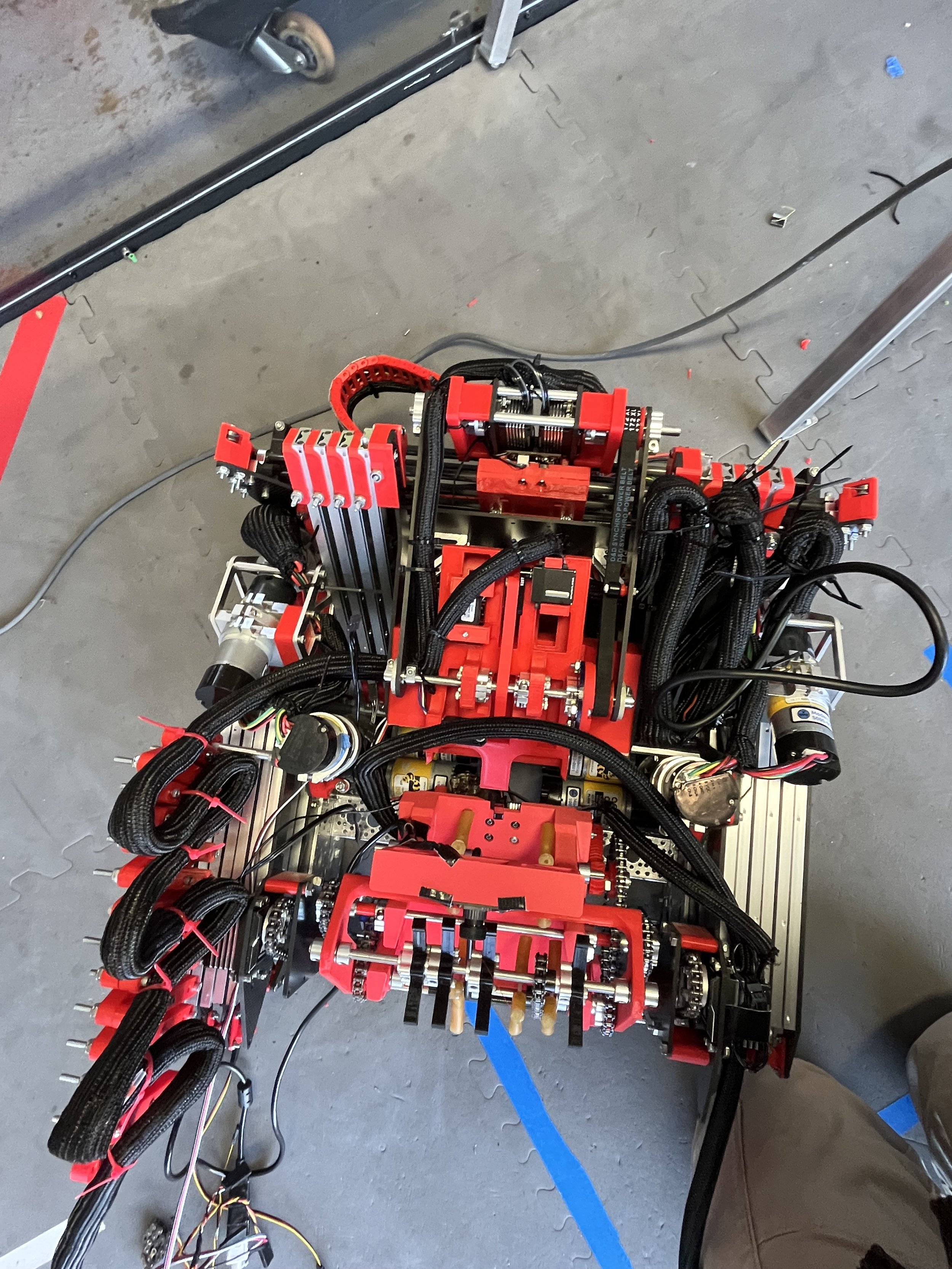
Bird's-eye of robot
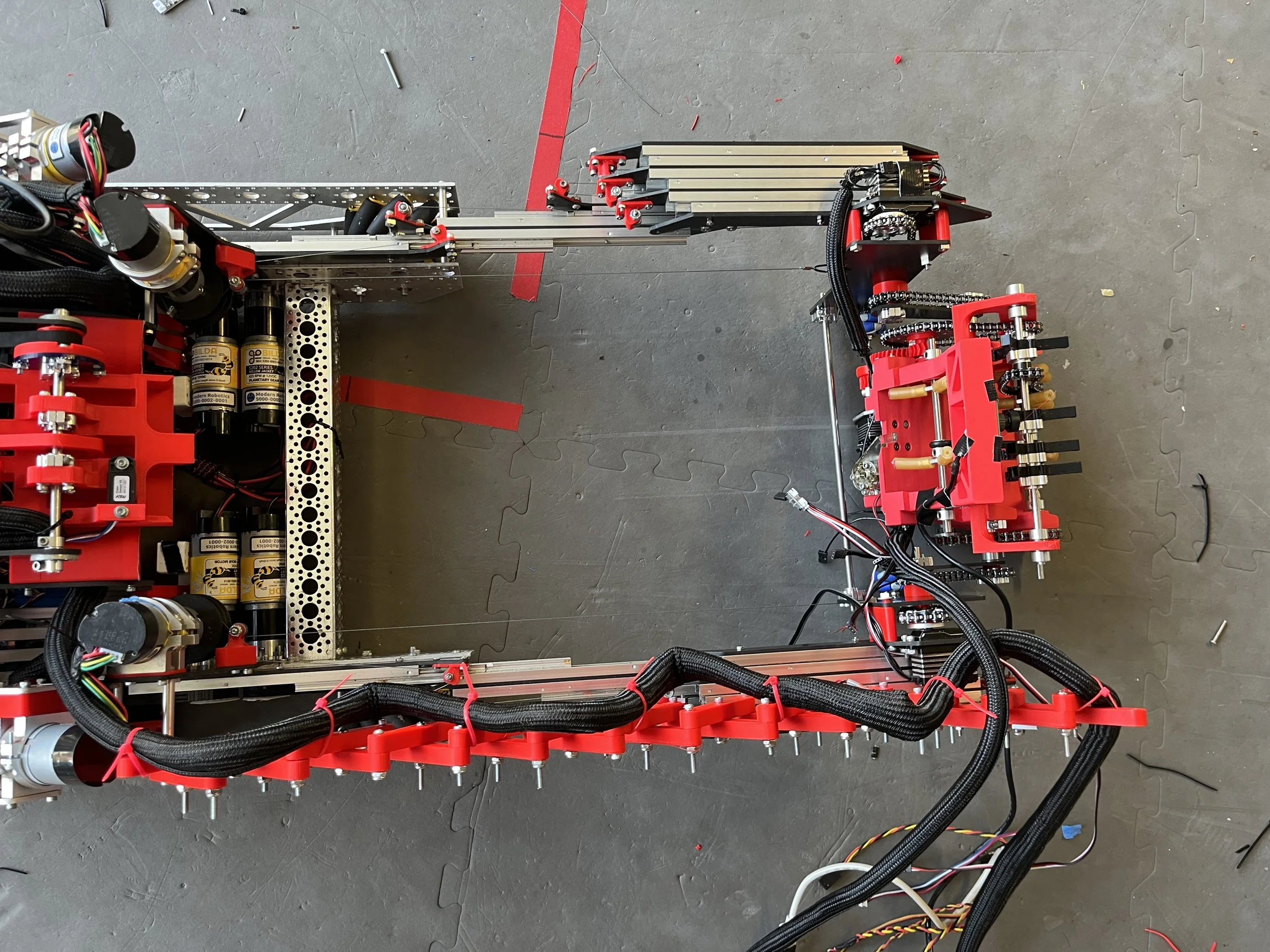
Extending intake
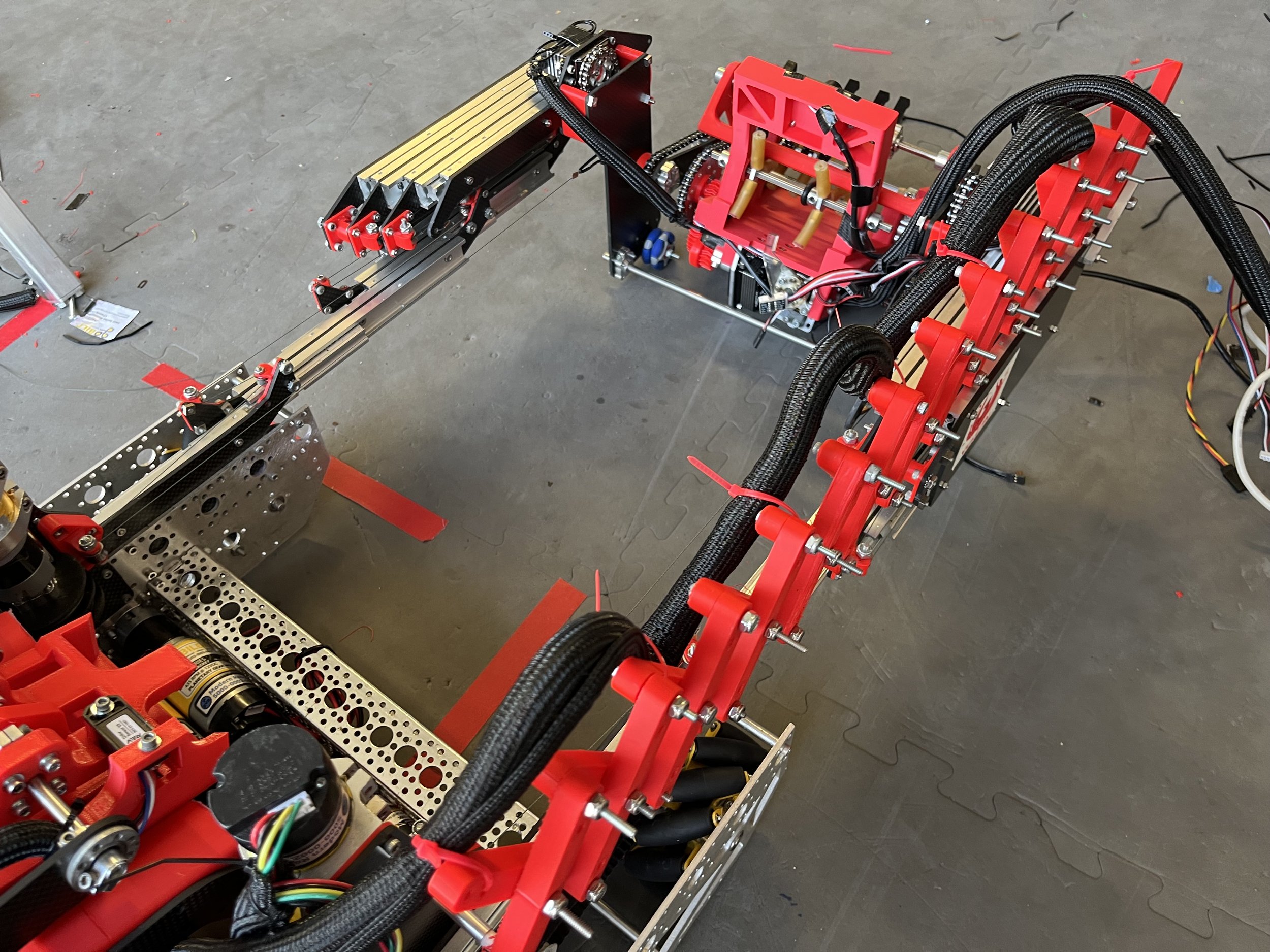
Extending intake
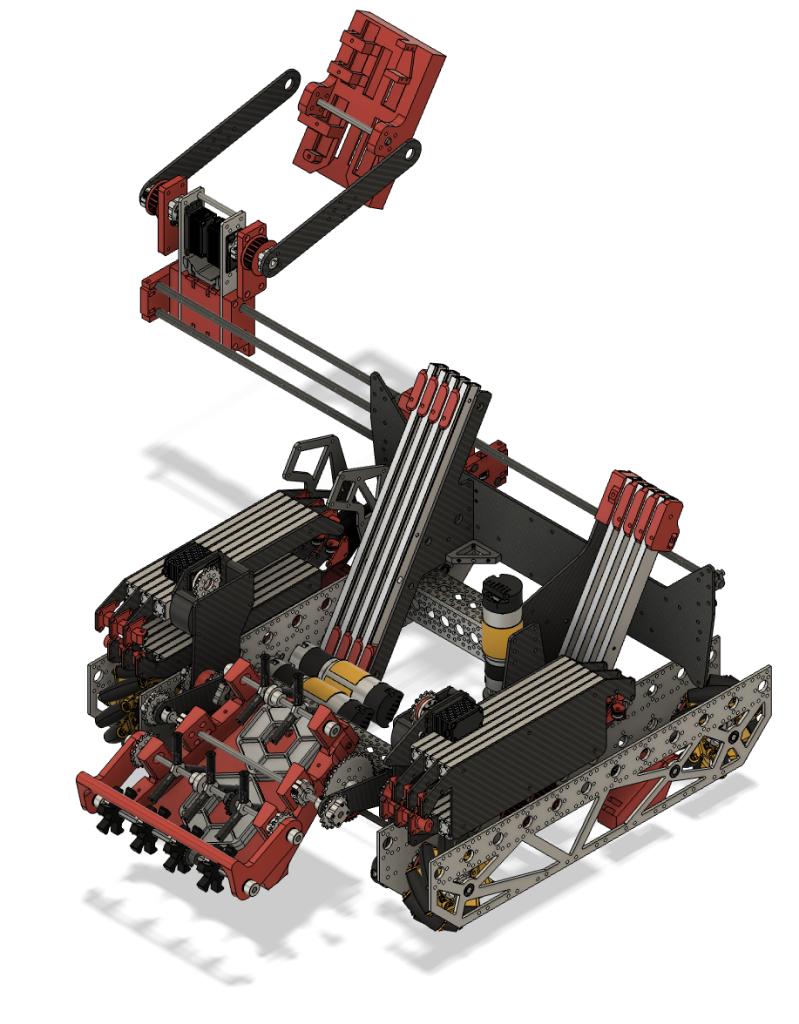
CAD of the differential lift in action
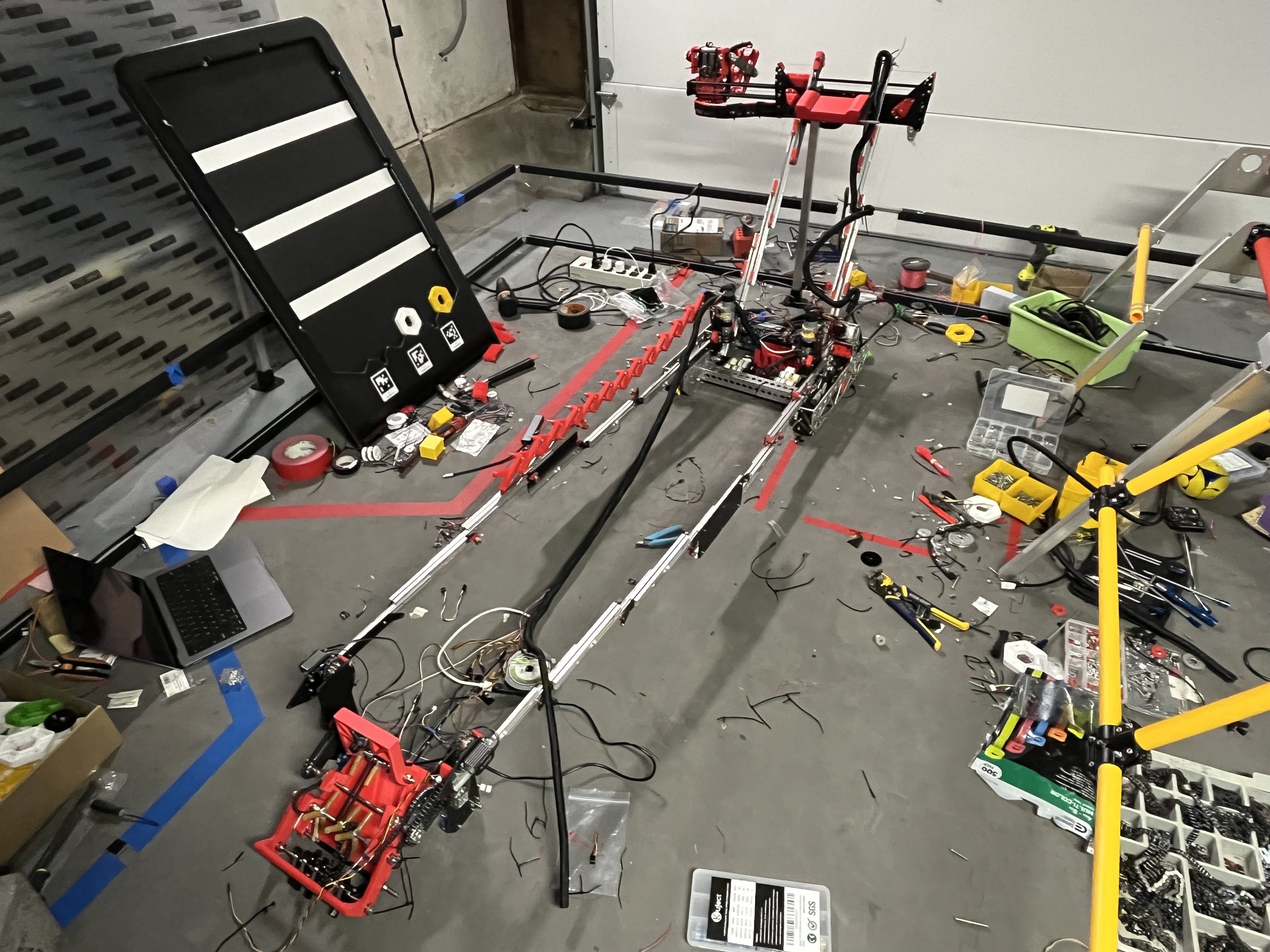
Full robot extension
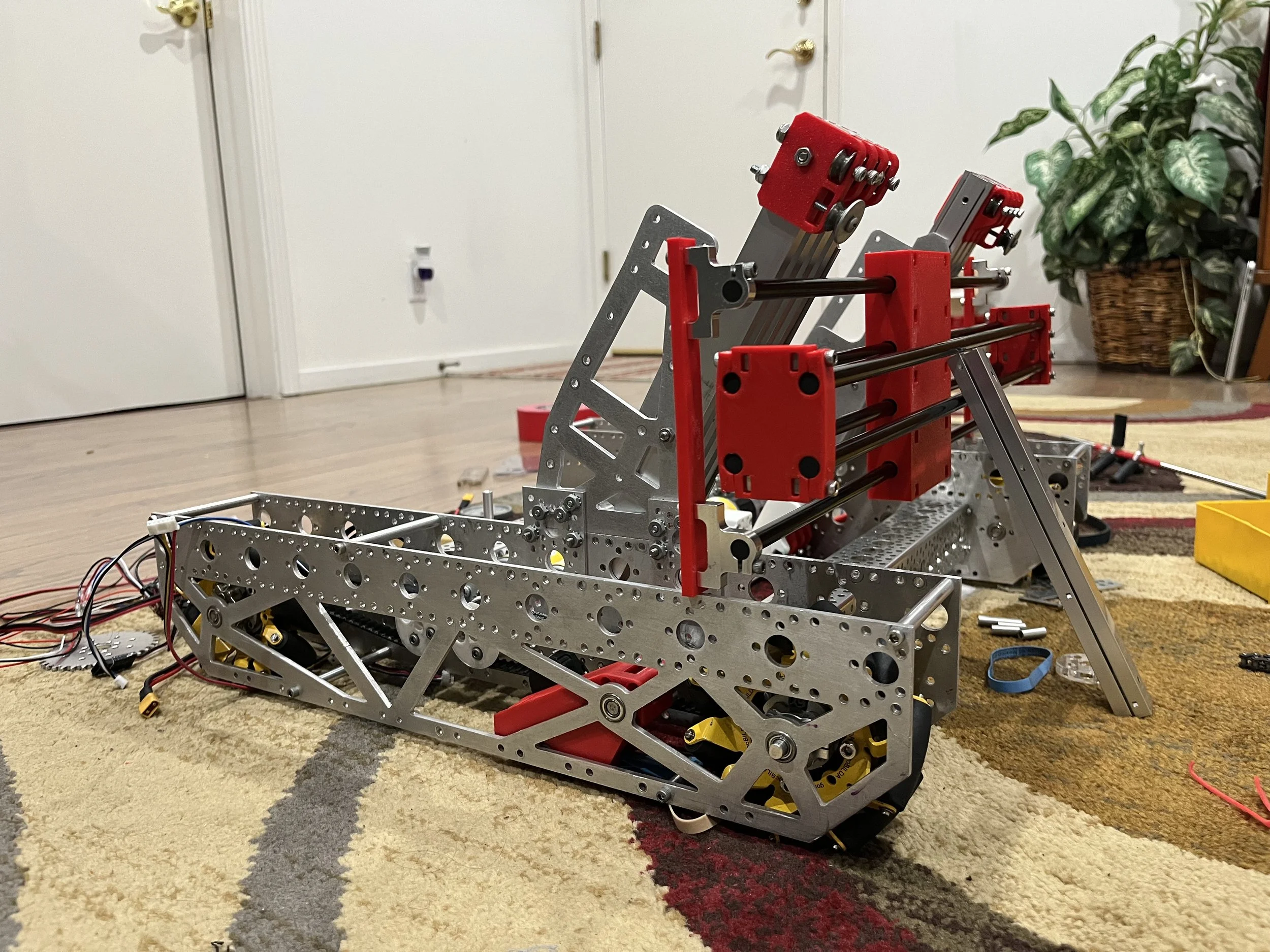
Prototype differential lift
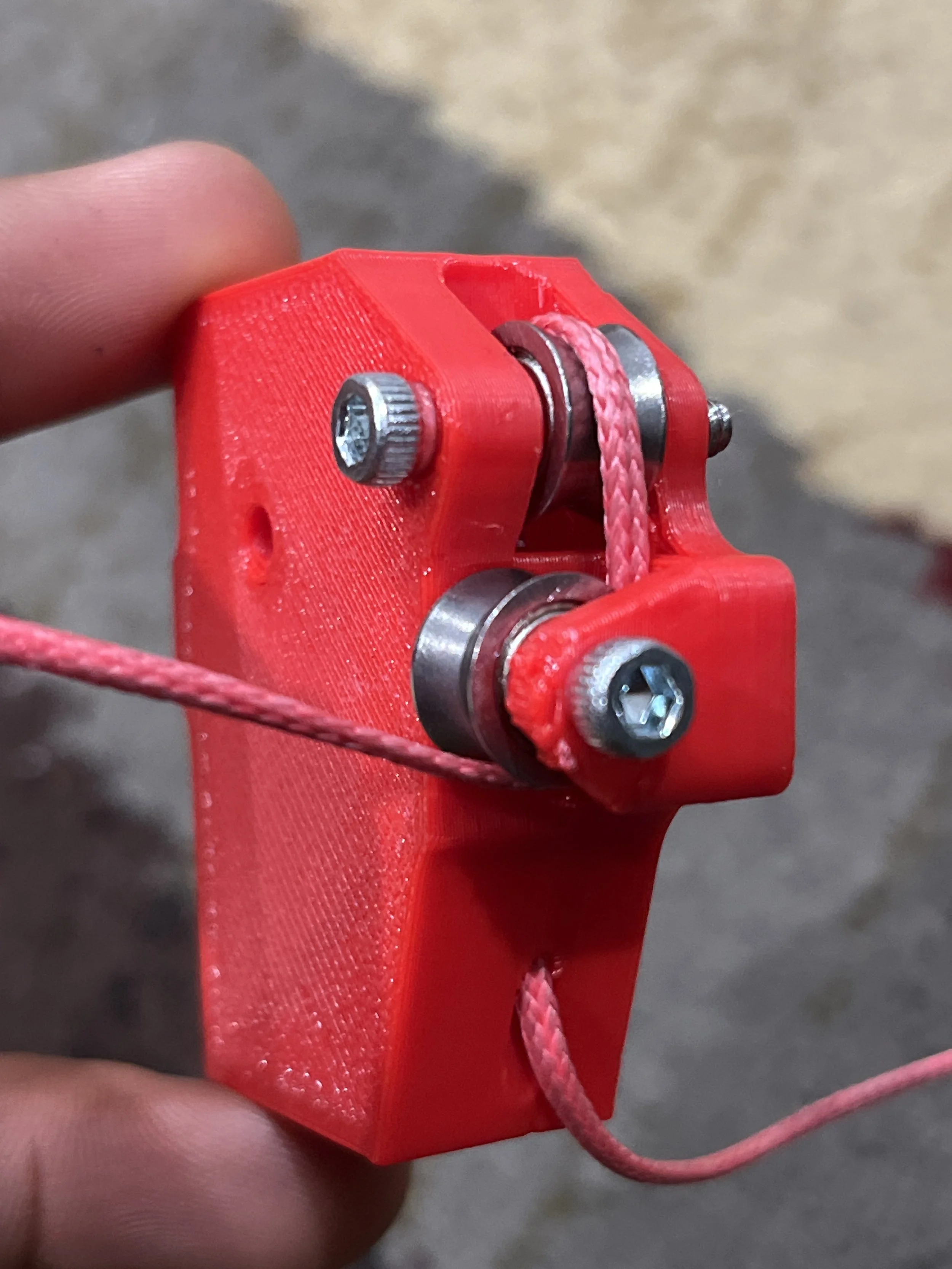
Pulley mechanism for the lift